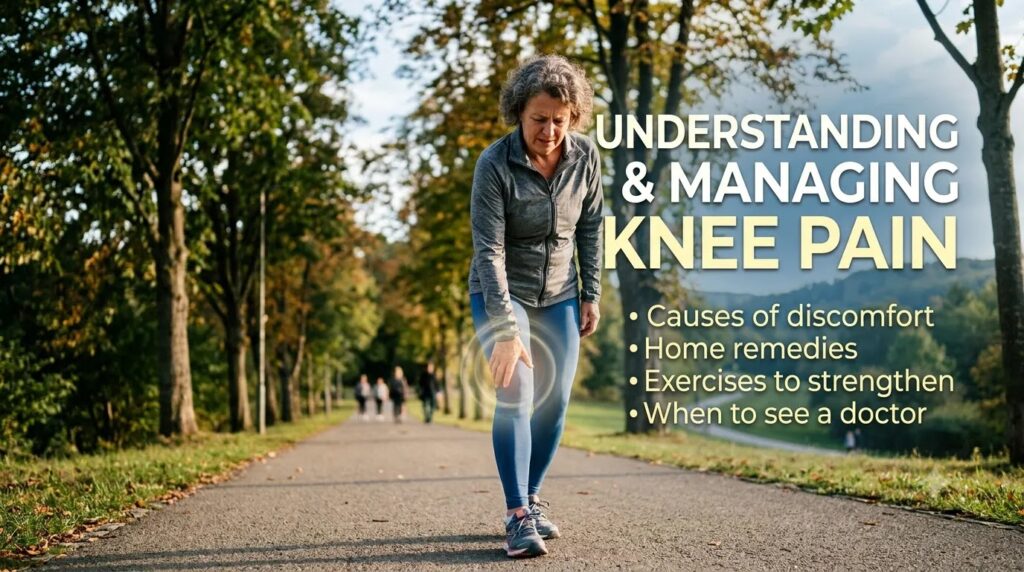
Knee pain is a common problem that can affect people of almost every age. It may develop gradually due to ageing, muscle weakness, overuse, or lifestyle habits, or it may occur suddenly after an injury, fall, sports activity, or awkward movement. For some people, knee pain is a temporary inconvenience, while for others, it can interfere with walking, exercising, climbing stairs, working, or performing everyday activities.
The knee is one of the largest and most complex joints in the human body. It supports much of our body weight and allows us to perform essential movements such as walking, running, sitting, standing, squatting, and climbing stairs. Because it is exposed to considerable stress every day, problems involving the bones, cartilage, muscles, tendons, ligaments, or other structures around the joint can result in pain.
The good news is that many causes of knee pain can be managed effectively with appropriate assessment, physiotherapy, exercise, and lifestyle modifications.
In this blog, we will discuss how to identify knee pain, common symptoms and causes, how physiotherapy can help, and lifestyle changes that may support recovery.
Pain around the knee does not always feel exactly the same. The location, intensity, and nature of the pain can vary depending on which structure is involved.
The knee is located between the thigh and the lower leg. You may experience knee-related pain in several different areas, including:
- Front of the knee: Often felt around or underneath the kneecap.
- Back of the knee: Pain may be noticeable when bending or straightening the leg.
- Inner side of the knee: Pain may occur along the inside of the joint.
- Outer side of the knee: Discomfort may be felt on the outside of the joint.
- Around the kneecap: Pain may become more noticeable while climbing stairs, squatting, or sitting for long periods.
- Joint line: Pain along the inner or outer joint line may sometimes be associated with structures such as the meniscus.
Certain movements can also provide clues that the knee is involved. For example, you may experience pain while:
- Walking or running
- Going up or down stairs
- Squatting
- Sitting down or getting up from a chair
- Bending or straightening the knee
- Standing for long periods
- Getting up after sitting for a long time
- Exercising or playing sports
You may also notice stiffness, swelling, weakness, clicking, or a sensation that the knee is unstable.
However, pain location alone cannot always identify the exact cause. Pain from the hip, lower back, or surrounding muscles can sometimes be felt around the knee. This is why a proper physiotherapy assessment can be helpful.
A physiotherapist can examine your knee movement, muscle strength, flexibility, walking pattern, posture, balance, and functional movements to determine potential contributing factors.
Common Symptoms of Knee Pain
Knee pain can range from mild discomfort to severe pain that significantly affects mobility. Symptoms often depend on the underlying cause.
Pain may be sharp, dull, aching, burning, or throbbing. It may occur continuously or only during specific movements.
Some people experience pain at rest, while others notice it mainly during activities such as walking, climbing stairs, running, or squatting.
Swelling
Swelling around the knee can occur following an injury, inflammation, irritation, or certain joint conditions.
A swollen knee may feel tight or uncomfortable and can make bending or straightening the joint difficult.
Knee Stiffness
You may experience stiffness after waking up, sitting for a prolonged period, travelling, or remaining inactive.
Some people describe difficulty “getting the knee moving” after sitting for a while.
Reduced Range of Motion
Knee pain may make it difficult to fully bend or straighten the leg. This can interfere with activities such as squatting, sitting on the floor, climbing stairs, or getting in and out of a car.
Clicking, Popping or Grinding
Some people notice sounds or sensations such as clicking, popping, or grinding when moving their knee.
These sounds do not necessarily mean that there is serious damage. However, when they occur along with pain, swelling, locking, or instability, professional assessment is advisable.
Weakness
Pain can cause people to avoid using the affected leg. Over time, reduced activity can contribute to muscle weakness, particularly around the thigh and hip.
Knee Instability
Some individuals feel that their knee is “giving way” or becoming unstable while walking, turning, climbing stairs, or participating in sports.
Difficulty Performing Daily Activities
Persistent knee pain can gradually affect quality of life. Activities such as walking, exercising, shopping, travelling, climbing stairs, or playing with children may become difficult.
What Are the Reasons for Knee Pain?
There are many possible causes of knee pain. Understanding the underlying cause is important because treatment should be based on the individual’s condition rather than simply treating the symptom.
Sports and Exercise Injuries
Sports involving running, jumping, twisting, sudden stops, or changes in direction can place considerable stress on the knee.
Injuries may involve structures such as the ligaments, meniscus, muscles, or tendons.
Examples include:
- ACL injuries
- Meniscus injuries
- MCL or other ligament injuries
- Muscle strains
- Tendon injuries
Overuse
Repeating the same movement frequently can gradually irritate tissues around the knee.
Running long distances, excessive squatting, repetitive jumping, or suddenly increasing exercise intensity may contribute to knee pain.
Increasing your workout volume too quickly without allowing adequate recovery can also increase the risk of developing discomfort.
Muscle Weakness
The muscles around the hip, thigh, and lower leg help control and support movement.
Weakness in the quadriceps, hamstrings, glutes, or calf muscles may affect movement mechanics and increase stress on the knee during certain activities.
Poor Movement Mechanics
The way you walk, run, squat, climb stairs, or perform exercises can influence the forces placed on your knee.
Poor technique or altered movement patterns may contribute to recurring pain in some individuals.
Age-Related Changes
As we age, changes can occur within the joints and surrounding tissues. Osteoarthritis is a common cause of knee pain, particularly among older adults.
It may be associated with symptoms such as pain, stiffness, reduced mobility, and difficulty performing certain activities.
Previous Knee Injury
A previous injury may continue to influence strength, mobility, balance, or movement patterns even after the initial pain has improved.
Incomplete rehabilitation following an injury can sometimes leave persistent weakness or movement limitations.
Excess Body Weight
The knees carry a significant amount of load during activities such as walking, climbing stairs, and standing.
Higher body weight can increase the mechanical demands placed on the knee. For individuals who are overweight, gradual and sustainable weight management may form part of a broader knee-health strategy.
Sedentary Lifestyle
Too little physical activity can contribute to muscle weakness and reduced joint mobility.
Interestingly, both excessive loading and insufficient movement can contribute to musculoskeletal problems. Finding an appropriate level of regular activity is therefore important.
How Can Physiotherapy Help Heal Knee Pain?
Physiotherapy can be an important part of managing many types of knee pain.
The goal of physiotherapy is not simply to reduce pain temporarily. A comprehensive treatment programme aims to address factors contributing to the problem and gradually restore movement, strength, balance, and functional ability.
Detailed Assessment
Treatment usually begins with an individual assessment.
Your physiotherapist may evaluate:
- Pain location and intensity
- Knee range of motion
- Muscle strength
- Joint mobility
- Flexibility
- Walking pattern
- Balance
- Posture
- Lower-limb alignment
- Squatting and functional movement patterns
- Activity and exercise history
This information helps the physiotherapist understand your condition and develop an appropriate rehabilitation programme.
Exercise Therapy
Exercise is one of the most important components of physiotherapy for many knee conditions.
Depending on your condition, exercises may target:
- Quadriceps
- Hamstrings
- Gluteal muscles
- Calf muscles
- Hip muscles
- Core muscles
Exercises are generally progressed gradually as your strength and tolerance improve.
Improving Knee Mobility
Stiffness can make movement uncomfortable and restrict everyday activities.
A physiotherapist may use appropriate mobility exercises to improve the range of motion of the knee and surrounding joints.
Improved mobility can make activities such as walking, squatting, climbing stairs, and getting up from a chair easier.
Strengthening the Supporting Muscles
The knee does not work in isolation. The muscles around the hip, thigh, and lower leg contribute to movement and stability.
Strengthening these muscles can improve lower-limb control and help you perform daily and sporting activities more efficiently.
Balance and Stability Training
For individuals experiencing instability or recovering from an injury, balance and proprioception exercises may be included.
These exercises help the body better control the position of the leg during movement.
Manual Therapy
Depending on the individual’s condition, physiotherapists may use hands-on techniques to address joint or soft-tissue mobility.
Manual therapy may be used alongside exercise rather than as a replacement for active rehabilitation.
Movement and Activity Modification
Sometimes, the issue is not that you need to stop moving completely, but that you need to temporarily modify how you move or exercise.
A physiotherapist can guide you regarding:
- Appropriate exercise intensity
- Training progression
- Rest and recovery
- Correct exercise technique
- Work-related movements
- Sports-specific activities
Rehabilitation After Surgery or Injury
Physiotherapy can also be an important part of rehabilitation following certain knee injuries or surgical procedures.
A structured programme can help progressively restore:
Mobility → Strength → Balance → Functional movement → Return to activity
The exact rehabilitation timeline varies depending on the injury, procedure, individual health, and treatment plan.
Lifestyle Changes That May Help With Knee Pain
Physiotherapy works best when supported by healthy daily habits.
Here are several lifestyle changes that may help support knee health and recovery.
Stay Physically Active
Complete inactivity can lead to muscle weakness and stiffness.
Low-impact activities such as walking, swimming, cycling, or appropriately prescribed exercises may help maintain mobility and strength.
However, exercise should be adjusted according to your condition. If a particular activity significantly increases pain, speak with a physiotherapist about suitable alternatives.
Maintain a Healthy Weight
If you are above your healthy weight range, gradual weight management may reduce the mechanical load placed on your knees.
A sustainable approach involving balanced nutrition and regular physical activity is generally more practical than extreme diets or rapid weight-loss programmes.
Strengthen Your Legs
Regular strengthening exercises can help maintain the muscles that support the knee.
Your physiotherapist can recommend exercises based on your current strength and condition.
Avoid Sudden Increases in Exercise
One common mistake is increasing exercise intensity or duration too quickly.
If you are returning to running or the gym after a period of inactivity, increase your workload gradually and allow sufficient recovery between demanding sessions.
Pay Attention to Your Footwear
Appropriate footwear can provide comfort and support during walking and exercise.
Replace excessively worn-out sports shoes and choose footwear appropriate for your activity.
Maintain Good Posture and Movement Habits
Pay attention to how you sit, stand, walk, lift objects, squat, and exercise.
Learning appropriate movement patterns can help you perform everyday activities more efficiently.
Take Breaks From Prolonged Sitting
If your work requires sitting for long periods, take regular movement breaks.
Simple activities such as standing, walking briefly, and gently moving the legs can help prevent stiffness.
Prioritise Recovery
Your body needs adequate recovery following physical activity.
Sleep, appropriate nutrition, hydration, rest days, and sensible exercise progression can all contribute to overall musculoskeletal health.
When Should You See a Physiotherapist for Knee Pain?
Not every episode of knee discomfort requires immediate professional treatment. However, you should consider getting your knee assessed if:
- Pain persists or keeps returning
- Knee pain is interfering with daily activities
- You have difficulty walking
- The knee repeatedly gives way
- You have significant swelling
- You have difficulty bending or straightening the knee
- Pain is affecting your ability to exercise or participate in sports
- You have experienced a significant injury
- Symptoms are progressively getting worse
Seek prompt medical evaluation after a major injury, particularly if you cannot bear weight, the knee appears deformed, or there is substantial swelling or severe pain.
Frequently Asked Questions About Knee Pain
1. Can physiotherapy completely cure knee pain?
The outcome depends on the underlying cause of the knee pain. Many knee conditions can improve significantly with appropriate physiotherapy, exercise, activity modification, and lifestyle changes. However, some conditions may require additional medical treatment. A physiotherapist can assess your symptoms and advise whether physiotherapy is appropriate or whether further medical evaluation is needed.
2. Should I exercise when I have knee pain?
In many cases, appropriate exercise can be beneficial, but the type and intensity of exercise matter. Completely stopping physical activity may lead to weakness and stiffness, while excessive loading may aggravate symptoms. A physiotherapist can help identify suitable exercises and determine how to progress them safely.
3. How long does it take for knee pain to improve with physiotherapy?
Recovery time varies significantly depending on the cause, severity, duration of symptoms, general health, activity level, and consistency with rehabilitation. Some mild problems may improve within a few weeks, while injuries or chronic conditions can require a longer rehabilitation programme.
4. Is knee pain always caused by arthritis?
No. Arthritis is only one possible cause of knee pain. Knee pain may also result from sports injuries, ligament or meniscus problems, tendon irritation, muscle weakness, overuse, movement-related problems, previous injuries, or other conditions. A proper assessment can help identify potential causes.
5. Can lifestyle changes prevent knee pain?
Healthy lifestyle habits can support overall joint and musculoskeletal health. Maintaining an appropriate level of physical activity, strengthening the muscles around the knee and hip, maintaining a healthy weight, avoiding sudden increases in exercise, and addressing movement-related problems can all be useful components of knee-health management.
Take the First Step Towards Better Knee Health
Knee pain can affect much more than your ability to walk. When left unmanaged, it can gradually influence your exercise routine, work, sleep, mobility, and quality of life.
The right approach depends on why your knee hurts in the first place. Instead of simply masking the pain, a comprehensive physiotherapy assessment can help identify contributing factors and create a personalised rehabilitation plan.
Whether your knee pain is related to an injury, overuse, muscle weakness, stiffness, ageing, or movement-related issues, physiotherapy can help you work towards improved mobility, strength, stability, and function.
If persistent knee pain is limiting your everyday life or preventing you from doing the activities you enjoy, consider consulting a qualified physiotherapist for an assessment and personalised treatment plan.