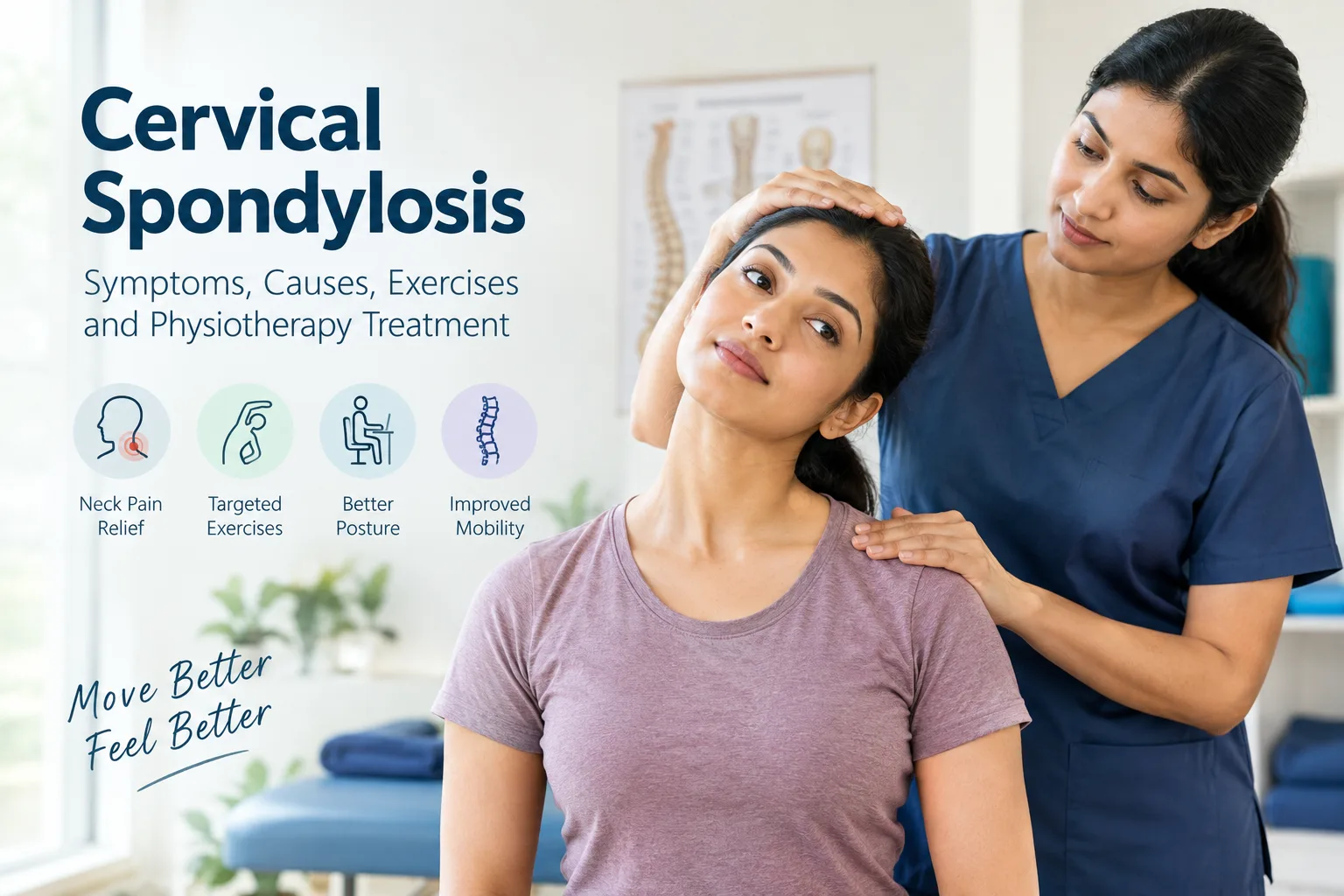
Cervical spondylosis is a common condition affecting the neck, particularly as people get older. It develops because of gradual age-related changes in the bones, joints and discs of the cervical spine. While some people may have cervical spondylosis without experiencing any symptoms, others may develop neck pain, stiffness, headaches, restricted movement or symptoms that extend into the shoulders and arms.
Modern lifestyles can also place additional stress on the neck. Spending long hours working on a computer, looking down at a smartphone, maintaining poor posture or remaining in the same position for extended periods may contribute to neck discomfort and stiffness.
The good news is that cervical spondylosis can often be managed effectively with physiotherapy, appropriate exercises, posture correction and healthy lifestyle habits. Treatment is generally focused on reducing symptoms, improving mobility, strengthening supporting muscles and helping the individual return to normal daily activities.
What Is Cervical Spondylosis?
Cervical spondylosis refers to degenerative changes that occur in the cervical spine, which is the portion of the spine located in the neck.
The cervical spine consists of seven vertebrae. Between many of these vertebrae are discs that help absorb shock and allow the neck to move smoothly. With ageing, these discs can gradually lose hydration and height. The joints and surrounding structures may also undergo degenerative changes, and bone spurs may develop.
These changes are often part of the normal ageing process. In fact, many people have radiological signs of cervical spondylosis without experiencing significant pain or disability.
However, when these changes affect surrounding joints, muscles or nerves, symptoms can develop.
Common Symptoms of Cervical Spondylosis
Symptoms vary considerably from one person to another. Some individuals experience occasional stiffness, while others may develop persistent neck pain or neurological symptoms.
Common symptoms include:
- Neck pain or discomfort
- Neck stiffness, particularly after waking up
- Difficulty turning or moving the neck
- Pain extending towards the shoulders
- Headaches that may originate around the back of the neck
- Muscle tightness around the neck and upper shoulders
- Tingling or numbness in the arm or hand
- Weakness in the arm or hand when nerve irritation is present
- A grinding, clicking or popping sensation during neck movement
Not everyone with cervical spondylosis experiences all these symptoms. The presence and severity of symptoms depend on the structures involved and the individual’s overall condition.
What Causes Cervical Spondylosis?
The primary factor associated with cervical spondylosis is ageing. As the body gets older, the discs, joints and other structures of the spine naturally undergo changes.
Several factors may contribute to neck symptoms or increase mechanical stress on the cervical spine.
1. Age-related changes
The discs between the vertebrae can gradually become less flexible and lose some of their ability to absorb loads. The joints may also experience degenerative changes.
2. Poor posture
Repeatedly maintaining a forward-head or slouched position can place additional demands on the muscles and joints around the neck.
3. Prolonged screen use
Working for several hours at a computer or frequently looking down at a phone can keep the neck in a sustained position. Taking regular movement breaks and arranging the workstation appropriately can help reduce unnecessary strain.
4. Previous neck injury
A previous injury involving the neck may contribute to future degenerative changes or persistent symptoms.
5. Family history
Some individuals may have a greater tendency towards developing cervical spondylosis because of inherited factors.
6. Lifestyle factors
Smoking, physical inactivity and excess body weight may also affect overall musculoskeletal health and can contribute to a less favourable environment for managing spinal problems.
How Is Cervical Spondylosis Diagnosed?
A physiotherapist or doctor will generally begin with a detailed history and physical examination.
The assessment may include:
- Understanding when the symptoms started
- Identifying activities that aggravate or relieve symptoms
- Checking neck movement
- Assessing muscle strength
- Evaluating posture and movement patterns
- Checking sensation and reflexes when neurological symptoms are present
- Examining the shoulders and upper back
Depending on the symptoms and clinical findings, a healthcare professional may recommend investigations such as an X-ray or other imaging.
Importantly, imaging findings should be interpreted alongside the person’s symptoms and physical examination. Degenerative changes can occur naturally with age and do not always explain the severity of pain.
How Can Physiotherapy Help Cervical Spondylosis?
Physiotherapy plays an important role in the conservative management of cervical spondylosis.
Rather than focusing only on temporary pain relief, a physiotherapy programme can address contributing factors such as stiffness, reduced strength, poor movement patterns, postural habits and reduced physical activity.
A physiotherapist may use a combination of:
Exercise therapy
Specific exercises can help improve neck mobility, strengthen supporting muscles and improve the function of the shoulders and upper back.
Manual therapy
Where appropriate, a physiotherapist may use hands-on techniques to help improve movement and reduce musculoskeletal discomfort. Manual therapy is generally used alongside active rehabilitation rather than as the sole treatment.
Posture and ergonomic education
A physiotherapist can assess how you sit, work, use your phone and perform everyday activities. Simple changes to workstation height, screen position and sitting habits can help reduce prolonged neck strain. A guided posture correction can bring relief.
Home exercise programme
A personalised home exercise routine allows patients to continue their rehabilitation between physiotherapy sessions. Consistency is an important part of recovery and long-term symptom management.
Exercises for Cervical Spondylosis
Exercise selection should depend on the individual’s symptoms, mobility and clinical assessment. The following movements are commonly used as part of neck rehabilitation, but they should be performed gently and should not be forced.
1. Chin Tucks
Sit or stand upright and look straight ahead. Gently draw your chin backwards, as though creating a small double chin. Keep your head level rather than looking up or down.
Hold briefly and relax.
Benefits: This exercise can help activate the deep neck muscles and encourage better head and neck positioning.
2. Gentle Neck Rotation
Sit comfortably with your back supported. Slowly turn your head towards one shoulder as far as feels comfortable. Return to the centre and repeat on the opposite side.
Avoid forcing the movement.
Benefits: Helps maintain comfortable neck rotation and mobility.
3. Neck Side Stretch
Gently tilt your head towards one shoulder while keeping the opposite shoulder relaxed. Hold the comfortable stretch for several seconds and return to the starting position.
Repeat on the other side.
Benefits: May help reduce tightness in muscles around the side of the neck.
4. Shoulder Rolls
Slowly move your shoulders upwards, backwards and downwards in a controlled circular movement. Repeat in both directions.
Benefits: Helps encourage movement around the shoulders and upper back, which can become stiff when neck discomfort is present.
5. Scapular Retraction
Sit or stand tall. Gently draw your shoulder blades backwards and slightly downwards, as if trying to bring them closer together. Avoid shrugging your shoulders.
Hold for a few seconds and relax.
Benefits: Strengthens muscles that support good upper-body posture.
6. Isometric Neck Exercise
Place your palm against your forehead. Gently attempt to move your head forward while using your hand to provide equal resistance. Your head should remain stationary.
The same principle can be applied from the side, with the hand resisting gentle sideways pressure.
Benefits: Provides a way to strengthen the neck muscles without significant neck movement.
A physiotherapist should determine whether these exercises are appropriate for your specific condition, particularly if you have arm pain, numbness, weakness, dizziness or other neurological symptoms.
Precautions While Exercising
Neck exercises should be performed slowly and comfortably.
Keep these points in mind:
- Avoid sudden or jerky neck movements.
- Do not force your neck into an extreme range.
- Begin with a small number of repetitions.
- Increase exercise gradually as tolerated.
- Stop an exercise if it causes significant or worsening symptoms.
- Do not ignore new numbness, weakness or severe pain.
- Maintain relaxed shoulders while performing neck exercises.
- Take regular movement breaks if you work at a desk.
- Consult a physiotherapist if you are uncertain about exercise technique.
Gentle exercise is commonly recommended for cervical spondylosis, but the exact programme should be individualised.
Lifestyle Changes for Cervical Spondylosis
Physiotherapy works best when combined with healthy daily habits.
Improve your workstation
Keep the computer screen at a comfortable height so that you do not have to continuously bend your neck downwards. Your chair should provide appropriate support, and frequently used objects should be positioned within easy reach.
Take movement breaks
Avoid staying in one position for prolonged periods. Stand up, walk around and gently move your shoulders and neck at regular intervals.
Limit prolonged smartphone use
Instead of keeping your phone near your waist and looking down for long periods, raise it closer to eye level when possible.
Stay physically active
Regular walking and general physical activity can help maintain overall strength, mobility and physical function.
Maintain healthy sleep habits
Choose a comfortable pillow that supports your head and neck without placing the neck in an awkward position.
Avoid smoking
Smoking can negatively affect overall spinal and musculoskeletal health. Quitting smoking can provide broader health benefits as well.
When Should You See a Physiotherapist or Doctor?
Occasional neck stiffness does not necessarily indicate a serious problem. However, persistent or worsening symptoms deserve professional assessment.
You should seek medical advice if neck pain or stiffness does not improve, particularly when symptoms interfere with normal activities.
More urgent assessment is important if neck symptoms are accompanied by significant arm or leg weakness, persistent pins and needles, difficulty walking, loss of coordination or other neurological changes.
New problems with bladder or bowel control, sudden difficulty walking or sudden loss of coordination require urgent medical attention. To know more book appointment with us.
Can Cervical Spondylosis Be Cured Permanently?
Cervical spondylosis involves degenerative changes associated with ageing, so treatment does not necessarily reverse the underlying structural changes.
However, this does not mean that a person has to live with constant pain.
Many people can manage their symptoms successfully through appropriate exercise, physical activity, posture and lifestyle modifications. Treatment is aimed at improving function and quality of life rather than simply treating an image seen on an X-ray or scan.
The duration of improvement varies from person to person. Some people respond relatively quickly to conservative management, while individuals with longstanding or more complicated symptoms may require a longer rehabilitation programme.
Why Early Physiotherapy Can Be Helpful
Ignoring recurring neck pain can sometimes lead to reduced physical activity and increasing stiffness. People may begin avoiding movements because they are worried that movement will worsen their condition.
A structured physiotherapy programme can help patients understand their symptoms, restore comfortable movement and gradually rebuild confidence in using the neck and upper body.
The goal is not simply to provide short-term relief. A comprehensive programme may combine exercise, education, ergonomic advice and appropriate hands-on treatment to help patients become more independent in managing their symptoms.
Conclusion
Cervical spondylosis is a common age-related condition involving changes in the cervical spine. Although it cannot always be prevented and the underlying degenerative changes cannot simply be reversed, symptoms can often be managed with the right approach.
Physiotherapy for cervical spondylosis can include targeted neck exercises, strengthening, mobility work, posture correction, ergonomic advice and appropriate manual therapy. Regular physical activity and consistent home exercises can also play an important role in maintaining neck function.
If you experience persistent neck pain, stiffness, headaches, arm symptoms or difficulty moving your neck, a professional assessment at our Physiotherapy Center can help identify the underlying contributors and create an appropriate treatment plan.
Frequently Asked Questions About Cervical Spondylosis
1. What is the best exercise for cervical spondylosis?
There is no single exercise that is best for everyone. Chin tucks, gentle neck mobility exercises, shoulder exercises and strengthening exercises may be included in a personalised rehabilitation programme. The appropriate exercises depend on symptoms, mobility, strength and whether nerves are involved.
2. Can physiotherapy help cervical spondylosis?
Yes. Physiotherapy can help manage cervical spondylosis through exercises, strengthening, mobility training, posture correction, ergonomic education and, where appropriate, manual therapy. The treatment programme should be based on an individual assessment.
3. Can cervical spondylosis cause pain in the shoulder or arm?
Yes. Cervical spondylosis can be associated with pain extending towards the shoulder, and if a nerve becomes irritated or compressed, symptoms such as tingling, numbness or weakness may occur in the arm or hand. Such neurological symptoms should be assessed by a qualified healthcare professional.
4. Is it safe to exercise with cervical spondylosis?
In many cases, gentle and appropriately selected exercise is part of managing cervical spondylosis. However, exercises should be performed gradually and without forcing painful movements. If exercise causes significant pain, increasing numbness, weakness, dizziness or other concerning symptoms, stop and seek professional advice.
5. Can cervical spondylosis be completely cured?
The age-related structural changes associated with cervical spondylosis cannot generally be reversed. However, symptoms can often be managed effectively. Regular exercise, appropriate physiotherapy, posture improvement, physical activity and lifestyle modifications can help improve mobility and daily function. More serious cases may require additional medical treatment.