Muscle Weakness
Reduced strength following stroke may affect movement, transfers and everyday physical activities.
Personalized stroke rehabilitation services in Gurgaon to support movement, balance, strength, walking ability and functional independence through structured physiotherapy care.
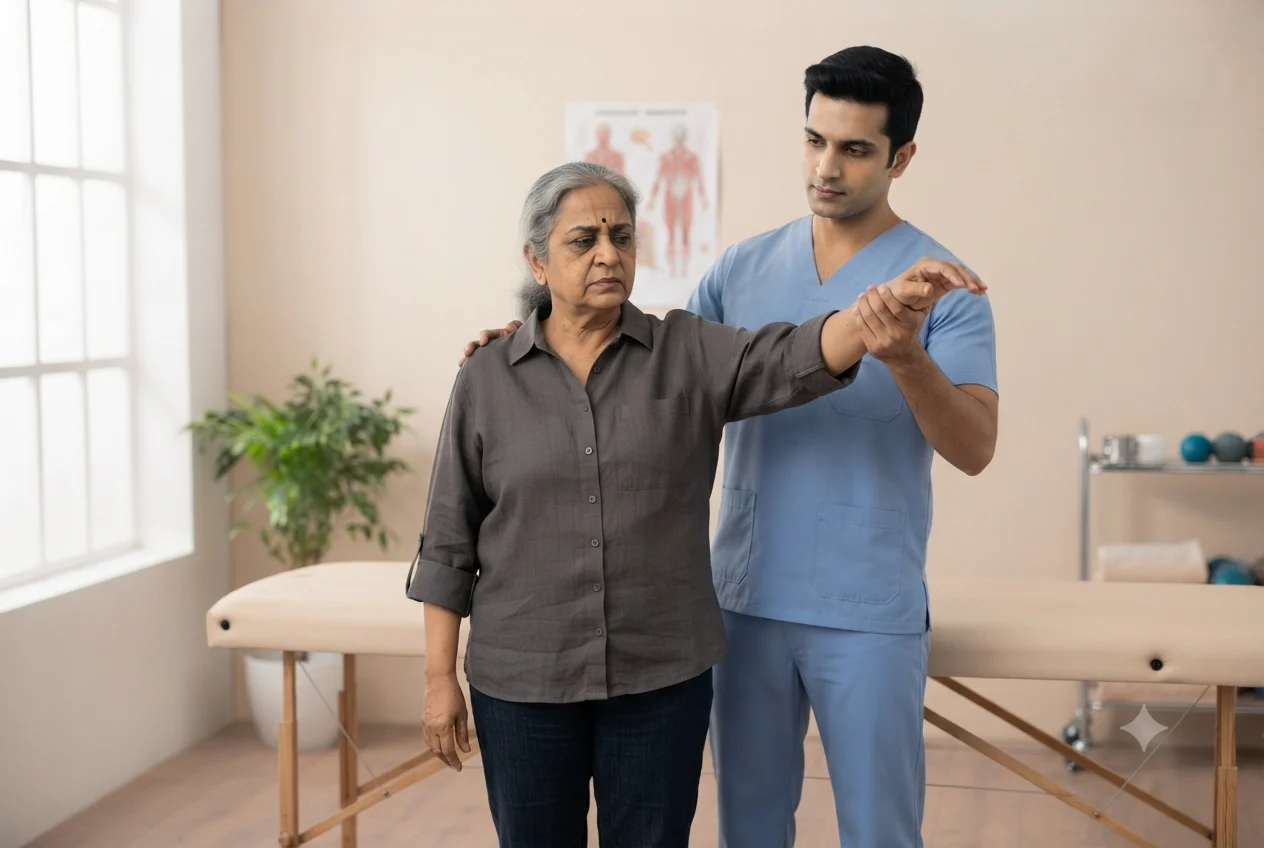
Stroke rehabilitation needs vary from person to person. A physiotherapist can assess movement, strength, balance, mobility and functional abilities before recommending an appropriate rehabilitation programme.
Stroke rehabilitation is a structured process that may help a person work on movement, balance, strength, coordination, walking and everyday functional abilities affected by stroke.
The rehabilitation programme is individualized. Your physiotherapist considers your current abilities, movement limitations, medical history and functional goals before deciding which exercises and rehabilitation techniques are appropriate.
Depending on the assessment, treatment may include therapeutic exercise, balance training, mobility work, gait training, transfer practice, functional activities and a home exercise programme.
Rehabilitation is planned according to the person's condition, abilities and functional requirements.
A physiotherapist assesses movement and function before recommending an appropriate rehabilitation plan.
Rehabilitation may focus on walking, transfers, balance and controlled functional movement.
Exercises and movement training can complement the rehabilitation plan when clinically appropriate.
The effects of stroke can vary considerably between individuals. Treatment suitability and rehabilitation priorities depend on the person's condition and clinical findings.
Reduced strength following stroke may affect movement, transfers and everyday physical activities.
Balance exercises may be incorporated to practice safe, controlled standing and movement.
Gait and mobility training may be included according to the person's walking ability and rehabilitation goals.
Rehabilitation may focus on practicing controlled, purposeful movements during functional activities.
Functional practice may include sit-to-stand and other transfers relevant to everyday movement.
Rehabilitation may focus on practical activities that support participation in everyday routines.
Stroke rehabilitation begins with an assessment of movement, strength, balance, mobility and functional abilities. The physiotherapist then identifies appropriate rehabilitation priorities.
Treatment may include active exercise, balance training, walking practice, mobility work, transfer training and functional activities according to the individual's needs.
Movement, strength, balance, mobility and relevant medical history are reviewed.
Practical rehabilitation goals are identified according to the person's current abilities and daily needs.
Exercises, balance work, mobility and functional movement activities are performed according to the plan.
Functional progress is reviewed and the rehabilitation plan may be adjusted when appropriate.
Stroke physiotherapy focuses on active rehabilitation and functional movement rather than passive treatment alone.
A stroke rehabilitation programme may combine different approaches according to the person's condition, including movement training, balance activities, mobility work, strengthening and functional practice.
Your programme may therefore include therapeutic exercises, gait training, transfer practice, functional activities, education and a home exercise plan where appropriate.
Stroke rehabilitation needs vary significantly between individuals. A physiotherapist should first understand the person's condition, current abilities and functional requirements before selecting appropriate treatment.
Stroke rehabilitation should take the person's diagnosis, symptoms, medications, medical history, mobility and current functional status into account. Rehabilitation may also need to be coordinated with the person's wider medical care.
If there are new, sudden or rapidly worsening neurological symptoms, severe weakness, difficulty speaking, changes in consciousness or another urgent concern, seek appropriate medical evaluation rather than relying on physiotherapy treatment alone.
A comprehensive rehabilitation plan may combine different physiotherapy approaches according to the person's condition and recovery goals.
Strength, mobility, flexibility and functional exercises tailored to the individual's abilities.
Appropriate balance activities may be used to practice controlled standing and movement.
Walking and movement activities may support mobility and everyday functional tasks when appropriate.
Practical exercises and self-management guidance for appropriate ongoing rehabilitation.
Calm n Cure Physiotherapy Center focuses on understanding the person's condition, movement limitations and functional goals before selecting rehabilitation techniques.
Book a physiotherapy assessment in Gurgaon. Our team can review your movement, mobility and rehabilitation requirements and explain the appropriate next step.
Book an AssessmentCommon questions about stroke physiotherapy, rehabilitation, sessions and continuing exercises at home.
Share your basic details and rehabilitation concern. The Calm n Cure clinic team can discuss your symptoms, assessment requirements and the next appropriate step.
Medical note: Stroke rehabilitation should be planned according to the individual's diagnosis, symptoms, medical history and functional abilities. Sudden or new neurological symptoms require prompt medical evaluation. Physiotherapy should be recommended and supervised by a qualified physiotherapist as appropriate. Individual treatment plans and outcomes vary.