Lordosis Treatment in Gurgaon
Get personalized physiotherapy care for lordosis-related posture, lower back discomfort, stiffness and movement concerns. At Calm n Cure Physiotherapy, treatment is planned after assessing your posture, movement, strength, flexibility and functional needs.
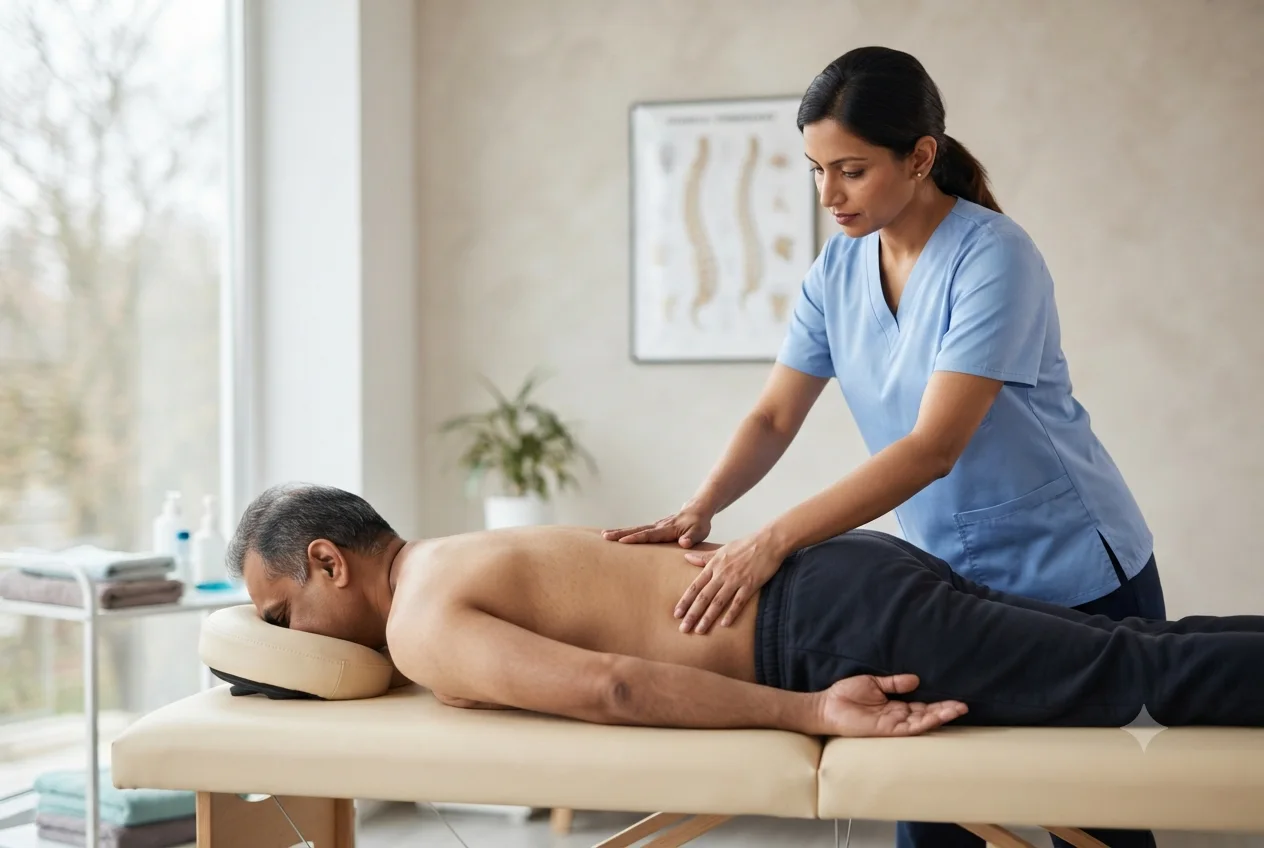
Understand your posture and movement
Physiotherapy assessment can help identify posture, mobility, strength and movement factors relevant to your symptoms.
Physiotherapy-based care for lordosis and posture-related concerns
Lordosis refers to an inward curvature of the spine. A certain degree of spinal curvature is normal, while an increased curvature may be associated with posture changes, discomfort or movement-related concerns in some individuals.
At Calm n Cure Physiotherapy, lordosis treatment in Gurgaon begins with an individual assessment of posture, spinal and pelvic movement, muscle strength, flexibility and functional limitations.
Based on your assessment, your physiotherapist can develop an appropriate exercise and rehabilitation plan focused on improving movement, physical function and symptom management.
Individual Assessment
Assessment of posture, movement, strength, flexibility and functional limitations.
Posture Assessment
Your posture and movement patterns are considered when planning appropriate rehabilitation.
Mobility Work
Appropriate mobility exercises may support comfortable movement of the spine, hips and surrounding areas.
Active Rehabilitation
A progressive exercise programme can support strength, movement control and functional capacity.
Lordosis-related concerns that may benefit from physiotherapy
Physiotherapy may be considered for selected posture and musculoskeletal concerns after an appropriate assessment.
Increased Lower Back Curve
An increased inward curve of the lower back may be associated with changes in posture and movement.
Posture-Related Discomfort
Certain postural patterns may be associated with discomfort during prolonged standing, sitting or everyday activities.
Sitting-Related Discomfort
Prolonged sitting or sustained positions can contribute to discomfort in some people with posture-related concerns.
Movement Difficulties
Changes in spinal, pelvic or hip movement may affect everyday activities and physical performance.
Core and Hip Weakness
Reduced strength or movement control around the trunk and hips may be relevant to an individual's rehabilitation plan.
Functional Rehabilitation
Structured physiotherapy may help address movement and physical function when clinically appropriate.
Factors that may be relevant to lordosis-related symptoms
Spinal curvature can vary between individuals and may have different underlying factors. A physiotherapy assessment helps identify the physical and functional factors relevant to your individual presentation.
Treatment should be based on your individual presentation
Lordosis does not look the same in every person. The presence of an increased spinal curve does not necessarily mean that treatment is required. Physiotherapy can focus on symptoms, movement limitations and functional concerns when appropriate.
Schedule an AssessmentHow lordosis physiotherapy works
Your treatment plan is developed around your posture, symptoms, movement limitations and rehabilitation goals.
Posture & Symptom Assessment
Your physiotherapist reviews your symptoms, posture, movement, strength, flexibility and functional limitations.
Treatment Planning
A suitable physiotherapy and rehabilitation plan is developed according to your individual assessment.
Physiotherapy Treatment
Appropriate exercises, mobility work and manual techniques may be included when clinically indicated.
Rehabilitation
Progressive exercises and home guidance can support ongoing movement and functional rehabilitation.
Treatment options for lordosis-related concerns
Depending on your assessment, your physiotherapist may use different approaches to address movement, strength, mobility and functional concerns.
Therapeutic Exercises
Exercises may be selected to improve strength, movement control and functional capacity.
Manual Therapy
Appropriate hands-on techniques may be used when indicated following clinical assessment.
Mobility Exercises
Mobility work may help support comfortable movement of the spine, hips and surrounding structures.
Home Exercise Plan
Appropriate exercises and activity guidance can help continue rehabilitation between appointments.
How physiotherapy may support lordosis-related concerns
A structured rehabilitation programme can focus on improving physical function, movement control and the ability to perform everyday activities comfortably.
Improve movement, strength and functional confidence
Rehabilitation can focus on more than posture alone. Depending on your assessment, treatment may also address strength, flexibility, movement control and functional activities.
Exercises can be progressed according to your individual response, tolerance and rehabilitation goals.
When physiotherapy for lordosis may be considered
When medical evaluation may be important
Severe or rapidly worsening back pain, significant trauma, new weakness or numbness, difficulty walking, loss of bladder or bowel control, unexplained weight loss, fever with significant symptoms or other concerning changes may require prompt medical assessment.
Physiotherapy is not a substitute for urgent medical care when serious symptoms are present.
A structured approach to lordosis management
Depending on your presentation, rehabilitation may combine different physiotherapy approaches to support movement, strength and physical function.
Strengthening
Progressive exercises may help improve trunk, hip and lower-limb strength where appropriate.
Manual Therapy
Hands-on techniques may be incorporated when clinically appropriate following assessment.
Movement Education
Guidance can help you understand suitable posture, movement and activity strategies.
Home Rehabilitation
Appropriate home exercises can support continued rehabilitation between appointments.
Personalized lordosis physiotherapy in Gurgaon
At Calm n Cure Physiotherapy, treatment is planned around your individual posture, symptoms, physical assessment and functional requirements.
Get assessed for your posture and movement concerns
Speak with the Calm n Cure Physiotherapy team about your lordosis-related symptoms and rehabilitation needs.
Book an AppointmentLordosis Treatment in Gurgaon FAQs
Find answers to common questions about lordosis, physiotherapy, posture and rehabilitation.
Ask About Your ConditionLooking for lordosis treatment in Gurgaon?
Contact Calm n Cure Physiotherapy to discuss your posture, lower back discomfort, movement limitations or rehabilitation requirements.
Request an Appointment
Share your details and our team can get in touch with you.
Medical note: Lordosis and spinal curvature can vary considerably between individuals, and an increased curve does not necessarily require treatment. New, severe or rapidly worsening symptoms, neurological changes or symptoms following significant trauma may require medical evaluation. Individual treatment plans and outcomes vary.