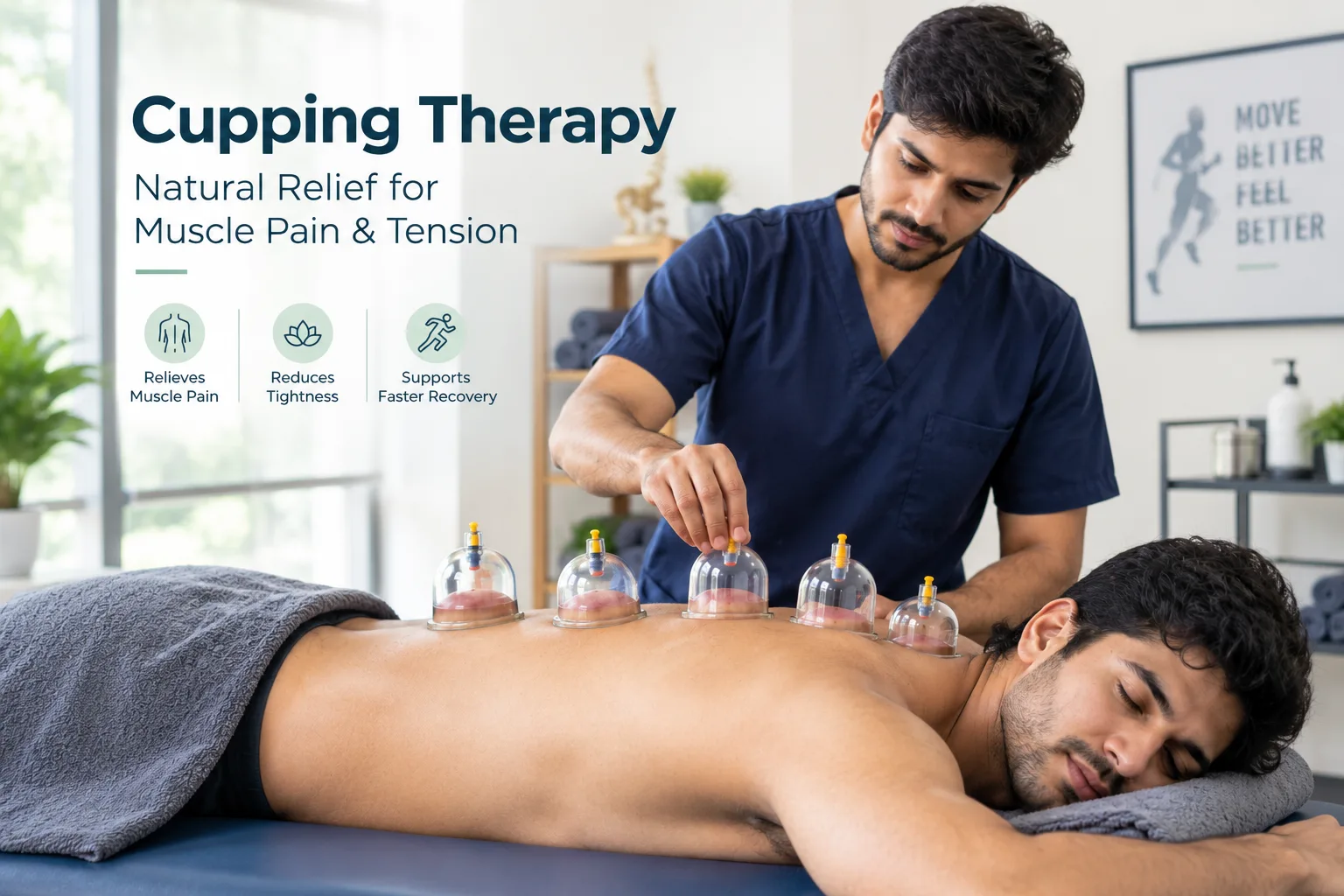
Cupping therapy is an increasingly popular complementary treatment used in physiotherapy and sports rehabilitation to help manage muscle tightness, stiffness and certain types of musculoskeletal pain. The technique involves placing specially designed cups on the skin and creating suction, which gently lifts the skin and underlying tissues. Depending on the technique used, cupping may be performed as a stationary treatment or combined with movement of the cups across the skin.
Although cupping therapy has roots in traditional medicine, it is now also used by some physiotherapists and sports professionals as part of a broader rehabilitation program. Research suggests that cupping may provide short-term pain relief in some conditions, although the overall quality of evidence remains limited and more high-quality research is needed.
What Is Cupping Therapy?
Cupping therapy is a technique in which cups are placed over selected areas of the body and suction is created inside the cup. The negative pressure gently pulls the skin upward rather than pressing down on the tissues.
Unlike massage, where pressure is generally applied into the muscles, cupping creates a lifting sensation. Physiotherapists may use this technique around areas of muscular tension or restricted soft-tissue mobility as one component of an individualized treatment plan.
There are several forms of cupping. Dry cupping uses suction without piercing the skin and is the form most relevant to physiotherapy. Wet cupping, sometimes referred to as hijama, involves piercing the skin and allowing a small amount of blood to enter the cup. Because wet cupping involves skin penetration and blood exposure, it has additional safety and infection-control considerations.
How Does Cupping Therapy Work?
During cupping therapy, the physiotherapist places cups over specific areas of the body and creates controlled suction. This produces a negative pressure that lifts the skin and superficial tissues.
The mechanical effect of suction can temporarily increase local blood flow and create a stretching or decompression effect on the superficial soft tissues. In clinical practice, cupping may therefore be used alongside other physiotherapy techniques to address areas of muscle tightness and discomfort.
It is important, however, not to overstate the mechanism. Claims that cupping “removes toxins,” cleanses the blood or directly eliminates the underlying cause of every type of pain are not well established by high-quality scientific evidence. Current evidence is stronger for possible short-term symptom relief than for broad claims about detoxification or systemic healing.
Cupping Therapy and Fascia
Fascia is a connective tissue network surrounding and connecting muscles and other structures throughout the body. When an area becomes painful or stiff, changes in muscle activity and movement can affect how the surrounding soft tissues feel and function.
Cupping creates a lifting force over the skin and superficial tissues. A physiotherapist may use this sensation as part of soft-tissue treatment, particularly when working around areas that feel restricted or tight.
Cupping should not be considered a standalone solution for every soft-tissue problem. Depending on the cause of the pain, effective physiotherapy may also include therapeutic exercises, mobility work, manual therapy, posture correction, strengthening and activity modification.
Types of Cupping Therapy
1. Dry Cupping
Dry cupping involves placing cups on the skin and creating suction without making any cuts or punctures.
It is commonly used in physiotherapy settings for areas of muscle tightness and musculoskeletal discomfort.
2. Moving Cupping
In moving cupping, a small amount of suitable lubricant is applied to the skin before the cup is moved across the treatment area.
This can be used over larger muscle groups and may produce a combination of suction and gliding sensations.
3. Flash Cupping
Flash cupping involves repeatedly applying and removing the cup over a particular area for short periods. The technique is intended to provide a brief stimulation of the tissues.
4. Wet Cupping
Wet cupping involves skin piercing followed by suction. Because it involves blood and breaks the skin, it requires appropriate sterile technique and infection-control precautions. It is different from the non-invasive dry cupping commonly used in physiotherapy.
Potential Benefits of Cupping Therapy
Cupping therapy is often used as a complementary technique rather than a replacement for conventional physiotherapy. Potential benefits may include:
1. May Help Reduce Muscle Pain
One of the most common reasons people seek cupping therapy is muscle pain. Some research suggests that cupping may help reduce pain intensity, particularly in certain musculoskeletal conditions, although the evidence is not strong enough to consider it a definitive treatment.
2. May Help With Muscle Tightness
People experiencing tight or overworked muscles may find cupping useful as part of a broader treatment program. The lifting sensation created by suction can provide a different form of soft-tissue stimulation compared with massage or manual pressure.
3. May Support Short-Term Relief From Back Pain
Cupping has been studied for low-back pain. NCCIH notes that a review of six studies involving 458 participants found better results with cupping than usual care or medication, but also emphasized uncertainty because the studies differed in their methods and some were of poor quality.
Therefore, cupping may be considered a complementary option for selected patients rather than a guaranteed treatment for chronic back pain.
4. May Help With Neck and Shoulder Discomfort
Neck and shoulder muscles can become tight due to prolonged sitting, poor ergonomics, repetitive activities, stress or physical overuse.
A physiotherapist may use cupping around selected soft tissues as part of a treatment plan designed to improve comfort and movement. The overall program may also include posture correction, stretching and strengthening exercises.
5. May Complement Sports Rehabilitation
Athletes frequently experience muscle soreness, tightness and overuse-related discomfort. Cupping may be incorporated into sports physiotherapy when clinically appropriate.
However, it should not replace proper assessment and rehabilitation following an injury. Conditions such as ligament injuries, significant muscle tears or fractures require appropriate diagnosis and structured rehabilitation.
6. May Promote Relaxation
The sensation of cupping can be relaxing for some individuals. When incorporated into a broader physiotherapy session, it may contribute to a feeling of reduced muscle tension.
The response is individual, and cupping should not be presented as a proven treatment for stress, anxiety or unrelated systemic conditions.
Conditions Where Cupping May Be Considered
A physiotherapist may consider cupping as part of an individualized treatment program for certain musculoskeletal complaints, including:
- Muscle tightness and stiffness
- Neck and shoulder discomfort
- Lower back pain
- Upper back pain
- Certain sports-related muscle problems
- Soft-tissue discomfort
- General muscular soreness
- Selected chronic musculoskeletal pain conditions
Whether cupping is appropriate depends on the cause, severity and duration of the symptoms. A proper physiotherapy assessment should be performed before treatment.
What Happens During a Cupping Therapy Session?
A typical dry cupping session may involve several steps.
Step 1: Assessment
The physiotherapist first discusses your symptoms, medical history, activity levels and treatment goals. The affected area may also be assessed for movement, tenderness, muscle tightness and functional limitations.
Step 2: Selection of Treatment Area
The therapist identifies the appropriate soft-tissue areas for treatment. Cups are not simply placed wherever pain is felt; their placement should be based on the clinical assessment.
Step 3: Application of Cups
The cups are positioned on the skin and suction is created using appropriate equipment. The intensity and duration can be adjusted according to the individual’s condition and tolerance.
Step 4: Monitoring
During treatment, the physiotherapist monitors the patient’s comfort and the skin’s response. Cupping should not be excessively painful.
Step 5: Removal and Aftercare
The cups are carefully removed after the appropriate duration. The treated area may show temporary circular marks.
Why Does Cupping Leave Red or Purple Marks?
The circular marks associated with cupping are one of its most recognizable features.
These marks occur because suction pulls the skin and superficial tissues upward and can cause temporary changes in local blood flow and small blood-vessel leakage under the skin. They can resemble bruises.
The marks are generally temporary, but their appearance and duration can vary between individuals. Patients should tell their healthcare providers about recent cupping if unusual circular marks are present so that they are not mistaken for another type of injury.
Is Cupping Therapy Painful?
Dry cupping usually creates a pulling, stretching or tight sensation. Some people experience mild discomfort, while others find the treatment relaxing.
Cupping should not be performed with unnecessarily aggressive suction. A trained physiotherapist can adjust the intensity according to the individual’s tolerance, skin condition and treatment requirements.
If the treatment becomes significantly painful, the patient should inform the therapist immediately.
Cupping Therapy vs Massage
Cupping and massage are not the same treatment.
Massage generally involves applying pressure and movement directly to muscles and other soft tissues. Cupping uses negative pressure to lift the skin and superficial tissues.
Depending on the patient’s condition, a physiotherapist may use either technique or incorporate multiple treatment approaches into the same rehabilitation plan.
The objective should always be to address the patient’s functional problem rather than simply provide a particular therapy because it is popular.
Is Cupping Therapy Safe?
Dry cupping is generally considered relatively low risk when performed appropriately by a trained professional. Temporary skin discoloration or bruising is common.
However, possible adverse effects can include persistent discoloration, burns, scars or infections. Wet cupping carries additional risks because the skin is pierced and blood is involved. Improperly sterilized equipment can potentially transmit bloodborne infections.
For this reason, professional assessment, appropriate hygiene and proper equipment are important.
Who Should Avoid or Seek Medical Advice Before Cupping?
Cupping may not be appropriate for everyone. Individuals with certain skin conditions, open wounds or infections should avoid treatment over affected areas.
People taking blood-thinning medication, people with bleeding disorders, and those with certain medical conditions should discuss cupping with their healthcare provider before treatment.
Pregnant individuals should also seek professional medical advice before receiving cupping, particularly when considering treatment around the abdomen or lower back.
A physiotherapist should review relevant medical history before starting treatment.
Cupping Therapy as Part of Physiotherapy
Cupping is best viewed as one tool within a comprehensive physiotherapy program, rather than a cure-all treatment.
For example, someone with chronic back pain may require a combination of education, posture modification, mobility exercises, core strengthening, manual therapy and gradual return to normal activity. Cupping may be incorporated when the physiotherapist believes it could help with symptoms or soft-tissue discomfort.
This integrated approach is important because pain can have multiple contributing factors. Treating the symptom alone may not address the movement, strength, posture or activity-related factors contributing to the problem.
What Does the Evidence Say About Cupping Therapy?
Scientific evidence regarding cupping is still developing. According to the U.S. National Center for Complementary and Integrative Health (NCCIH), some studies indicate that cupping may help reduce pain, but much of the existing research is considered low quality. There is currently insufficient high-quality evidence to draw firm conclusions about cupping for many other health conditions.
This means cupping can be considered a complementary technique for selected patients, but claims that it can treat a wide range of diseases or “detoxify” the body should be approached cautiously.
A professional physiotherapy assessment remains important when deciding whether cupping is suitable.
Conclusion
Cupping therapy is a traditional technique that has found a place in some modern physiotherapy and sports-rehabilitation settings. By creating controlled suction on the skin, it provides a distinctive form of soft-tissue stimulation and may offer short-term relief for certain types of musculoskeletal pain.
It may be particularly useful when integrated with evidence-informed physiotherapy techniques such as therapeutic exercise, mobility training, manual therapy, posture correction and rehabilitation.
However, cupping is not a replacement for proper diagnosis or comprehensive physiotherapy. The available scientific evidence suggests potential benefits for pain, but important uncertainties remain.
If you are experiencing persistent muscle pain, stiffness, back pain, neck pain or a sports-related problem, consult a qualified physiotherapist at our Physiotherapy Center to determine the underlying cause and whether cupping therapy is appropriate for your condition. Contact our expert physiotherapist in Gurgaon to assist you.
Frequently Asked Questions About Cupping Therapy
1. What is cupping therapy used for?
Cupping therapy is commonly used as a complementary technique for certain types of muscle pain, stiffness and musculoskeletal discomfort. It may be incorporated into physiotherapy for conditions such as back, neck and shoulder discomfort and selected sports-related problems. Evidence suggests possible short-term pain relief, but research quality varies.
2. How long do cupping marks last?
Cupping can leave temporary circular red, purple or darker marks on the skin. Their duration varies from person to person. They generally fade naturally, although persistent discoloration can occasionally occur.
3. Is cupping therapy painful?
Most people experience a pulling or tight sensation rather than severe pain during dry cupping. The intensity can be adjusted by the physiotherapist. If you experience significant pain or discomfort, inform your therapist immediately.
4. Can cupping therapy be used for back pain?
Cupping has been studied as a complementary treatment for low-back pain. Some research suggests potential benefits, but the evidence is not strong enough to say that cupping will work for everyone. It is generally more appropriate when combined with an individualized physiotherapy and rehabilitation plan.
5. Is cupping therapy safe?
Dry cupping is generally considered relatively safe when performed appropriately by a trained professional. Temporary marks are common, while burns, infections, scars and prolonged discoloration are possible complications. Wet cupping has additional risks because it involves breaking the skin and exposure to blood. People with certain medical conditions, bleeding problems, skin infections or those taking blood-thinning medication should seek professional advice before treatment.