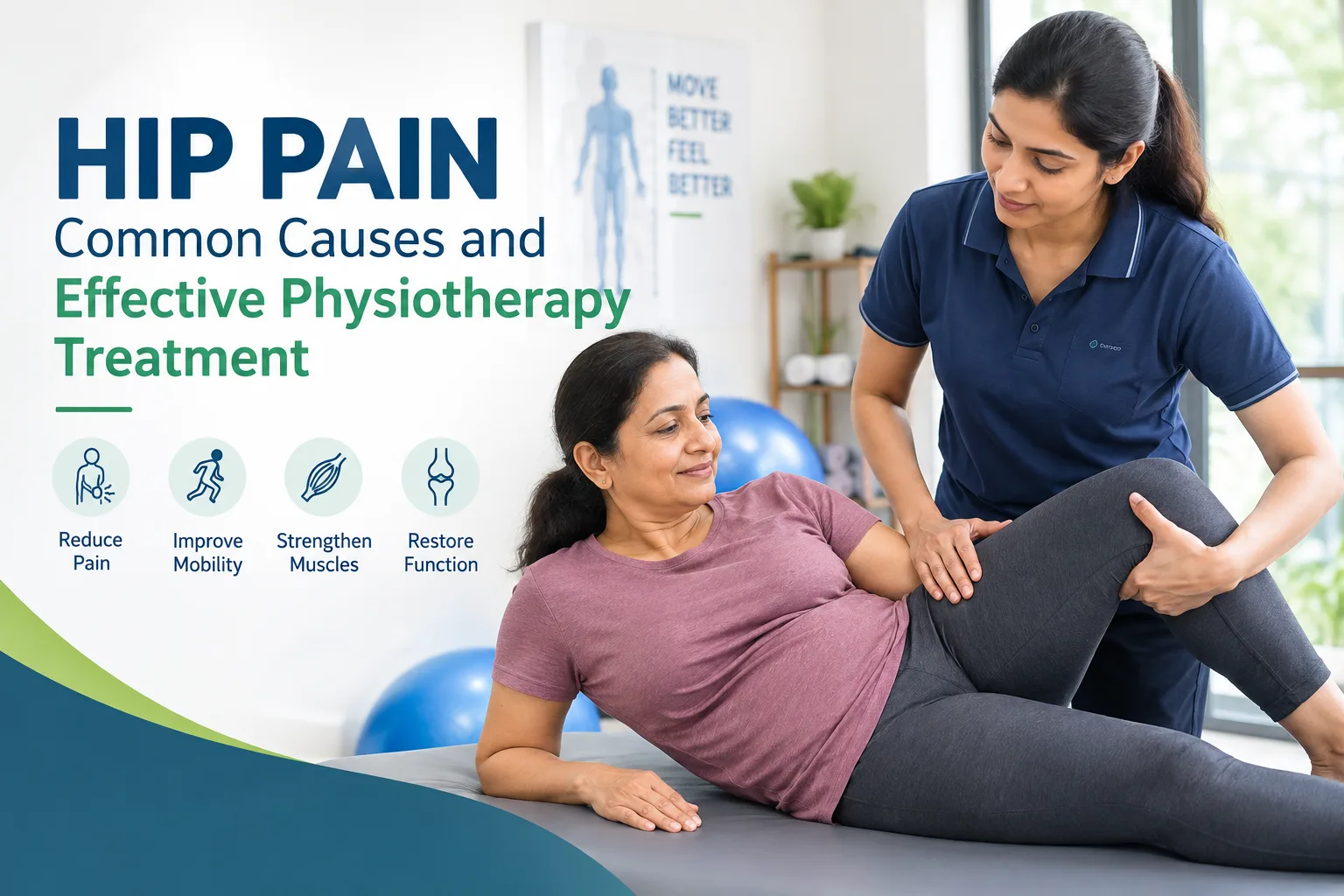
Hip pain is a common musculoskeletal problem that can affect people of all ages, from young adults and athletes to middle-aged and older individuals. The pain may develop gradually due to poor posture, repetitive movements, muscle weakness, or age-related joint changes. In other cases, it can occur suddenly following an injury, fall, or excessive physical activity.
The hip joint plays a vital role in everyday movements, including walking, standing, climbing stairs, sitting, bending, and maintaining balance. When hip pain develops, even simple activities can become uncomfortable and challenging. Persistent discomfort may also affect sleep, mobility, exercise routines, and overall quality of life.
Understanding the common causes of hip pain is the first step towards effective treatment. Physiotherapy can play an important role in managing many hip-related conditions by reducing pain, improving flexibility, strengthening supporting muscles, and restoring functional movement.
Our individualised treatment approach can help address the underlying factors contributing to hip pain and support a safe, progressive return to daily activities.
This article explores the common causes, symptoms, diagnosis, physiotherapy treatment options, and preventive strategies for hip pain.
What Is Hip Pain?
Hip pain refers to discomfort felt in or around the hip joint and its surrounding structures. The hip is a ball-and-socket joint formed by the head of the femur (thigh bone) and the acetabulum (socket of the pelvis). This structure provides stability while allowing a wide range of movement.
The hip joint is supported by cartilage, ligaments, tendons, muscles, and fluid-filled bursae that help minimise friction during movement. Problems affecting any of these structures can result in pain, stiffness, weakness, or restricted mobility.
According to the health information provided by the Cleveland Clinic, hip pain can arise from several causes, including injuries, arthritis, inflammation, and problems involving nearby structures. Pain may be felt directly over the hip, in the groin, on the outer side of the hip, or around the buttock.
It is also important to understand that not all pain felt around the hip originates in the hip joint itself. Conditions affecting the lower back, pelvis, or surrounding nerves may cause referred pain in the hip region.
Common Symptoms of Hip Pain
The symptoms of hip pain vary depending on the underlying cause, the structures involved, and the severity of the condition.
Common symptoms include:
- Pain in the groin, outer hip, buttock, or upper thigh.
- Stiffness in the hip joint, particularly after waking up or sitting for long periods.
- Difficulty walking, standing for extended periods, or climbing stairs.
- Pain when bending, squatting, or rotating the leg.
- Reduced flexibility or range of motion.
- Muscle weakness around the hip and pelvis.
- Discomfort when lying on the affected side.
- Limping or difficulty bearing weight on the affected leg.
- Pain that increases during physical activity or after prolonged inactivity.
Some people experience a dull ache, while others report sharp, burning, or shooting pain. Symptoms that persist, worsen, or interfere with normal activities should be evaluated by a qualified healthcare professional.
Common Causes of Hip Pain
Identifying the underlying cause of hip pain is essential for selecting the right treatment. The discomfort may result from joint degeneration, muscle or tendon injuries, inflammation, structural abnormalities, or referred pain from other parts of the body.
1. Osteoarthritis of the Hip
Hip osteoarthritis is a degenerative joint condition in which the protective cartilage gradually wears down. As the cartilage becomes thinner, movement may become uncomfortable, and stiffness can develop.
This condition is more common with increasing age, although previous injuries, joint abnormalities, and other factors can also contribute.
Common symptoms include:
- Pain in the groin, thigh, or hip region.
- Stiffness after waking up or sitting for a long time.
- Difficulty walking, squatting, or climbing stairs.
- Reduced hip flexibility and range of motion.
Physiotherapy can help manage hip osteoarthritis by strengthening the muscles around the joint, improving mobility, and supporting daily function. Although exercise cannot restore lost cartilage, an appropriate rehabilitation programme may reduce symptoms and improve quality of life.
2. Hip Bursitis
Bursae are small, fluid-filled sacs that cushion bones and soft tissues, helping reduce friction during movement. When a bursa around the hip becomes irritated, it can cause pain and tenderness.
Greater trochanteric pain syndrome is a common cause of pain on the outer side of the hip. It may involve irritation of the bursa and problems affecting nearby gluteal tendons.
Common symptoms include:
- Pain on the outer side of the hip.
- Discomfort when lying on the affected side.
- Pain when climbing stairs or standing after sitting.
- Tenderness around the bony prominence on the side of the hip.
Physiotherapy may include activity modification, progressive strengthening of the hip muscles, and guidance on reducing pressure over the painful area.
3. Muscle Strains and Tendon Injuries
Muscle strains occur when muscle fibres are overstretched or torn. Hip flexor strains, hamstring injuries, and strains involving the adductor muscles can all cause pain around the hip and upper thigh.
These injuries are commonly associated with running, jumping, sudden changes of direction, sports, or strenuous exercise without adequate preparation.
Tendon problems can also develop when the tissues connecting muscles to bones are repeatedly overloaded.
Common symptoms include:
- Pain during movement or muscle contraction.
- Tenderness around the affected muscle or tendon.
- Reduced strength and flexibility.
- Discomfort during running, lifting the leg, or changing direction.
Treatment generally focuses on managing the initial symptoms and gradually restoring strength, flexibility, and tolerance to activity.
4. Hip Labral Tears
The hip labrum is a ring of cartilage surrounding the hip socket. It helps deepen the socket, support joint stability, and maintain smooth movement.
A labral tear may occur following an injury, repetitive twisting movements, or structural problems such as femoroacetabular impingement.
Symptoms may include:
- Deep pain in the groin or hip.
- Clicking, catching, or locking sensations.
- Discomfort during prolonged sitting.
- Pain when rotating or bending the hip.
Physiotherapy may improve muscle strength, movement control, and joint stability. However, treatment depends on the extent of the injury, and some cases require specialist assessment and additional interventions.
5. Femoroacetabular Impingement (FAI)
Femoroacetabular impingement occurs when the shape of the hip bones causes abnormal contact during certain movements. This can irritate the joint structures, particularly during deep hip flexion or rotation.
It may affect physically active individuals and people who regularly perform activities involving repeated deep squats, twisting, or high hip flexion.
Symptoms commonly include groin pain, stiffness, and discomfort during specific movements.
Physiotherapy can help modify aggravating activities, improve strength and movement control, and maintain comfortable mobility. Exercises should be selected according to the individual’s symptoms rather than forcing the hip into painful positions.
6. Hip Fractures and Dislocations
Hip fractures and dislocations are serious injuries that may result from falls, road accidents, sports injuries, or significant trauma. Older adults, particularly those with reduced bone density, may also sustain fractures after relatively minor falls.
Symptoms can include sudden severe pain, swelling, difficulty moving the leg, and inability to bear weight.
Suspected hip fractures or dislocations require urgent medical attention. Physiotherapy should begin only when the treating medical team confirms that rehabilitation is safe. The rehabilitation programme may then focus on restoring mobility, strength, balance, and independence.
7. Tendinopathy and Overuse Injuries
Repetitive movements can place excessive stress on the tendons around the hip. This may lead to tendinopathy, particularly in people who run frequently, participate in sports, or suddenly increase their exercise intensity.
Gluteal tendinopathy, for example, often causes pain on the outer side of the hip, particularly during walking, stair climbing, or lying on the affected side.
Physiotherapy treatment usually involves adjusting activity levels and progressively strengthening the affected muscles and tendons.
8. Referred Pain from the Lower Back
Not all hip-region pain originates in the hip joint. Conditions affecting the lumbar spine, intervertebral discs, or nearby nerves may cause pain that spreads towards the buttocks, hip, or thigh.
Nerve irritation may also cause tingling, numbness, burning sensations, or pain that travels down the leg.
A physiotherapist can assess the hip and lower back to determine whether symptoms are more consistent with a local hip problem or referred pain. Treatment then targets the underlying source rather than focusing exclusively on the area where pain is felt.
9. Other Medical Conditions
Less commonly, hip pain may be associated with inflammatory arthritis, infection, reduced blood supply to bone (avascular necrosis), or other medical conditions.
Persistent pain at rest, unexplained night pain, fever, or symptoms accompanied by feeling generally unwell warrant medical evaluation. These problems should not be assumed to be routine muscular pain.
How Is Hip Pain Diagnosed?
An accurate assessment helps determine which structures may be responsible for the pain and whether physiotherapy is appropriate.
A healthcare professional may assess the following:
1. Medical history: The assessment includes when the pain began, its location, previous injuries, physical activity, and movements that worsen or relieve symptoms.
2. Physical examination: The professional may evaluate hip range of motion, muscle strength, flexibility, tenderness, balance, and walking patterns.
3. Functional assessment: Activities such as walking, standing from a chair, and climbing stairs may be assessed to understand how the pain affects everyday life.
4. Further investigations: Depending on the findings, a doctor may recommend an X-ray, MRI, or other investigations to assess suspected fractures, joint changes, soft-tissue injuries, or other conditions.
Physiotherapy assessment can help guide rehabilitation, but it does not replace medical investigation when symptoms suggest a serious underlying condition.
Effective Physiotherapy Treatment for Hip Pain
Physiotherapy is an important treatment option for many causes of hip pain. A structured rehabilitation programme aims to reduce discomfort, improve joint mobility, strengthen supporting muscles, and restore the ability to perform daily activities. To know more book appointment with us.
Treatment should be individualised according to the diagnosis, severity of symptoms, physical capacity, and recovery goals.
1. Therapeutic Exercises
Exercise therapy is a central component of hip pain rehabilitation. Appropriate Therapeutic Exercises help improve muscle strength, joint mobility, endurance, and movement control.
Depending on the condition, a physiotherapist may prescribe:
- Gluteal strengthening: Exercises that target the muscles supporting the pelvis and hip.
- Hip abductor exercises: Movements that strengthen the muscles on the outer side of the hip and improve pelvic stability.
- Hip bridges: Exercises that activate the gluteal muscles and support hip extension.
- Gentle range-of-motion exercises: Controlled movements that help maintain comfortable joint mobility.
- Functional strengthening: Progressions such as sit-to-stand exercises, step-ups, and modified squats when appropriate.
Exercises must be adapted to the person’s symptoms and physical capacity. Not every exercise is suitable for every hip condition, and painful movements should not be forced.
2. Manual Therapy
Manual therapy involves hands-on techniques performed by a trained physiotherapist to address selected movement restrictions and soft-tissue symptoms.
Depending on the assessment, treatment may include gentle joint mobilisation, soft-tissue techniques, or assisted stretching.
Manual therapy may help improve short-term comfort and movement in some patients. It is generally most useful when combined with an appropriate exercise programme rather than used as the only treatment.
3. Stretching and Flexibility Training
Tightness in the hip flexors, hamstrings, or other surrounding muscles may contribute to movement limitations in some individuals.
A physiotherapist may recommend gentle stretching to improve flexibility and comfort where appropriate.
Stretching should be performed gradually and without forcing the joint into painful positions. People with hip impingement, acute injuries, or significant joint irritation may need to avoid certain stretches.
4. Pain-Relief Modalities
Depending on the clinical assessment, a physiotherapist may use selected modalities to help manage symptoms.
These can include:
- Heat therapy: May help relieve stiffness and relax surrounding muscles in suitable cases.
- Cold therapy: May help manage short-term discomfort following certain acute injuries.
- TENS: Transcutaneous electrical nerve stimulation may provide temporary pain relief for some people.
- Other electrotherapy modalities: May be considered as an adjunct when clinically appropriate.
These approaches are not suitable for every condition and should not replace diagnosis, progressive exercise, or other necessary medical treatment. Their benefits vary depending on the individual and the modality used.
5. Gait Training and Movement Correction
Hip pain can alter the way a person walks, stands, or distributes weight between the legs. These changes may increase discomfort and make daily activities more difficult.
Gait training helps improve walking mechanics, balance, and movement confidence.
A physiotherapist may also provide guidance on getting up from a chair, climbing stairs, lifting objects, and performing everyday tasks with less unnecessary strain. Temporary use of a walking aid may be appropriate when recommended by a healthcare professional.
6. Activity Modification and Load Management
Resting completely for prolonged periods can lead to muscle weakness and reduced physical capacity. However, continuing activities that repeatedly aggravate the hip can also delay recovery.
A balanced approach involves temporarily modifying activities that cause excessive discomfort while maintaining safe, tolerable movement.
For example, a runner may need to reduce running distance and temporarily switch to a lower-impact activity. Someone with outer hip pain may benefit from avoiding prolonged pressure on the affected side.
Activity should be increased gradually as symptoms and functional capacity improve.
7. Posture and Lifestyle Education
Physiotherapy also involves helping patients understand how their daily habits may influence hip symptoms.
Practical recommendations may include:
- Taking regular movement breaks during prolonged sitting.
- Avoiding repeated movements that consistently trigger pain.
- Gradually increasing exercise intensity.
- Maintaining an appropriate level of physical activity.
- Following an individualised home exercise programme.
- Using suitable footwear and assistive devices when needed.
Education supports long-term self-management and helps people maintain the improvements achieved during rehabilitation.
What Are the Benefits of Physiotherapy for Hip Pain?
When appropriately prescribed, physiotherapy may provide several benefits:
- Pain management: Helps reduce discomfort through exercise, education, and selected supportive treatments.
- Improved flexibility: Supports comfortable movement and reduces restrictions associated with stiffness.
- Increased muscle strength: Improves the capacity of the muscles supporting the hip and pelvis.
- Better balance and stability: Helps improve movement control during walking and everyday activities.
- Improved functional mobility: Supports activities such as standing, walking, and climbing stairs.
- Reduced risk of recurrence: Helps address contributing factors, including muscle weakness, inappropriate training loads, and movement difficulties.
- Greater independence: Supports a gradual return to work, recreation, and daily routines.
Recovery varies according to the underlying cause, the severity of the condition, general health, and adherence to the treatment plan. Some mild problems improve within weeks, while chronic conditions or significant injuries may require longer-term management.
Simple Tips to Prevent Hip Pain
Although not all hip problems can be prevented, certain habits can help reduce the risk of avoidable injuries and overuse.
Warm up before exercise. Begin physical activity with gentle movements and gradually increase intensity.
Strengthen the hip muscles. Regular, appropriate strengthening exercises can improve joint support and movement control.
Increase activity gradually. Avoid sudden increases in workout intensity, running distance, or training frequency.
Maintain movement throughout the day. Break up prolonged sitting with comfortable movement whenever possible.
Use proper exercise technique. Seek professional guidance if a particular movement repeatedly causes discomfort.
Allow adequate recovery. Rest and adjust training when pain or unusual fatigue develops.
Pay attention to persistent symptoms. Do not repeatedly push through pain that worsens during or after activity.
When Should You Seek Medical Attention for Hip Pain?
Not every episode of hip pain requires emergency treatment, but certain symptoms should never be ignored.
Seek urgent medical attention if you experience:
- Sudden, severe hip pain following a fall or injury.
- Inability to stand, walk, or bear weight on the affected leg.
- A visibly deformed hip or suspected fracture or dislocation.
- A hot, swollen hip accompanied by fever or feeling seriously unwell.
Arrange a medical assessment if the pain persists for several days without improvement, repeatedly returns, disrupts sleep, limits everyday activities, or progressively worsens. New numbness or weakness also requires appropriate assessment.
Early evaluation can help identify the cause and determine whether physiotherapy, medical treatment, imaging, or specialist referral is needed.
Conclusion
Hip pain can arise from several conditions, including osteoarthritis, bursitis, muscle strains, tendon injuries, structural abnormalities, and problems affecting the lower back. Since these conditions can produce similar symptoms, identifying the underlying cause is essential for effective treatment.
Physiotherapy can play a valuable role in managing many forms of hip pain through therapeutic exercises, mobility training, strengthening, activity modification, and patient education. A personalised rehabilitation programme can help improve movement, restore functional capacity, and support a return to everyday activities.
Our individualised approach to hip pain management can help patients work towards improved mobility and a better quality of life. If hip pain is affecting your daily routine, seek a professional assessment to understand its cause and explore appropriate treatment options.
Frequently Asked Questions (FAQs)
1. What are the most common causes of hip pain?
The most common causes include osteoarthritis, bursitis, muscle strains, tendon injuries, overuse, and structural problems such as femoroacetabular impingement. Hip pain can also originate from the lower back or surrounding nerves. The appropriate treatment depends on the underlying cause.
2. Can physiotherapy help relieve hip pain?
Yes. Physiotherapy can help manage many causes of hip pain through individualised strengthening exercises, mobility training, activity modification, movement education, and selected pain-relief techniques. The treatment approach depends on the diagnosis and the person’s physical capacity.
3. Which exercises are best for hip pain?
The most appropriate exercises depend on the cause and severity of the pain. Depending on the condition, a physiotherapist may recommend hip bridges, gluteal strengthening, gentle mobility exercises, or functional exercises such as sit-to-stand movements. Exercises that worsen symptoms should be modified or avoided until assessed.
4. How long does physiotherapy take to improve hip pain?
The recovery period varies. Mild muscle strains may improve over several weeks, while osteoarthritis, persistent tendon problems, and significant injuries may require longer rehabilitation. Progress depends on the underlying condition, symptom severity, treatment consistency, and individual recovery.
5. When should I consult a physiotherapist for hip pain?
Consider consulting a physiotherapist when hip pain persists, limits walking or other daily activities, reduces flexibility, or repeatedly returns during exercise. Seek urgent medical care for severe pain after an injury, inability to bear weight, or a hot and swollen hip accompanied by fever.