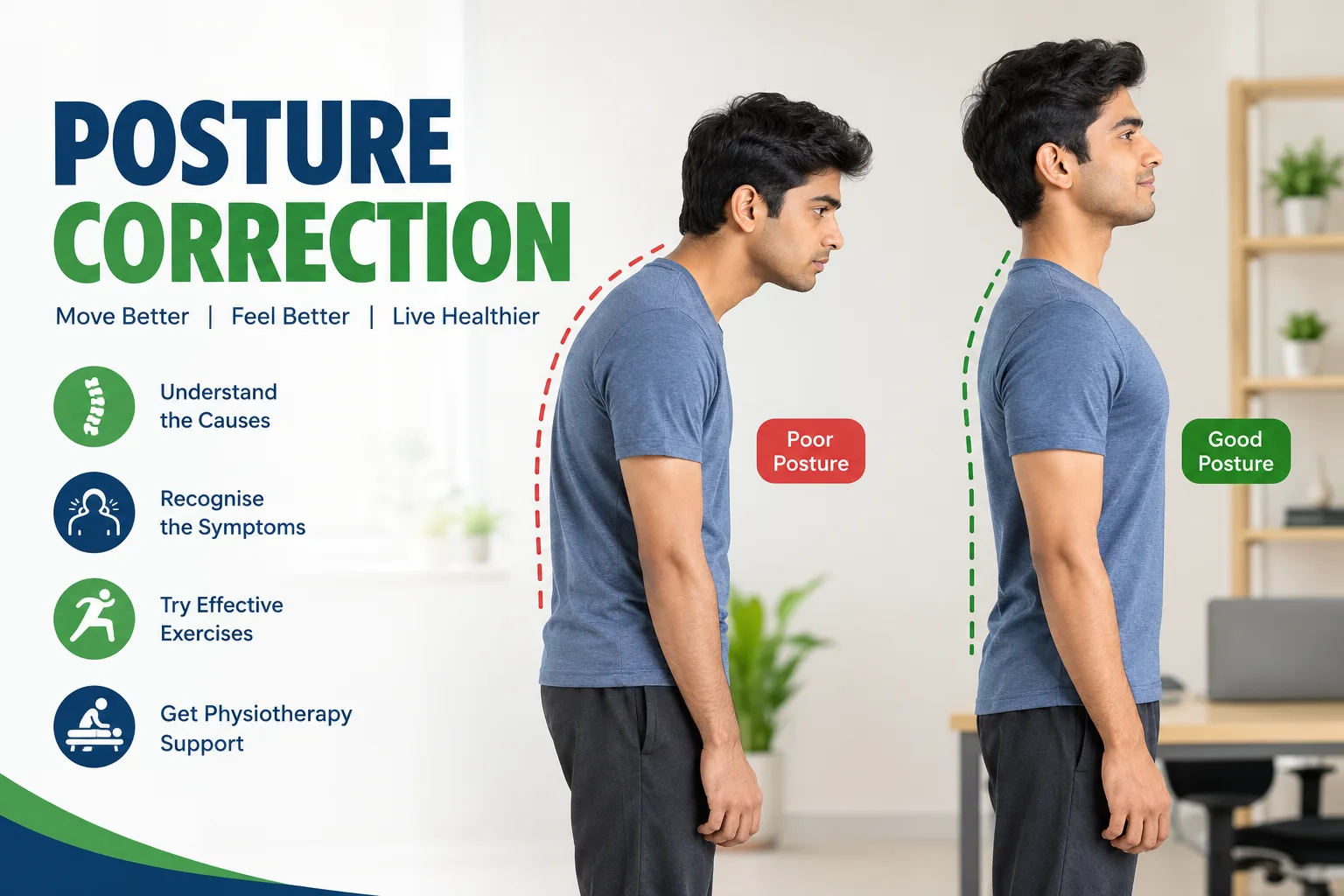
Good posture is an important part of maintaining a healthy spine, balanced movement, and comfortable everyday life. Whether you are sitting at a desk, standing, walking, exercising, or sleeping, the way you position your body can influence how your muscles and joints function.
In today’s lifestyle, prolonged sitting, excessive screen time, smartphone use, poor workstation ergonomics, lack of physical activity, and repetitive movements have made poor posture increasingly common. What may initially seem like a simple habit can gradually contribute to neck pain, shoulder stiffness, back pain, headaches, muscle fatigue, and restricted movement.
The good news is that posture correction does not necessarily mean forcing your body into a rigid “straight” position. Effective posture management involves improving body awareness, strengthening weak muscles, stretching tight muscles, improving mobility, and making practical changes to everyday activities.
What Is Posture?
Posture refers to the way you hold and position your body while sitting, standing, lying down, or moving.
There are two broad types of posture:
- Static posture: How you position your body while sitting, standing, or sleeping.
- Dynamic posture: How you maintain body alignment while walking, bending, lifting, exercising, or performing other movements.
A healthy posture allows the body to remain balanced while distributing stress efficiently across the muscles, joints, ligaments, and spine. The spine naturally has curves in the cervical, thoracic, and lumbar regions. These curves help the body absorb loads and maintain balance.
Poor posture can alter normal movement patterns and place additional stress on certain muscles and joints. However, posture is only one factor contributing to pain; prolonged static positions, muscle weakness, previous injuries, activity levels, and other physical factors can also play important roles. At our Posture Correction Therapy in Gurgaon, we have the expertise to treat bad postures through various techniques.
What Causes Poor Posture?
Poor posture usually develops gradually rather than from a single event. Several lifestyle and physical factors can contribute to postural problems.
1. Prolonged Sitting
Sitting for several hours without changing position can encourage slouching, rounded shoulders, and forward head positioning. Office workers, students, and people working from home may spend a large part of their day in the same position.
Over time, prolonged static positioning can contribute to muscle stiffness and discomfort.
2. Excessive Smartphone and Screen Use
Looking down at a phone for long periods can encourage a forward head position, commonly referred to as “text neck.” Repeatedly maintaining this position may increase stress on the muscles around the neck and upper back.
Laptops and computer screens positioned too low can create a similar problem.
3. Incorrect Workstation Ergonomics
A desk that is too high or too low, an improperly positioned monitor, inadequate back support, or a chair that does not suit the user can encourage unhealthy working positions.
An ergonomic workstation should allow the person to work comfortably while maintaining a relatively neutral and supported position.
4. Weak Core Muscles
The muscles of the abdomen, back, pelvis, and hips contribute to spinal stability. If these muscles are weak or poorly coordinated, maintaining an efficient posture can become more difficult.
Core strengthening is therefore often included as part of a comprehensive posture correction programme.
5. Tight Muscles
Tightness in areas such as the chest, hip flexors, hamstrings, or upper back can affect movement and alignment. For example, tight chest muscles may contribute to rounded shoulders, while restricted hip mobility can influence how the pelvis and lower back move.
6. Lack of Physical Activity
A sedentary lifestyle can reduce muscle strength, joint mobility, and general physical conditioning. Regular movement is important for maintaining musculoskeletal health.
7. Poor Body Mechanics
Repeatedly bending, lifting, carrying bags on one side, standing with most of your weight on one leg, or working in awkward positions can contribute to muscular imbalance and movement dysfunction.
Common Signs and Symptoms of Poor Posture
Poor posture does not always cause symptoms immediately. Some people may notice visible changes first, while others experience discomfort after prolonged sitting or standing.
Common signs include:
- Neck pain or stiffness
- Shoulder pain or tightness
- Rounded shoulders
- Forward head posture
- Upper back discomfort
- Lower back pain
- Muscle fatigue
- Reduced flexibility
- Headaches associated with neck tension
- Difficulty maintaining a comfortable sitting position
- Uneven weight distribution while standing
- Reduced range of movement
- Discomfort after prolonged computer or mobile use
Persistent symptoms should not automatically be attributed to posture. Neck or back pain can have several causes, so a proper assessment may be necessary when symptoms continue, worsen, or interfere with daily activities.
How Does Poor Posture Cause Pain?
The body works as a connected system. A change in one area can influence movement and loading elsewhere.
For example, prolonged forward-head positioning may require the muscles around the neck and upper back to work differently. Rounded shoulders can affect shoulder blade movement, while changes in pelvic positioning may influence how the lower back and hips move.
When the body repeatedly remains in an uncomfortable or inefficient position, certain muscles may become overworked while others become less active. This can contribute to stiffness, fatigue, and discomfort.
Poor sitting posture can also increase mechanical stress on the back and surrounding tissues. Ergonomic considerations are therefore an important part of managing posture-related discomfort.
Why Is Posture Correction Important?
Posture correction is not simply about looking straight or sitting upright all day. The objective is to improve movement efficiency, muscle balance, mobility, strength, and awareness.
Good postural habits can help:
- Reduce unnecessary muscular strain
- Improve body awareness
- Support spinal health
- Improve movement efficiency
- Maintain flexibility and mobility
- Reduce discomfort associated with prolonged static positions
- Improve workstation habits
- Support better exercise technique
- Reduce the risk of recurring musculoskeletal problems
It is also important to understand that there is no single “perfect posture” that every person should maintain continuously. Regularly changing positions and moving throughout the day is generally more practical than trying to hold one rigid posture for hours.
Effective Posture Correction Exercises
Exercises for posture correction should be selected according to the individual’s specific movement limitations, muscle weakness, pain, and physical condition.
Some commonly used exercises include:
1. Chin Tucks
Chin tucks can help improve awareness of head and neck positioning.
Sit or stand comfortably with your shoulders relaxed. Gently draw your chin backward, as if creating a small double chin, without looking up or down. Hold briefly and return to the starting position.
This exercise is commonly used as part of programmes addressing forward-head posture.
2. Chest Stretch
Stand near a doorway and place your forearms against the door frame. Gently move forward until you feel a comfortable stretch across your chest.
Avoid forcing the movement or causing pain.
Chest mobility exercises may be useful for people who spend long periods with their shoulders positioned forward.
3. Wall Angels
Stand with your back against a wall as comfortably as possible. Slowly move your arms upward and downward while maintaining controlled movement.
Wall angels can help improve awareness of shoulder and upper-back positioning and encourage mobility.
4. Cat-Cow Stretch
Start on your hands and knees. Slowly alternate between gently rounding the spine and extending it within a comfortable range.
This movement can help improve spinal mobility and body awareness.
5. Glute Bridges
Lie on your back with your knees bent and feet comfortably placed on the floor. Engage your abdominal muscles and lift your hips in a controlled manner.
Glute bridges can strengthen the muscles around the hips and pelvis and may be included in programmes designed to improve lower-body stability.
6. Core Strengthening Exercises
Exercises such as dead bugs, modified planks, and other controlled core exercises can help improve trunk stability.
The appropriate exercise and intensity should depend on the person’s physical condition and symptoms.
7. Hip Flexor Stretch
Prolonged sitting can contribute to reduced hip mobility in some individuals. A gentle hip flexor stretch may help improve mobility when performed correctly.
A physiotherapist can determine whether restricted hip movement is contributing to a person’s postural pattern.
How to Improve Posture While Sitting
If you work at a desk for several hours, small ergonomic changes can make a significant difference.
Try to:
- Keep your feet supported on the floor or a footrest.
- Sit back in the chair rather than perching at the edge.
- Keep your shoulders relaxed.
- Position the monitor approximately at eye level.
- Avoid continuously leaning toward the screen.
- Keep frequently used items within easy reach.
- Avoid sitting in the same position for extended periods.
- Stand, walk, or stretch regularly throughout the working day.
An ergonomic chair can provide useful support, but simply buying a chair does not automatically correct posture. How the workstation is arranged and how frequently you move are equally important considerations.
How to Maintain Good Standing Posture
When standing:
- Keep your head comfortably aligned rather than pushing it forward.
- Relax your shoulders instead of constantly pulling them backward.
- Distribute your weight reasonably between both feet.
- Avoid continuously leaning onto one hip.
- Keep your knees relaxed rather than locked.
- Maintain a comfortable, natural position for your lower back.
- Avoid forcing your body into an exaggerated “straight” posture.
Good posture should feel natural rather than rigid or uncomfortable.
Posture Correction While Sleeping
Sleeping posture can also influence comfort, particularly for people who already experience neck or back discomfort.
Side sleeping with an appropriately supportive pillow can help maintain a comfortable head and neck position. Some people find placing a pillow between the knees comfortable because it can reduce unwanted twisting of the hips and lower back.
For people who sleep on their backs, a pillow supporting the head and neck appropriately may help maintain comfort. A pillow under the knees can also be comfortable for some individuals.
There is no universally perfect sleeping position. Comfort, existing medical conditions, and individual anatomy should be considered.
How Physiotherapy Can Help With Posture Correction
When poor posture is associated with persistent pain, stiffness, weakness, or movement restrictions, physiotherapy for posture correction can provide a more personalised approach.
A physiotherapist may assess:
- Spinal and joint mobility
- Muscle strength
- Flexibility
- Shoulder and pelvic alignment
- Movement patterns
- Core stability
- Workstation and lifestyle habits
- Walking and functional movement
- Pain and symptom patterns
Based on the assessment, the physiotherapist can develop an individualised treatment programme.
Depending on the person’s needs, treatment may include therapeutic exercises, mobility exercises, strengthening, stretching, manual therapy, movement retraining, ergonomic education, and home exercises.
The aim is not simply to make someone “sit straight.” Instead, physiotherapy focuses on improving the underlying factors that contribute to inefficient movement and discomfort.
When Should You See a Physiotherapist?
Occasional stiffness after sitting for a long time may improve with movement and simple lifestyle changes. However, professional assessment is advisable when:
- Neck or back pain persists for several weeks.
- Pain keeps returning despite home exercises.
- You experience significant stiffness or restricted movement.
- Pain interferes with work, sleep, exercise, or daily activities.
- You experience numbness, tingling, or weakness.
- Your posture has changed following an injury.
- You are unsure which exercises are appropriate for your condition.
Symptoms such as significant weakness, progressive numbness, severe pain, or other concerning neurological symptoms require prompt medical evaluation rather than relying solely on posture exercises.
Simple Daily Habits for Better Posture
Posture correction becomes more effective when healthy habits are incorporated into daily life.
Try these simple strategies:
Move regularly: Avoid staying in one position for too long.
Adjust your workstation: Make sure your chair, monitor, keyboard, and desk allow comfortable working positions.
Use your phone wisely: Raise the phone closer to eye level instead of constantly bending your neck downward.
Strengthen your body: Include appropriate strength training in your routine.
Improve flexibility: Stretch areas that are restricted, particularly when advised by a physiotherapist.
Build awareness: Occasionally check how you are sitting, standing, walking, and lifting.
Change positions: Rather than searching for one perfect posture, regularly alternate between sitting, standing, walking, and moving.
Conclusion
Posture correction is a gradual process, not a one-day fix. Poor posture often develops through repeated daily habits such as prolonged sitting, excessive screen use, inadequate movement, poor workstation setup, muscle weakness, and restricted mobility.
The solution is therefore more than simply telling yourself to “sit straight.”
A successful posture correction programme combines body awareness, regular movement, appropriate stretching, strengthening exercises, ergonomic improvements, and, when necessary, professional physiotherapy.
If poor posture is accompanied by persistent neck pain, shoulder discomfort, back pain, stiffness, weakness, or restricted movement, Contact our expert physiotherapist in Gurgaon can assess the underlying problem and develop a personalised treatment plan.
With consistent attention to movement and healthy daily habits, it is possible to improve posture, support better physical function, and make everyday activities more comfortable.
Frequently Asked Questions About Posture Correction
1. Can physiotherapy correct poor posture?
Yes. Physiotherapy can help improve posture by identifying muscle weakness, stiffness, mobility restrictions, movement problems, and ergonomic factors contributing to poor posture. A physiotherapist can create an individualised programme involving strengthening, stretching, mobility exercises, and movement retraining.
2. What are the best exercises for posture correction?
There is no single exercise that is best for everyone. Commonly used exercises include chin tucks, chest stretches, wall angels, cat-cow movements, glute bridges, and core strengthening exercises. The right exercises depend on the individual’s posture, symptoms, strength, mobility, and underlying condition.
3. How long does it take to correct poor posture?
The time required varies from person to person. Mild postural problems may improve with consistent exercise and lifestyle changes, while long-standing problems associated with pain, weakness, or restricted movement may require a longer rehabilitation programme. Consistency is more important than trying to correct posture quickly.
4. Can poor posture cause neck and back pain?
Poor posture can contribute to neck and back discomfort, particularly when combined with prolonged static positions, muscle fatigue, reduced mobility, and poor ergonomics. However, neck and back pain can have many causes, so persistent or severe pain should be properly assessed rather than automatically attributed to posture.
5. Can posture be corrected at any age?
Yes. Posture and movement habits can be improved at different stages of life. The approach may vary according to age, physical fitness, medical history, existing injuries, and individual needs. A physiotherapist can recommend safe and appropriate exercises and lifestyle modifications for the individual.