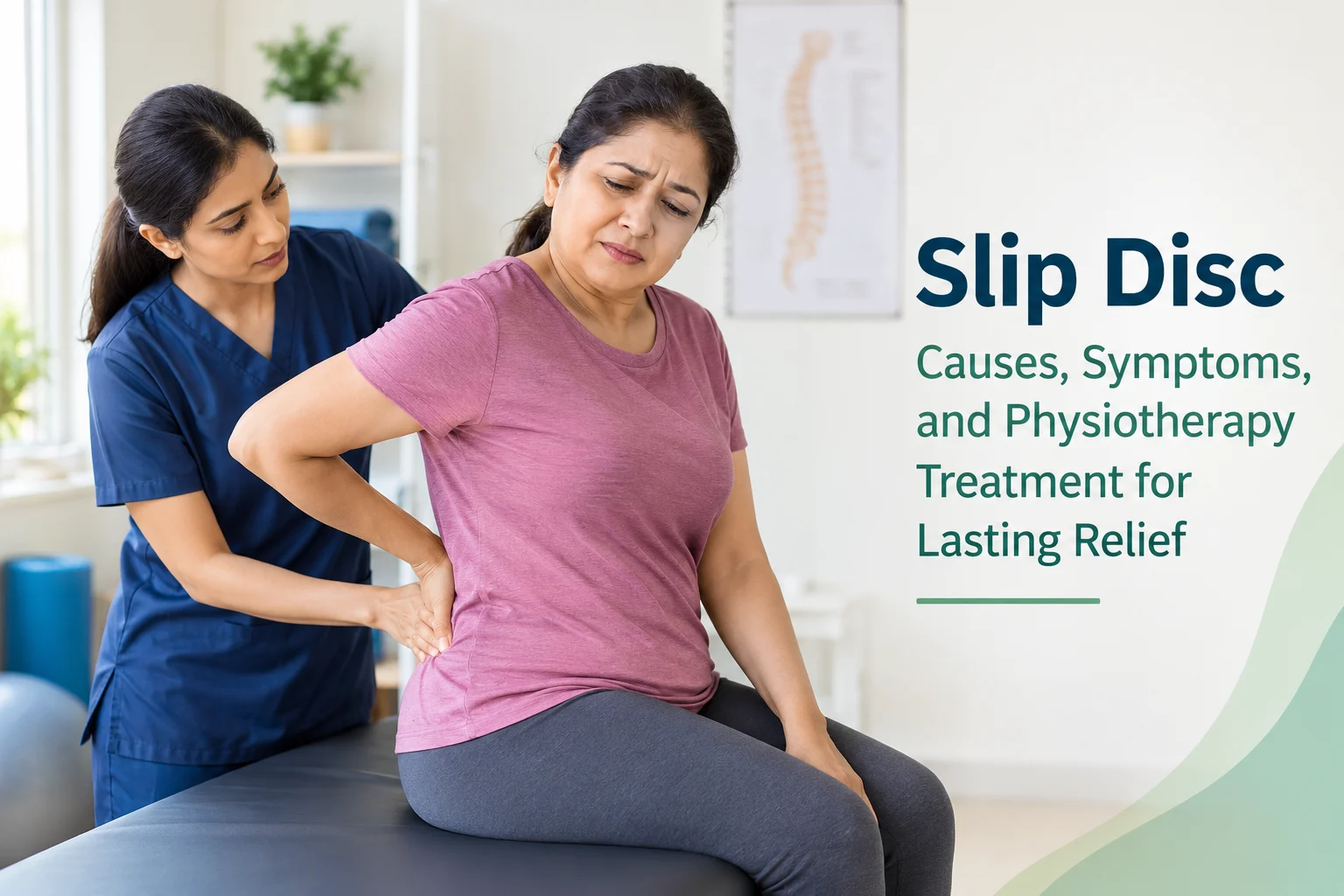
A healthy spine is essential for maintaining mobility, balance, and flexibility in everyday life. However, persistent back pain, stiffness, or discomfort radiating into the legs can indicate an underlying spinal condition known as a slip disc or herniated disc. This condition can affect people of different age groups and may interfere with routine activities such as walking, sitting, bending, lifting objects, and even sleeping.
Although the term slip disc is commonly used, the condition does not mean that a spinal disc has literally slipped out of its position. Instead, it refers to a problem in which the soft inner material of a spinal disc protrudes through a weakened or damaged outer layer, sometimes putting pressure on nearby nerves.
The good news is that many people with a slip disc can experience significant improvement through conservative treatment, including physiotherapy, guided exercises, posture correction, and appropriate lifestyle modifications. Surgery is generally considered only when specific medical indications arise or non-surgical treatment does not provide sufficient relief.
In this comprehensive guide, we will explore what a slip disc is, its causes and symptoms, available diagnostic methods, and how physiotherapy can help manage pain, restore movement, and support long-term spinal health.
What Is a Slip Disc?
The human spine consists of a series of small bones called vertebrae, separated by flexible structures known as intervertebral discs. These discs act as natural shock absorbers, allowing the spine to bend, twist, and move while protecting the vertebrae from excessive impact.
Each intervertebral disc consists of two main components:
- Nucleus Pulposus: The soft, gel-like inner portion that absorbs pressure and distributes loads across the disc.
- Annulus Fibrosus: The tough, fibrous outer layer that surrounds and contains the inner material.
A slip disc occurs when the outer layer develops a tear or weakness, allowing the inner material to protrude beyond its normal boundary. If this protrusion irritates or compresses a nearby spinal nerve, it may cause pain, tingling, numbness, or muscle weakness.
The condition can develop in different regions of the spine, but the two most common types are:
1. Lumbar Disc Herniation
This affects the lower back and is the most frequently encountered form of slip disc. It may cause lower back pain that radiates into the buttocks, thighs, calves, or feet. When the sciatic nerve is irritated, the condition may produce symptoms commonly associated with sciatica.
2. Cervical Disc Herniation
This affects the neck region and can cause pain extending into the shoulders, arms, and hands. Depending on the affected nerve, individuals may experience tingling, numbness, reduced grip strength, or difficulty performing certain movements.
Understanding the location and severity of disc herniation is important for determining the appropriate treatment approach.
What Are the Common Causes of Slip Disc?
A slip disc can develop due to a combination of age-related changes, physical strain, lifestyle habits, and individual risk factors. While some cases occur suddenly following an injury, others develop gradually over time.
The most common causes include:
1. Age-Related Disc Degeneration
As the body ages, spinal discs gradually lose water content and elasticity. This process, known as disc degeneration, can make the discs less flexible and more vulnerable to damage.
Age-related changes are among the most common contributors to disc herniation, although not everyone with disc degeneration experiences pain or other symptoms.
2. Improper Heavy Lifting
Lifting heavy objects using incorrect techniques can place excessive stress on the lower back. Bending from the waist, twisting while carrying weight, or lifting loads beyond one’s physical capacity may increase the risk of disc injury.
3. Prolonged Sitting and Poor Posture
Spending extended periods sitting, particularly with inadequate back support, may contribute to discomfort and place sustained demands on spinal structures.
People working at desks, driving for long hours, or maintaining sedentary routines should pay attention to posture and incorporate regular movement breaks.
4. Sudden Injury or Trauma
Falls, road accidents, sports injuries, and sudden twisting movements can damage spinal structures and contribute to disc herniation.
5. Excess Body Weight
Excess body weight can increase the mechanical load on the spine, particularly the lumbar region. Maintaining a healthy weight can help reduce unnecessary stress on the lower back.
6. Weak Core Muscles
The abdominal, back, and pelvic muscles play an important role in supporting the spine. When these muscles lack strength or endurance, maintaining spinal stability during everyday activities may become more challenging.
7. Smoking
Smoking is associated with impaired disc nutrition and accelerated degenerative changes. It may also negatively affect tissue healing and overall musculoskeletal health.
8. Genetic Predisposition
Some individuals may have inherited characteristics that influence disc structure, strength, or susceptibility to degeneration, increasing their likelihood of developing disc-related problems.
What Are the Symptoms of Slip Disc?
Slip disc symptoms vary depending on the location of the affected disc, the degree of nerve irritation, and the individual’s overall health.
Some people experience severe pain, while others may have a disc herniation without noticeable symptoms.
Common symptoms include:
- Persistent or recurring back or neck pain.
- Pain radiating into the legs, shoulders, or arms.
- Tingling or a pins-and-needles sensation.
- Numbness in the affected limb.
- Muscle weakness.
- Difficulty bending, sitting, standing, or walking.
- Increased discomfort while coughing or sneezing.
- Reduced flexibility and range of motion.
- Muscle spasms or stiffness.
Symptoms of Lumbar Slip Disc
A lumbar slip disc may cause:
- Pain in the lower back.
- Shooting pain from the buttock down one leg.
- Numbness or tingling in the foot or toes.
- Weakness in the leg or foot.
- Discomfort that increases during prolonged sitting.
- Difficulty standing upright or changing positions.
Pain radiating from the lower back into the leg is commonly associated with sciatica, although other conditions can also produce similar symptoms.
Symptoms of Cervical Slip Disc
A cervical slip disc may cause:
- Neck pain and stiffness.
- Pain extending into the shoulder or arm.
- Tingling or numbness in the fingers.
- Reduced hand strength.
- Difficulty turning the neck.
- Discomfort during certain head movements.
Important: Seek immediate medical attention if you experience loss of bladder or bowel control, numbness around the groin or saddle area, rapidly worsening weakness, or severe symptoms affecting both legs. These may indicate serious nerve compression requiring emergency assessment.
How Is Slip Disc Diagnosed?
Accurate diagnosis is essential for identifying the affected spinal region, assessing nerve involvement, and selecting an appropriate treatment plan.
A healthcare professional may recommend the following assessments:
1. Physical Examination
The examination typically includes an assessment of:
- Spinal movement and flexibility.
- Muscle strength.
- Reflexes.
- Sensation in the arms or legs.
- Walking pattern and balance.
- Pain response during specific movements.
For suspected lumbar disc herniation, a Straight Leg Raise (SLR) test may be performed to assess possible nerve irritation.
2. MRI Scan
Magnetic Resonance Imaging (MRI) provides detailed images of spinal discs, nerves, and surrounding soft tissues. It is particularly useful when symptoms suggest nerve compression, when symptoms persist, or when serious underlying conditions need to be investigated.
3. X-Ray
An X-ray primarily helps assess bones, spinal alignment, and certain structural abnormalities. It does not directly show a herniated disc but may help rule out other causes of pain.
4. CT Scan
A Computed Tomography (CT) scan may be recommended in selected cases, particularly when MRI is unsuitable or additional information about spinal structures is required.
It is important to remember that imaging findings should always be interpreted alongside symptoms and clinical examination, as disc bulges and degenerative changes can also occur in people without pain.
How Does Physiotherapy Help Treat Slip Disc?
Physiotherapy is an important component of conservative slip disc management. A structured rehabilitation programme aims to reduce pain, improve mobility, strengthen supporting muscles, and help individuals return to their regular activities safely. To know more book appointment with us.
Treatment is tailored to the patient’s symptoms, physical capacity, and stage of recovery.
Here are some commonly used physiotherapy approaches for slip disc treatment.
1. Therapeutic Exercises
Exercise-based rehabilitation helps improve spinal stability, muscular endurance, flexibility, and functional movement.
Depending on the patient’s condition, a physiotherapist may recommend:
- Pelvic tilts.
- Gentle abdominal bracing.
- Bridging exercises.
- Cat-cow movements.
- Controlled spinal mobility exercises.
- Hip and hamstring stretches.
- Gradual strengthening of the back and abdominal muscles.
Exercises should be selected carefully, as movements that relieve symptoms in one individual may aggravate them in another.
2. Core Strengthening
The core muscles provide essential support to the spine during everyday activities such as walking, bending, lifting, and maintaining posture.
A physiotherapist may introduce progressive core-strengthening exercises to improve stability and reduce excessive strain during movement.
The programme generally begins with low-intensity exercises and advances as strength and tolerance improve.
3. McKenzie Method
The McKenzie Method, also known as Mechanical Diagnosis and Therapy (MDT), is an assessment and treatment approach that uses specific movements and positioning to understand and manage spinal symptoms.
For selected patients with lumbar disc-related pain, certain extension-based exercises may help reduce symptoms or centralise pain, meaning discomfort moves away from the leg and towards the lower back.
However, these exercises are not suitable for every patient and should be prescribed following an appropriate assessment.
4. Manual Therapy and Joint Mobilisation
Manual therapy involves hands-on techniques used to address joint stiffness, soft-tissue discomfort, and movement restrictions.
Depending on the patient’s condition, treatment may include:
- Gentle joint mobilisation.
- Soft-tissue techniques.
- Myofascial release.
- Muscle relaxation techniques.
- Guided movement exercises.
Manual therapy is generally used alongside active rehabilitation rather than as a standalone solution.
5. Nerve Mobilisation Exercises
When a herniated disc irritates a spinal nerve, patients may experience radiating pain, tingling, or restricted movement.
Nerve mobilisation, sometimes called nerve gliding, involves controlled movements intended to improve nerve mobility and tolerance to movement.
These techniques should be introduced gradually under professional supervision, especially when symptoms are sensitive or severe.
6. Spinal Decompression Therapy
Non-surgical spinal decompression is a treatment approach involving controlled traction intended to reduce mechanical loading on the spine.
Some clinics use specialised equipment to deliver this treatment as part of a broader rehabilitation programme.
However, research on its effectiveness is mixed, and it should not be presented as a guaranteed method of reversing disc herniation. A qualified clinician can help determine whether traction-based treatment is appropriate for an individual patient.
7. Heat and Cold Therapy
Heat and cold Therapy may provide temporary relief from discomfort associated with muscle tension or acute pain.
- Cold packs may help soothe an irritated area during an acute flare-up.
- Heat therapy may help relax tight muscles and improve comfort.
These approaches are supportive measures and do not replace the need for appropriate assessment and rehabilitation.
8. Posture Correction and Ergonomic Training
A physiotherapist can help patients understand how their everyday movements influence spinal comfort.
Postural and ergonomic guidance may include:
- Maintaining comfortable spinal alignment while sitting.
- Adjusting workstation height.
- Using appropriate back support.
- Avoiding prolonged static positions.
- Learning safe bending and lifting techniques.
- Improving movement habits during daily activities.
The goal is not to maintain one rigid posture throughout the day but to develop comfortable, varied movement patterns that reduce unnecessary strain.
When Is Surgery Required for Slip Disc?
Most people with a symptomatic herniated disc are initially managed through non-surgical treatment, provided there are no urgent neurological concerns.
However, surgery may be considered in specific situations, including:
- Persistent, disabling pain despite an adequate trial of conservative treatment.
- Significant nerve compression associated with progressive muscle weakness.
- Severe neurological symptoms affecting daily function.
- Cauda equina syndrome, which is a medical emergency.
- Clinical findings that indicate surgery is necessary to prevent further neurological damage.
The decision to undergo surgery depends on clinical assessment, imaging findings, symptom severity, and the individual’s response to treatment.
Physiotherapy may also play an important role in recovery following spinal surgery.
How Long Does It Take to Recover from a Slip Disc?
Recovery time varies significantly depending on the severity of disc herniation, the extent of nerve involvement, general health, and consistency with treatment.
Many patients experience noticeable improvement over several weeks, while others may require a longer rehabilitation period.
A general recovery programme may involve:
Initial phase: Managing pain, reducing aggravating activities, and maintaining comfortable movement.
Intermediate phase: Introducing mobility exercises, gentle strengthening, and improved movement control.
Advanced phase: Progressing core strength, functional activities, and endurance.
Maintenance phase: Continuing appropriate exercises, improving fitness, and adopting habits that support spinal health.
Recovery should be measured not only by pain reduction but also by improvements in walking, strength, flexibility, sleep, and the ability to perform everyday tasks.
What Should You Avoid If You Have a Slip Disc?
Certain activities may aggravate symptoms, particularly during the early stages of recovery.
Consider avoiding or modifying the following:
- Heavy lifting without proper technique: Avoid lifting loads that cause pain or require excessive straining.
- Sudden twisting movements: Turn your whole body rather than twisting sharply through the lower back while carrying weight.
- Prolonged sitting: Take regular movement breaks to prevent stiffness and discomfort.
- Unsupervised strenuous exercise: Avoid exercises that significantly increase radiating pain, numbness, or weakness.
- Complete bed rest: Extended inactivity can contribute to muscle deconditioning and delayed functional recovery.
- Ignoring worsening neurological symptoms: New or progressive weakness, significant numbness, or bladder and bowel changes require prompt medical assessment.
The aim is to modify painful activities while maintaining safe, tolerable movement rather than avoiding all physical activity.
Tips to Prevent Slip Disc and Maintain a Healthy Spine
Although not every case of disc herniation can be prevented, adopting healthy movement habits can support spinal function and reduce avoidable strain.
- Maintain a healthy weight: Reducing excess body weight can help minimise mechanical stress on the lower back.
- Exercise regularly: Include walking, appropriate strength training, and mobility exercises in your routine.
- Strengthen your core: Build abdominal and back muscle endurance through a progressive exercise programme.
- Practise safe lifting: Bend your knees, keep the load close to your body, and avoid twisting while lifting.
- Improve workstation ergonomics: Adjust your chair, desk, and screen to support comfortable working positions.
- Take movement breaks: Avoid remaining in the same position for extended periods.
- Quit smoking: Reducing tobacco exposure supports overall tissue and spinal health.
- Maintain good sleep habits: Choose a comfortable sleeping position and mattress that supports restful sleep.
- Address persistent pain early: Seek professional guidance if back or neck pain repeatedly interferes with daily activities.
Consistency with these habits can help improve physical resilience and support long-term spinal health.
Conclusion
A slip disc can cause significant discomfort, restricted movement, and nerve-related symptoms, but it does not automatically mean that surgery is required. With an accurate diagnosis, an appropriate treatment plan, and consistent rehabilitation, many individuals can manage their symptoms and return to their normal routines.
Physiotherapy plays a valuable role in slip disc management by combining therapeutic exercises, core strengthening, manual techniques, posture correction, and functional rehabilitation. The treatment approach should always be individualised, taking into account the location of the herniation, symptom severity, and the patient’s overall health.
If you are experiencing persistent back pain, neck stiffness, radiating leg pain, or tingling and numbness, consult a qualified healthcare professional for an assessment. Early evaluation can help identify the underlying cause, guide appropriate treatment, and reduce the risk of complications.
With the right guidance and a commitment to recovery, it is possible to improve mobility, rebuild confidence in movement, and work towards a healthier, more active life.
Frequently Asked Questions (FAQs) About Slip Disc
1. Can a slip disc be cured without surgery?
Yes, many people with a slip disc improve significantly through conservative treatment, including physiotherapy, guided exercises, activity modification, and appropriate pain management. Surgery is generally reserved for selected cases involving persistent disabling symptoms or serious neurological complications. Recovery varies from person to person, and a qualified healthcare professional should determine the most suitable treatment.
2. What are the first signs of a slip disc?
Early symptoms may include lower back or neck pain, stiffness, discomfort while sitting or bending, and pain radiating into the legs or arms. Some individuals may also experience tingling, numbness, or muscle weakness. However, symptoms vary depending on the affected disc and whether nearby nerves are irritated.
3. Is walking good for a slip disc?
Gentle walking is often beneficial for people with a slip disc because it helps maintain mobility, supports circulation, and reduces the effects of prolonged inactivity. However, walking duration and intensity should be adjusted according to individual symptoms. Stop and seek professional advice if walking significantly increases pain, numbness, or weakness.
4. How long does a slip disc take to heal?
Many people experience improvement within six to twelve weeks of conservative treatment, although recovery can take longer depending on the severity of the condition and the degree of nerve involvement. Pain relief and functional recovery do not always occur at the same rate. A structured physiotherapy programme can help monitor progress and guide a safe return to regular activities.
5. Which exercises are best for slip disc treatment?
Exercises commonly used in slip disc rehabilitation include pelvic tilts, gentle core strengthening, bridges, controlled spinal mobility exercises, and selected stretching or nerve mobilisation techniques. The most appropriate exercises depend on the patient’s symptoms, affected spinal region, and physical assessment. It is advisable to consult a qualified physiotherapist before beginning an exercise programme, particularly if pain radiates into the arms or legs or is accompanied by numbness or weakness.