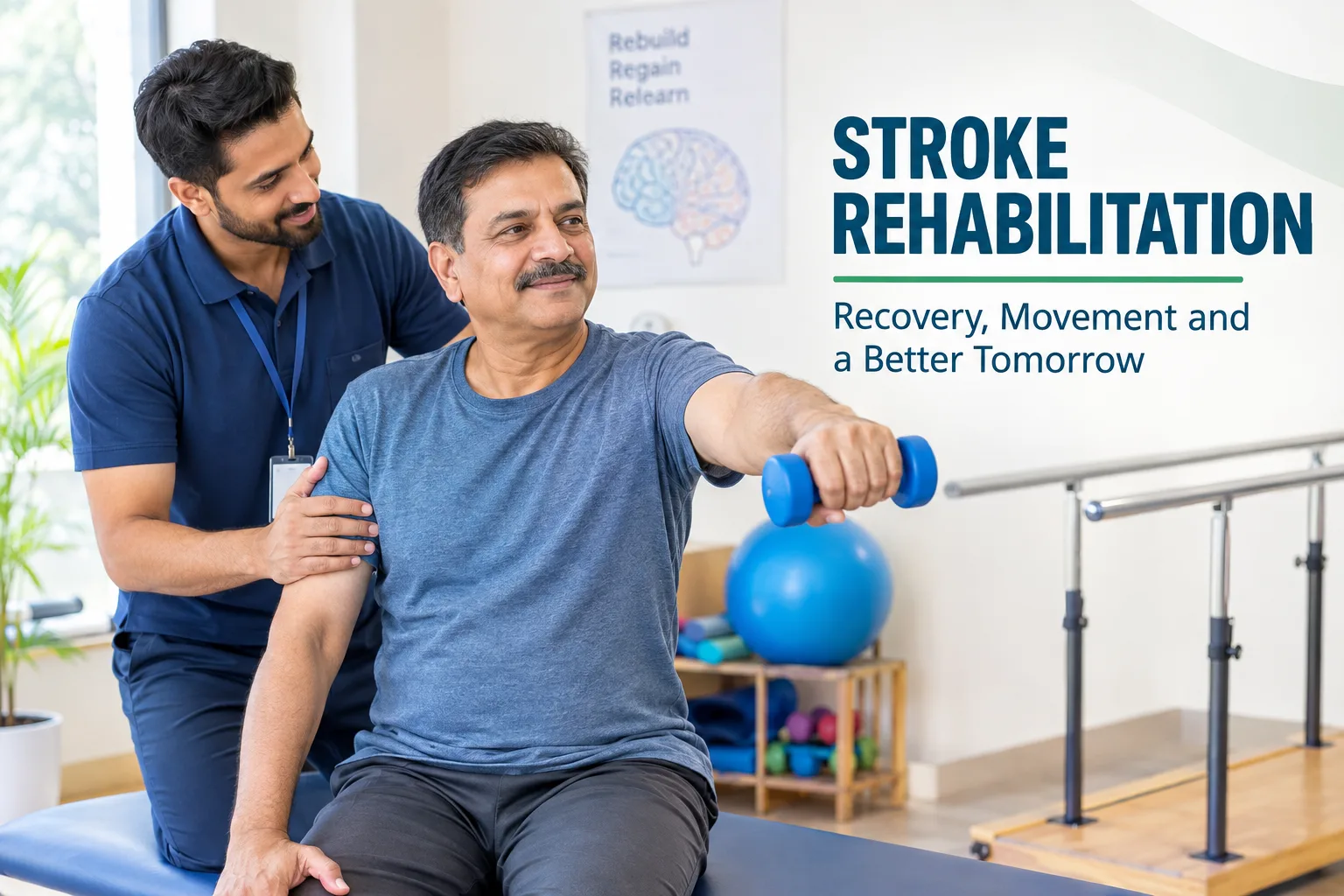
A stroke can bring sudden and significant changes to a person’s physical abilities, communication, memory, and everyday life. Simple activities such as walking, dressing, eating, or holding an object may become challenging. However, with timely medical care, structured rehabilitation, and consistent physiotherapy, many stroke survivors can regain important skills, improve mobility, and achieve greater independence.
Stroke rehabilitation, also known as stroke rehab, is a comprehensive recovery process designed to help individuals overcome physical and functional limitations caused by a stroke. It involves a combination of physiotherapy, occupational therapy, speech therapy, and psychological support, depending on the patient’s needs.
Physiotherapy plays a particularly important role in stroke recovery by improving muscle strength, balance, coordination, flexibility, and movement control. Through personalised exercises and repetitive task-based training, patients can gradually relearn movements and develop strategies to manage daily activities.
In this guide, we explore the causes and effects of stroke, the importance of rehabilitation, effective physiotherapy treatments, stages of recovery, and practical ways to support long-term progress.
What Is a Stroke?
A stroke occurs when the blood supply to a part of the brain is interrupted or when a blood vessel in the brain ruptures. Since brain cells require a continuous supply of oxygen and nutrients, reduced blood flow can damage brain tissue and affect the functions controlled by the affected area.
The severity of a stroke depends on several factors, including the location of the brain injury, the extent of damage, and how quickly medical treatment is provided.
There are two primary types of stroke:
1. Ischaemic Stroke
An ischaemic stroke occurs when a blood clot blocks an artery supplying blood to the brain. It is the most common type of stroke and can result in weakness, paralysis, speech difficulties, and impaired coordination.
2. Haemorrhagic Stroke
A haemorrhagic stroke occurs when a blood vessel in the brain ruptures, causing bleeding within or around the brain. The resulting pressure and damage can affect movement, sensation, cognition, and other neurological functions.
Both types of stroke can lead to temporary or long-term disabilities, making appropriate rehabilitation essential for recovery.
Important: A suspected stroke is a medical emergency. Sudden facial drooping, arm weakness, speech difficulty, loss of balance, or vision changes require immediate emergency medical attention. Rehabilitation begins only after the patient has been medically assessed and stabilised.
Common Physical and Functional Effects of Stroke
Stroke affects individuals differently. Some people experience mild weakness, while others may require extensive assistance with daily activities.
Common post-stroke complications include:
- Hemiplegia: Complete paralysis of one side of the body.
- Hemiparesis: Weakness affecting one side of the body.
- Muscle stiffness and spasticity: Increased muscle tone that makes movement difficult.
- Balance problems: Difficulty maintaining stability while sitting, standing, or walking.
- Poor coordination: Reduced ability to perform smooth and controlled movements.
- Gait abnormalities: Changes in walking patterns, including dragging a foot or taking uneven steps.
- Reduced joint mobility: Stiffness and restricted movement due to weakness or inactivity.
- Sensory changes: Altered sensation, numbness, or difficulty recognising limb position.
- Fatigue: Persistent tiredness that can interfere with physical activity and concentration.
- Difficulty performing daily activities: Challenges with dressing, bathing, eating, and household tasks.
These complications can affect confidence, independence, and overall quality of life. Stroke rehabilitation aims to address these limitations through targeted interventions and continuous progress monitoring.
What Is Stroke Rehabilitation?
Stroke rehabilitation is a structured, goal-oriented programme designed to help survivors recover lost abilities, adapt to physical limitations, and improve their quality of life.
The rehabilitation process focuses on two important approaches:
- Restorative rehabilitation: Exercises and activities that aim to improve impaired body functions, movement, strength, and coordination.
- Compensatory rehabilitation: Techniques and adaptations that help patients perform daily activities safely, even when some impairments remain.
According to the American Heart Association and American Stroke Association’s 2026 guidelines, multidisciplinary rehabilitation is essential for reducing neurological impairment and improving functional outcomes. Rehabilitation should be coordinated across different stages of recovery, with treatment plans adjusted according to individual progress.
The primary goals of stroke rehabilitation include:
- Improving muscle strength and movement control.
- Restoring balance and coordination.
- Enhancing walking ability and mobility.
- Preventing joint stiffness and secondary complications.
- Improving independence in everyday activities.
- Reducing the risk of falls.
- Supporting confidence and emotional well-being.
- Helping patients return to meaningful social and family activities.
Role of Physiotherapy in Stroke Rehabilitation
Physiotherapy is one of the most important components of stroke recovery. A qualified physiotherapist assesses the patient’s physical limitations and designs an individualised treatment plan to address specific impairments. At our Stroke Rehabilitation Clinic in Gurgaon, we provide expert services to recover from stroke.
The focus is not simply on strengthening muscles but also on retraining the nervous system to improve movement patterns and functional performance.
1. Range of Motion Exercises
After a stroke, reduced movement and prolonged inactivity can cause joint stiffness and muscle shortening.
Range of motion exercises help maintain joint flexibility, improve circulation, and prevent contractures. These exercises may be performed actively by the patient, with assistance from a therapist, or passively when independent movement is limited.
Commonly targeted areas include the shoulder, elbow, wrist, fingers, hip, knee, and ankle.
2. Strengthening Exercises
Muscle weakness is a common consequence of stroke. Strengthening exercises help improve the ability to perform everyday movements such as standing, transferring, reaching, and walking.
Depending on the patient’s condition, treatment may include:
- Assisted limb movements.
- Resistance exercises.
- Seated strengthening activities.
- Supported standing exercises.
- Functional strengthening tasks.
The intensity and progression of exercises should be determined by the physiotherapist based on the patient’s medical stability, physical capacity, and recovery goals.
3. Balance and Coordination Training
Balance impairment increases the risk of falls and can make independent mobility difficult.
Physiotherapists use progressive balance exercises to improve postural control and stability. These may include:
- Sitting balance activities.
- Weight-shifting exercises.
- Supported standing.
- Reaching activities.
- Controlled stepping.
- Functional balance training.
Coordination exercises also help patients develop smoother and more controlled movements during everyday tasks.
4. Gait Training and Walking Rehabilitation
Difficulty walking is one of the most common challenges after a stroke. Weakness, reduced balance, poor coordination, and altered muscle tone can affect walking patterns.
Gait training focuses on improving walking speed, step length, weight distribution, endurance, and overall mobility.
Treatment may involve:
- Parallel bar walking.
- Supported stepping exercises.
- Overground walking practice.
- Treadmill training when appropriate.
- Stair climbing practice.
- Walking with a cane, walker, or other prescribed support.
Task-specific walking practice is an important component of stroke rehabilitation because it allows patients to practise the movements required for real-life mobility.
5. Functional Electrical Stimulation (FES)
Functional Electrical Stimulation uses controlled electrical impulses to activate selected muscles and assist with functional movements.
It may be used in suitable patients to support activities such as lifting the foot during walking or improving selected upper-limb movements.
FES is generally used as part of a comprehensive rehabilitation programme rather than as a standalone treatment. Its suitability depends on the patient’s neurological condition, muscle response, and medical history.
6. Constraint-Induced Movement Therapy (CIMT)
Constraint-Induced Movement Therapy is a rehabilitation approach that encourages greater use of the affected arm or hand by limiting reliance on the less-affected limb under controlled conditions.
It combines repetitive, task-specific practice with strategies that encourage the patient to incorporate the affected limb into daily activities.
CIMT is suitable only for selected patients who meet clinical criteria and should be supervised by a trained rehabilitation professional.
7. Neuromuscular Re-Education
Neuromuscular re-education focuses on improving communication between the brain, nerves, and muscles.
After a stroke, the brain may have difficulty coordinating previously automatic movements. Repetitive, purposeful exercises can help patients practise and refine motor skills.
Treatment may include:
- Controlled weight shifting.
- Postural correction.
- Reaching and grasping activities.
- Supported limb movements.
- Repetitive functional tasks.
- Movement pattern training.
The exercises are selected according to the patient’s abilities and adjusted as recovery progresses.
8. Spasticity Management
Spasticity refers to increased muscle tone that causes stiffness and resistance to movement. It may affect the arms, hands, legs, or feet after a stroke.
Physiotherapy can help manage spasticity through positioning, stretching, movement training, and functional exercises. In some cases, medical interventions may also be required.
Early assessment is important because untreated spasticity can contribute to discomfort, reduced mobility, and joint contractures.
Stages of Stroke Rehabilitation
Stroke recovery is a gradual process, and the rehabilitation approach changes according to the patient’s condition and progress.
Acute Stage
The acute stage begins immediately after the stroke, when the patient is receiving hospital-based medical care.
Once medically stable, the rehabilitation team evaluates movement, muscle strength, sensation, balance, and functional abilities. Early rehabilitation focuses on safe positioning, preventing complications, and initiating appropriate movement.
The timing and intensity of mobilisation must be determined by the treating medical and rehabilitation team. High-intensity mobilisation within the first 24 hours is not appropriate for every patient.
Subacute Stage
The subacute stage generally covers the first few weeks and months following a stroke.
This is often a period of active rehabilitation, during which patients work on improving mobility, strength, coordination, and independence.
Treatment may include structured physiotherapy sessions, occupational therapy, speech therapy, and repetitive functional practice.
Chronic Stage
The chronic stage refers to the longer-term period following a stroke.
Although the rate of improvement may vary, meaningful progress can continue months or even years after the initial event.
Long-term rehabilitation focuses on maintaining physical fitness, improving functional abilities, preventing secondary complications, and helping patients participate more fully in everyday life.
The American Stroke Association emphasises that stroke recovery does not have a fixed endpoint and that improvements may continue well beyond formal rehabilitation.
Importance of Early and Consistent Stroke Rehabilitation
Early, appropriately timed rehabilitation is important because it helps patients begin addressing physical limitations before they become more difficult to manage.
Consistent therapy also provides repeated opportunities to practise movements and develop functional skills.
Some key benefits include:
1. Improved Mobility: Regular movement training can help patients improve their ability to sit, stand, transfer, and walk.
2. Better Muscle Strength: Targeted strengthening exercises help address weakness and support everyday activities.
3. Reduced Risk of Complications: Appropriate positioning and movement can help prevent problems associated with immobility, including joint stiffness, pressure injuries, and loss of physical conditioning.
4. Greater Independence: Rehabilitation helps patients relearn practical skills and reduce their dependence on caregivers.
5. Improved Confidence: Achieving small, measurable goals can encourage patients to participate more actively in their recovery.
6. Better Quality of Life: Improved physical function can support social participation, family involvement, and emotional well-being.
The effectiveness of rehabilitation depends on several factors, including stroke severity, overall health, the location of brain injury, treatment consistency, and individual response to therapy.
Home-Based Stroke Rehabilitation: Exercises and Safety Tips
Home-based rehabilitation can complement supervised physiotherapy and help patients practise functional movements in their familiar environment.
However, exercises should be prescribed according to the patient’s abilities and medical condition. Patients with significant weakness, balance impairment, or a history of falls should not attempt challenging exercises independently.
Common activities that may be incorporated into a supervised home programme include:
- Gentle assisted arm and leg movements.
- Supported sitting and standing.
- Weight-shifting activities.
- Sit-to-stand practice.
- Supported walking.
- Reaching for lightweight objects.
- Practising everyday tasks such as dressing or grooming.
Essential Safety Precautions
- Keep walking areas free from clutter.
- Install grab bars where necessary.
- Use prescribed walking aids.
- Ensure adequate lighting.
- Wear well-fitting, non-slip footwear.
- Avoid pulling the affected arm during transfers.
- Follow the physiotherapist’s instructions for positioning and movement.
- Stop exercising if unusual pain, dizziness, chest discomfort, or significant breathlessness occurs, and seek appropriate medical advice.
Caregivers should receive practical training in safe transfers, positioning, and assistance techniques to protect both the patient and themselves.
Role of Family and Caregivers in Stroke Recovery
Family members play a significant role in supporting stroke survivors throughout rehabilitation.
Their involvement can encourage consistency, improve confidence, and help patients practise newly acquired skills in daily life.
Caregivers can contribute by:
- Encouraging participation in prescribed exercises.
- Supporting safe mobility and transfers.
- Helping maintain a structured daily routine.
- Celebrating small improvements.
- Communicating changes in symptoms to healthcare professionals.
- Providing emotional support.
- Allowing patients to perform tasks independently whenever safe and appropriate.
It is equally important to recognise caregiver fatigue. Family members should receive education, practical assistance, and opportunities for rest to maintain their own physical and emotional well-being.
How Long Does Stroke Rehabilitation Take?
There is no fixed duration for stroke rehabilitation. Recovery varies significantly from one person to another.
Some patients may achieve substantial functional improvement within a few months, while others require ongoing therapy and support over a longer period.
Factors that influence recovery include:
- Type and severity of stroke.
- Location and extent of brain damage.
- Age and overall health.
- Pre-existing medical conditions.
- Time taken to receive emergency treatment.
- Consistency of rehabilitation.
- Cognitive and emotional health.
- Availability of appropriate support.
Rather than focusing exclusively on a specific recovery timeline, patients and caregivers should work with their rehabilitation team to establish realistic, measurable goals.
Regular reassessment helps determine whether the treatment programme needs to be modified or progressed.
Can a Person Fully Recover from a Stroke?
Complete recovery is possible for some individuals, but it cannot be guaranteed. Outcomes depend on the extent of brain injury, the functions affected, and the person’s response to treatment.
Many stroke survivors experience meaningful improvements in strength, mobility, communication, and independence, even when some neurological impairments remain.
The objective of stroke rehabilitation is to maximise the individual’s functional potential, improve safety, and support the best possible quality of life.
A personalised rehabilitation programme, regular medical follow-up, and appropriate lifestyle modifications are essential components of long-term care.
When Should You Consult a Physiotherapist for Stroke Rehabilitation?
A physiotherapy assessment is recommended when a stroke survivor experiences weakness, reduced mobility, balance difficulties, stiffness, or challenges performing everyday activities.
Early assessment helps identify functional limitations and establish an appropriate rehabilitation plan.
You should consider consulting a qualified physiotherapist if the patient:
- Has difficulty standing or walking independently.
- Experiences weakness in the arm or leg.
- Shows signs of muscle stiffness or reduced joint movement.
- Has difficulty maintaining balance.
- Requires assistance with daily activities.
- Experiences reduced confidence during movement.
- Needs guidance on safe home exercises.
- Has reached a plateau in recovery and requires reassessment.
Physiotherapy should be coordinated with the patient’s neurologist and other healthcare professionals to ensure safe, comprehensive care.
Conclusion
Stroke rehabilitation is a vital part of recovery, helping individuals rebuild physical abilities, regain confidence, and improve independence after a neurological event.
While the journey can be challenging, structured physiotherapy, consistent practice, family support, and appropriate medical care can make a meaningful difference in everyday functioning.
From strengthening exercises and balance training to gait rehabilitation and functional movement practice, each component of a personalised stroke rehabilitation programme contributes to the patient’s recovery goals.
Most importantly, stroke recovery is not defined by a single milestone or timeline. With continued support and regular reassessment, patients can keep working towards greater mobility, improved self-reliance, and a better quality of life.
If you or a loved one is recovering from a stroke, consult a qualified physiotherapist at our Physiotherapy Center to understand the available rehabilitation options and develop a treatment plan tailored to individual needs.
Frequently Asked Questions (FAQs) About Stroke Rehabilitation
1. What is the main goal of stroke rehabilitation?
The primary goal of stroke rehabilitation is to help individuals regain lost abilities, improve physical function, and achieve the highest possible level of independence. It focuses on improving strength, mobility, balance, coordination, and the ability to perform everyday activities safely.
2. When should physiotherapy start after a stroke?
Physiotherapy should begin as soon as the patient is medically stable and the treating team considers rehabilitation safe. Early assessment helps identify physical limitations and establish appropriate treatment goals. However, the timing and intensity of exercises must be individualised, particularly during the initial phase after a stroke.
3. Can physiotherapy help a stroke patient walk again?
Yes, physiotherapy can help many stroke survivors improve their walking ability through gait training, strengthening exercises, balance activities, and repetitive movement practice. The degree of improvement depends on the severity of the stroke, the patient’s physical condition, and their response to rehabilitation.
4. How many physiotherapy sessions are needed after a stroke?
The number of physiotherapy sessions varies according to the patient’s needs, functional limitations, and recovery progress. Some individuals require intensive rehabilitation initially, followed by ongoing outpatient or home-based therapy. A physiotherapist can recommend an appropriate frequency and duration after a comprehensive assessment.
5. Can stroke patients continue rehabilitation at home?
Yes, home-based rehabilitation can be an effective part of long-term stroke recovery when exercises are prescribed and monitored by qualified professionals. A structured home programme helps patients practise functional movements, maintain physical activity, and work towards greater independence. Regular reassessment is important to ensure exercises remain safe and appropriate as abilities change.