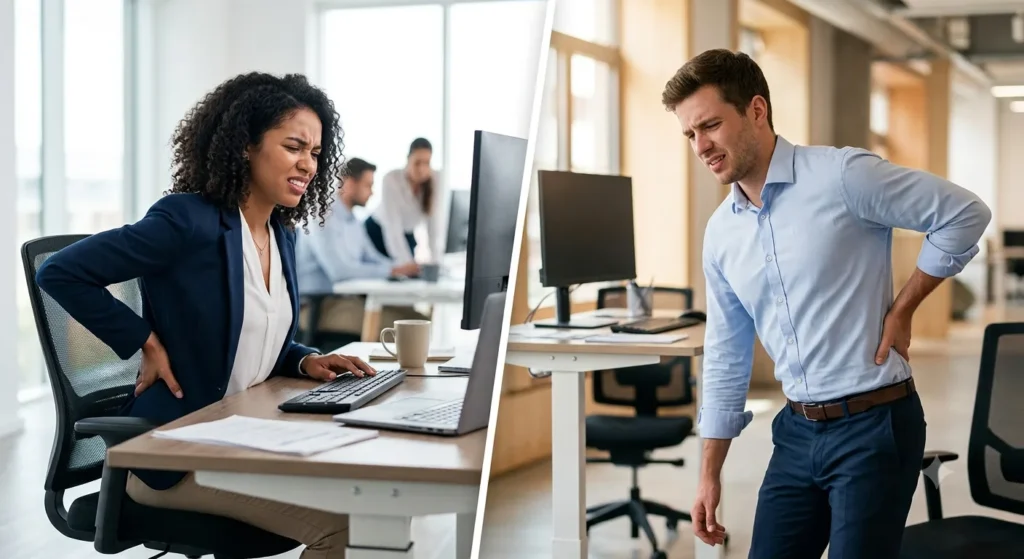
Lower back pain is one of the most common musculoskeletal problems affecting adults. It can occur suddenly after lifting something heavy or making an awkward movement, or it may develop gradually due to prolonged sitting, poor movement habits, muscle weakness, physical inactivity, or age-related changes.
For some people, lower back pain may be temporary and improve with appropriate activity and self-care. For others, persistent pain can interfere with work, sleep, exercise, walking, and everyday activities.
The lower back, also known as the lumbar region, supports much of the body’s weight and plays an important role in bending, twisting, sitting, standing, and walking. Because the area is involved in almost every movement of the body, problems affecting the muscles, joints, discs, nerves, or surrounding structures can result in lower back pain.
The good news is that many cases of lower back pain can be effectively managed with the right combination of physiotherapy, exercise, movement, and lifestyle changes.
In this guide, we will discuss how to identify lower back pain, its common symptoms and causes, how physiotherapy can help, and lifestyle changes that may support recovery.
How to Identify If the Pain Is in Your Lower Back
The lower back is the area between the bottom of the rib cage and the upper part of the buttocks. Pain originating from this region is commonly described as lower back pain, lumbar pain, or low back pain.
Lower back pain may be felt:
- Across the middle of the lower back
- On one side of the lower back
- On both sides of the spine
- Around the waist or lumbar region
- Near the junction between the lower back and pelvis
- In the lower back and buttocks
The pain may feel different depending on the underlying cause. Some people experience a dull or aching sensation, while others may describe the pain as sharp, stabbing, burning, or tight.
Does movement affect your pain?
Certain movements may provide clues that the lower back is involved. You may notice discomfort while:
- Bending forward
- Leaning backwards
- Turning or twisting
- Standing for a long time
- Sitting for prolonged periods
- Getting up from a chair
- Getting out of bed
- Lifting objects
- Walking for extended periods
- Exercising
Sometimes, lower back pain can also extend into the buttocks or legs. This may occur when structures around the lower back irritate or affect a nerve.
However, pain felt in the lower back does not always originate from the spine itself. Problems involving the hip, pelvis, muscles, or other structures can sometimes cause pain in the same general area.
This is why a proper assessment by a qualified physiotherapist or healthcare professional is important, particularly when pain persists or is accompanied by other symptoms.
Symptoms of Lower Back Pain
Lower back pain can present differently from person to person. Symptoms may range from mild stiffness to significant pain that limits movement.
1. Aching or Dull Pain
A dull, persistent ache across the lower back is a common symptom. It may become more noticeable after sitting, standing, or performing physical activities for an extended period.
2. Sharp or Sudden Pain
Some people experience sudden, sharp pain after bending, lifting, twisting, or making an unexpected movement.
3. Stiffness
Lower back stiffness can make it difficult to move comfortably, particularly after waking up or remaining in one position for a long time.
You may feel as though your back needs time to “loosen up” before you can move normally.
4. Muscle Tightness or Spasm
The muscles around the lower back may become tight or go into spasm. This can make bending, turning, or standing uncomfortable.
5. Pain Radiating Into the Buttocks or Leg
In some cases, pain originating from the lower back may travel into the buttock or leg.
If nerve structures are involved, symptoms may include pain, tingling, numbness, or weakness in the leg.
6. Reduced Mobility
Pain may make it difficult to bend forward, straighten up, rotate the trunk, or perform everyday movements.
7. Difficulty Sitting or Standing
Some people find that prolonged sitting or standing increases their symptoms. They may frequently need to change positions to remain comfortable.
8. Difficulty Performing Everyday Activities
Lower back pain can affect simple activities such as:
- Getting dressed
- Putting on shoes
- Getting in and out of bed
- Driving
- Lifting objects
- Working at a desk
- Exercising
- Household chores
The severity of symptoms does not always indicate the severity of the underlying problem. A professional assessment can help determine the appropriate course of action.
What Causes Lower Back Pain?
Lower back pain can have many different causes. Sometimes there is one clear trigger, while in other cases several factors contribute to the problem.
Poor Posture and Prolonged Sitting
Spending many hours sitting at a desk, working on a laptop, or using a phone can contribute to stiffness and discomfort.
Poor sitting habits may also encourage people to remain in one position for too long.
It is important to understand that there is not necessarily one “perfect” sitting posture. Regular movement and changing positions throughout the day are often more useful than trying to maintain one rigid posture continuously.
Muscle Weakness
The muscles of the abdomen, back, hips, and pelvis work together to support movement and stability.
Weakness or poor endurance in these muscles may affect how the body handles everyday physical demands.
A physiotherapist can assess your strength and recommend exercises appropriate for your condition.
Muscle Strain
Lifting something heavy, suddenly increasing physical activity, or performing an unfamiliar movement can strain the muscles and other soft tissues around the lower back.
This may result in pain, stiffness, and muscle spasm.
Poor Lifting Technique
Repeatedly lifting heavy objects or lifting while twisting can place significant stress on the lower back.
Learning appropriate lifting and movement techniques can help reduce unnecessary strain during physical tasks.
Lack of Physical Activity
A sedentary lifestyle can contribute to reduced muscle strength, flexibility, and physical capacity.
When the body is not regularly exposed to movement and exercise, activities that would normally be manageable may become more demanding.
Excessive Physical Activity or Overtraining
The opposite can also happen. Suddenly increasing gym workouts, running, sports, or manual work without adequate recovery can overload the tissues around the lower back.
Gradual progression is important when starting or increasing an exercise programme.
Disc-Related Problems
The spine contains discs between many of its vertebrae. These discs help absorb loads and allow movement.
Changes involving a spinal disc can sometimes contribute to lower back pain and, in certain cases, symptoms that travel into the leg.
Age-Related Changes
As we get older, changes naturally occur in the muscles, joints, discs, and other structures of the spine.
These changes do not automatically mean that pain is inevitable. Regular movement, strengthening, and maintaining physical capacity can support spinal health.
Previous Injury
A previous back injury may sometimes contribute to recurring symptoms, particularly if strength, mobility, or movement patterns have not fully recovered.
Appropriate rehabilitation can help restore function and confidence in movement.
Stress and Poor Sleep
Physical symptoms can also be influenced by stress, poor sleep, fatigue, and reduced recovery.
These factors do not mean that the pain is “just psychological.” Rather, pain is influenced by multiple physical and lifestyle factors, and improving sleep, stress management, and activity levels may support recovery.
How Physiotherapy Can Help With Lower Back Pain
Physiotherapy is commonly used to manage lower back pain and improve mobility and physical function.
The objective is not simply to reduce pain temporarily. A comprehensive physiotherapy programme aims to identify factors contributing to your symptoms and gradually improve your ability to move and perform daily activities.
Detailed Physiotherapy Assessment
Treatment generally begins with an assessment of your symptoms and physical function.
A physiotherapist may evaluate:
- Location and nature of your pain
- Spinal movement
- Hip mobility
- Muscle strength
- Flexibility
- Balance
- Posture and movement patterns
- Walking
- Functional movements
- Work and exercise habits
Your physiotherapist may also ask about when your pain started, what makes it better or worse, and how it affects your daily activities.
This information helps create a personalised treatment programme.
Exercise Therapy
Exercise is one of the most important components of physiotherapy for many types of lower back pain.
Depending on your condition, your programme may include exercises for:
- Core muscles
- Back muscles
- Glutes
- Hip muscles
- Hamstrings
- Overall mobility and flexibility
Exercises are usually progressed gradually according to your strength, symptoms, and functional goals.
Improving Mobility
Stiffness in the lower back, hips, or surrounding muscles may affect movement.
A physiotherapist can prescribe appropriate mobility exercises to help improve movement and make everyday activities more comfortable.
Strength and Endurance Training
Strengthening the muscles around the trunk and hips can improve your ability to perform daily activities and exercise.
The goal is not necessarily to build large muscles, but to develop adequate strength and endurance for your lifestyle.
Manual Therapy
Depending on the individual and the underlying condition, a physiotherapist may use hands-on techniques to address joint or soft-tissue mobility.
Manual therapy may be combined with exercise and education as part of a broader rehabilitation programme.
Movement and Ergonomic Education
A physiotherapist can help you understand how to modify movements and activities that aggravate your symptoms.
This may include guidance related to:
- Desk work
- Sitting
- Lifting
- Sleeping positions
- Exercise technique
- Returning to sport
- Workplace activities
Gradual Return to Activity
One common concern among people with lower back pain is whether they should stop exercising completely.
In many cases, complete inactivity is not necessary. Instead, activities can often be modified and gradually increased as symptoms improve.
A physiotherapist can help determine an appropriate progression based on your individual condition.
Lifestyle Changes That Can Help With Lower Back Pain
Physiotherapy can be more effective when supported by healthy daily habits.
Stay Active
Regular movement is important for maintaining strength, mobility, and physical capacity.
Depending on your symptoms, activities such as walking, swimming, cycling, or an appropriate exercise programme may be beneficial.
Avoid prolonged bed rest unless specifically advised by your healthcare professional.
Take Regular Movement Breaks
If you work at a desk, avoid staying in the same position for several hours.
Stand up, walk around, stretch gently, or change your working position regularly.
The goal is not to find one perfect posture but to avoid prolonged periods of inactivity.
Strengthen Your Core and Hips
Appropriate strengthening exercises can improve the capacity of your trunk and hip muscles.
However, exercises should be selected according to your symptoms and physical condition rather than copied from random online routines.
Maintain a Healthy Weight
If you are carrying excess body weight, gradual and sustainable weight management can support overall musculoskeletal health.
A balanced diet combined with regular physical activity is generally more sustainable than extreme diets.
Improve Your Sleeping Habits
Adequate sleep is important for recovery and overall health.
Try to maintain a consistent sleep schedule and create a comfortable sleeping environment.
There is no single sleeping position that works for everyone. Choose a position that allows you to sleep comfortably without significantly aggravating your symptoms.
Lift Objects Carefully
When lifting, avoid unnecessarily heavy loads and ask for assistance when required.
Plan the movement before lifting and avoid combining heavy lifting with sudden twisting.
Manage Stress
Stress can influence muscle tension, sleep, activity levels, and how the nervous system processes pain.
Activities such as breathing exercises, meditation, walking, hobbies, and relaxation techniques may help improve overall well-being.
Progress Exercise Gradually
Whether you are returning to the gym, running, or sports, avoid doing too much too soon.
Gradually increase exercise intensity, duration, or frequency and allow sufficient recovery between demanding sessions.
When Should You See a Physiotherapist for Lower Back Pain?
Many episodes of lower back pain improve with time, appropriate movement, and self-management. However, professional assessment is recommended when pain is persistent, recurring, or interfering with your daily life.
Consider consulting a physiotherapist if:
- Your lower back pain keeps returning
- Pain is affecting work or daily activities
- You are unable to exercise normally
- Your movement is becoming increasingly restricted
- You experience persistent pain travelling into the leg
- You have ongoing tingling or numbness
- You feel weakness in the leg
- You are unsure what is causing your symptoms
Seek urgent medical attention if lower back pain is accompanied by significant or progressive weakness, loss of bladder or bowel control, numbness around the genital or anal region, or other serious symptoms.
Frequently Asked Questions About Lower Back Pain
1. Can physiotherapy cure lower back pain?
Physiotherapy can help manage many types of lower back pain and improve movement, strength, and physical function. The outcome depends on the underlying cause, duration and severity of symptoms, overall health, and adherence to the rehabilitation programme. Some conditions may require additional medical investigation or treatment.
2. Should I rest if I have lower back pain?
Short periods of relative rest may sometimes be useful when symptoms are aggravated, but prolonged bed rest is generally not recommended for most uncomplicated lower back pain. Appropriate, gradual movement can help maintain mobility and physical capacity. Your physiotherapist can advise you on which activities are appropriate for your condition.
3. Is lower back pain caused by poor posture?
Posture can be one contributing factor, but lower back pain is usually more complex than having one “bad” posture. Physical activity levels, muscle strength, workload, sleep, stress, previous injuries, and other factors can all contribute. Regularly changing positions and maintaining adequate physical capacity are often more useful than trying to maintain a rigid posture all day.
4. How long does lower back pain take to improve?
Recovery varies considerably from person to person. Mild episodes may improve within days or weeks, while persistent or recurrent lower back pain may require a longer rehabilitation programme. The underlying cause, symptom duration, general health, activity level, and consistency with treatment can all influence recovery.
5. Can exercise make lower back pain worse?
Some exercises can temporarily aggravate symptoms if they are too intense, performed incorrectly, or introduced too quickly. However, appropriately selected and progressively loaded exercise is an important component of rehabilitation for many people with lower back pain. A physiotherapist can help identify suitable exercises and determine how they should be progressed.
Take the First Step Towards a Healthier Back
Lower back pain can affect much more than your spine. Persistent pain can influence your work, exercise routine, sleep, mobility, and overall quality of life.
The most effective approach is to understand why the pain is occurring rather than simply trying to mask the symptoms. A thorough physiotherapy assessment can help identify contributing factors and create a personalised treatment and rehabilitation programme.
Whether your lower back pain is related to muscle weakness, prolonged sitting, overuse, an injury, reduced mobility, or other contributing factors, physiotherapy can help you work towards better movement, strength, confidence, and function.
If your lower back pain is persistent, recurring, or interfering with your everyday activities, consult a qualified physiotherapist for an appropriate assessment and personalised treatment plan.