Neck Pain & Stiffness
Joint and muscle-related neck pain, including desk-related strain, may be assessed for gentle osteopathic techniques and exercise.
Hands-on osteopathy treatment for back pain, neck pain, joint stiffness and muscle tension, using a whole-body view of how your joints, muscles and posture work together, and combined with exercise to support lasting recovery.
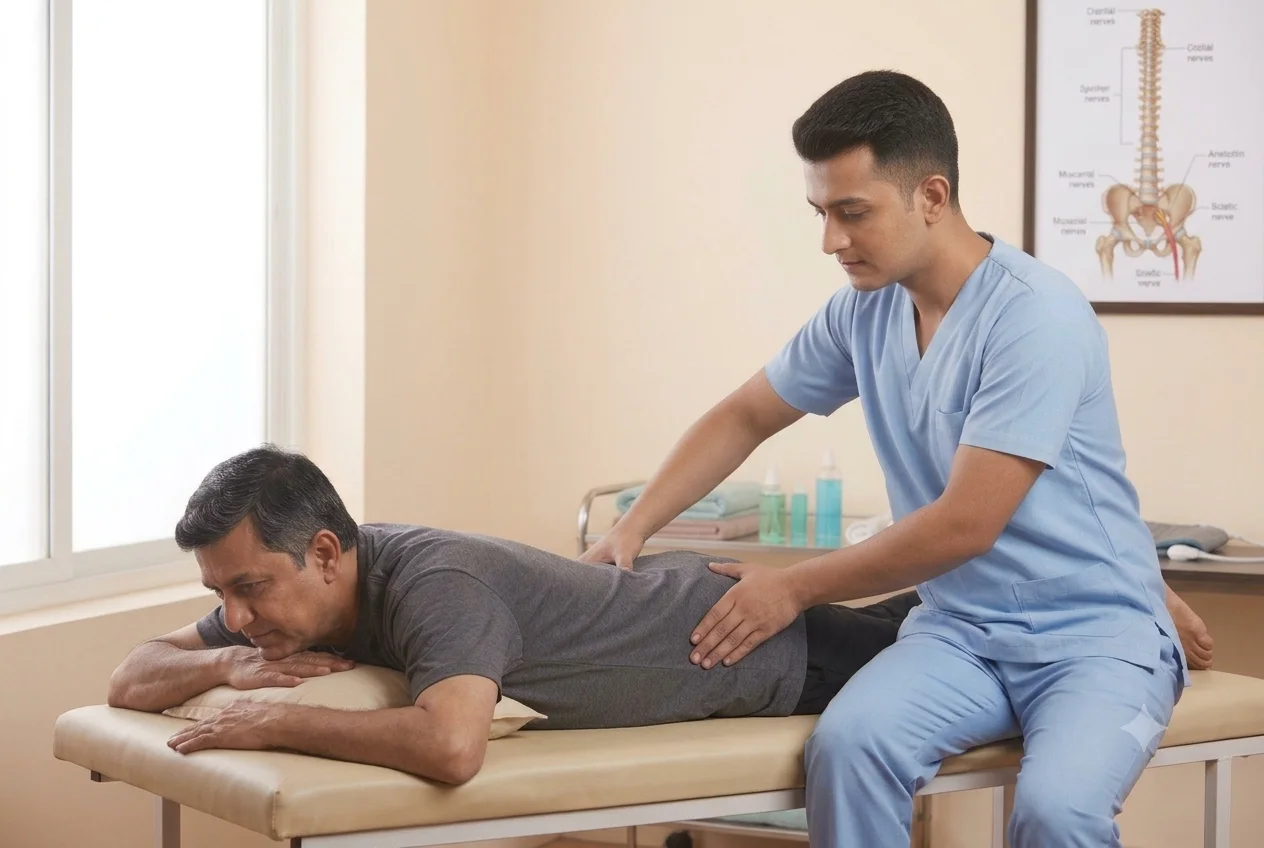
Osteopathy suits some problems and not others. Your practitioner reviews your symptoms, medical history and goals before recommending hands-on treatment, and explains each step.
Osteopathy is a hands-on approach to assessing and treating the muscles, joints and connective tissue, based on the idea that the body works as one connected system and that problems in one area can affect another.
Rather than looking only at the painful spot, osteopathic assessment considers how your posture, movement, work habits and other body regions may be contributing. For example, stiffness in the hips or upper back can add strain to a painful lower back or neck.
Osteopathy treatment at Calm n Cure is used for musculoskeletal problems and is combined with exercise, posture education and a home programme. It is not a treatment for internal organ or other medical diseases.
Posture, joints, muscles and movement are reviewed as a whole.
Techniques are chosen and applied by a trained practitioner.
Pressure and intensity are adjusted to your comfort and response.
Exercise and habit changes help the benefits of treatment last.
Suitability depends on the diagnosis, symptoms and clinical findings. An assessment should come before treatment.
Joint and muscle-related neck pain, including desk-related strain, may be assessed for gentle osteopathic techniques and exercise.
Persistent or movement-related back pain may be treated with hands-on techniques as part of an active plan.
Reduced movement or tightness around the shoulders and hips may be addressed with mobilisation and stretching.
Tight muscles from long sitting, poor posture or stress may be treated with soft-tissue techniques and advice.
Muscle strains and overuse problems may be assessed as part of a graded return to activity.
Some headaches linked to neck stiffness may be reviewed, after serious causes have been ruled out.
Different techniques suit different problems. Your practitioner may use one or a combination, adjusting pressure and intensity to your response.
Techniques such as joint manipulation are used only when clinically appropriate and with your informed consent. Many treatments are gentle and involve no joint "cracking".
Looking at how posture, joints and muscles in different areas relate to your symptoms.
Rhythmic stretching, pressure and myofascial release to ease muscle tension.
Gentle, repeated movement of stiff joints to support range of motion.
Guided muscle contractions and stretches to improve muscle length and control.
Your first visit includes a detailed conversation about your symptoms, health history and daily activities, followed by an examination of posture, movement, joints and muscles.
Treatment begins once you understand the plan. You can ask questions, and ask to adjust or stop any technique at any time.
Your symptoms, medical background, work and lifestyle are reviewed.
Movement and tissues are assessed, and warning signs and precautions are checked.
Suitable techniques are applied with consent and with pressure adjusted to you.
You receive exercises and posture advice, and progress is reviewed at each stage.
Responses vary between people. Hands-on treatment is generally used to create comfort and movement that exercise and good habits can then build on.
Relief from hands-on treatment alone can be short-lived. Lasting improvement usually comes from better strength, mobility and everyday movement habits.
That is why your plan combines osteopathy with exercise and education, and relies less on hands-on work as you recover.
Osteopathy may be considered for many musculoskeletal problems once a practitioner has assessed you and found no reason to avoid hands-on treatment.
Hands-on treatment calls for caution or a different approach with suspected fracture, osteoporosis, infection, cancer, inflammatory arthritis flare-ups, bleeding disorders or blood-thinning medication, and progressive neurological symptoms. Tell your practitioner about your full medical history and any pregnancy.
Seek urgent medical care for loss of bladder or bowel control, numbness between the legs, rapidly worsening limb weakness, severe pain after trauma, chest pain, or severe back pain with fever.
A comprehensive plan combines different approaches according to your findings and goals.
Progressive strengthening and mobility work to build on hands-on treatment.
Practice of better movement patterns for work, sport and daily tasks.
Practical advice on sitting, working and lifting to reduce repeat strain.
A simple routine and self-care guidance to maintain progress between visits.
Calm n Cure Physiotherapy Center focuses on understanding your symptoms and movement limitations before selecting a technique, and explains each step so you stay in control of your care.
Book an assessment at Calm n Cure. Our team can review your symptoms and explain whether osteopathy is suitable and what a realistic plan could look like.
Book an AssessmentCommon questions about osteopathy treatment, safety, sessions and what to expect.
Share your basic details and concern. The Calm n Cure clinic team can discuss your symptoms, assessment requirements and the next appropriate step.
Medical note: Osteopathy is a hands-on approach for musculoskeletal problems and is not suitable for every person or condition. It does not replace medical diagnosis or treatment and is not a treatment for internal organ diseases. Treatment should be recommended and carried out by a suitably trained and qualified practitioner after an appropriate assessment. Individual treatment plans and outcomes vary.