Plantar Fasciitis & Heel Pain
Long-standing heel pain that is worst with the first steps of the day is one of the most common reasons for shockwave therapy.
Non-invasive shockwave therapy for stubborn tendon and soft-tissue pain, such as plantar fasciitis, tennis elbow and Achilles tendinopathy, delivered after assessment and combined with a rehabilitation exercise plan.
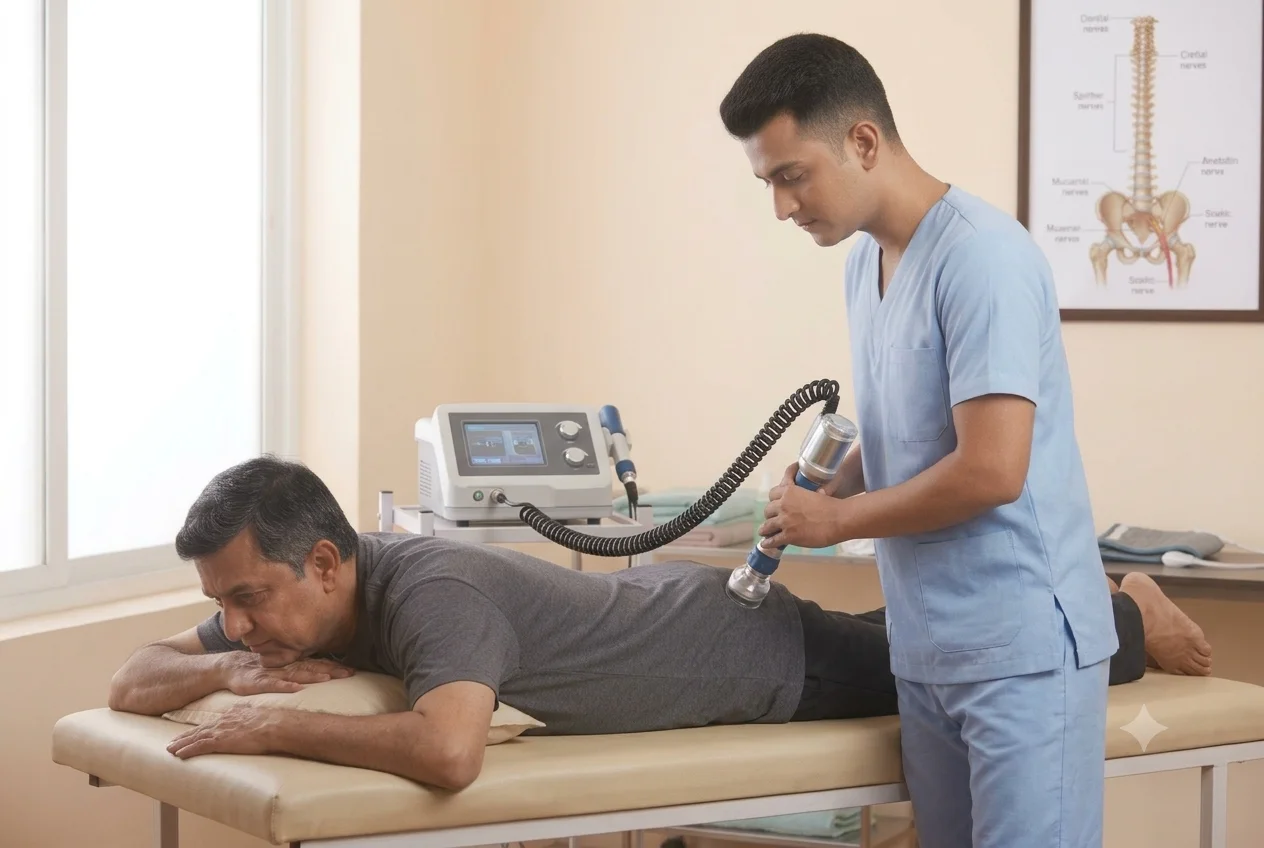
Shockwave works for some conditions better than others. A physiotherapist confirms the likely source of your pain and checks for precautions before recommending it.
Shockwave therapy, also called extracorporeal shockwave therapy (ESWT), uses short pulses of acoustic energy applied through the skin to a painful area, to help reduce pain and support the body's natural repair processes.
It is most often considered for chronic tendon problems that have not settled with rest, simple exercises or other basic care. The treatment needs no needles, medication or recovery time away from daily life.
The strongest evidence is for certain tendon conditions, so shockwave is used selectively and usually alongside a progressive exercise programme, posture and footwear advice and a home plan.
We confirm what is causing your pain before deciding whether shockwave fits.
Settings and treatment areas are chosen and monitored by a physiotherapist.
Energy is directed at the painful tendon or tissue, with intensity set to your comfort.
Loading exercises help tendons recover strength after treatment.
Suitability depends on the diagnosis and how long symptoms have lasted. Shockwave is generally considered for persistent problems rather than new injuries.
Long-standing heel pain that is worst with the first steps of the day is one of the most common reasons for shockwave therapy.
Persistent pain on the outer or inner elbow from tendon overload may be considered when other care has not been enough.
Ongoing pain or stiffness in the Achilles tendon may be treated with shockwave alongside a progressive loading programme.
Shoulder pain linked to calcium deposits in the rotator cuff tendons may be assessed for shockwave in selected cases.
Patellar tendinopathy (jumper's knee) and outer-hip tendon pain may be considered once the cause has been confirmed.
Persistent shin and lower-leg overuse pain may be assessed for shockwave as part of a graded return to activity.
Researchers propose several ways shockwave may help, and the exact mechanisms are still being studied. The effects below are the commonly described ones.
Different shockwave devices deliver energy in different ways, so your physiotherapist selects settings that suit your condition and tolerance.
Short pulses of energy travel through the skin into the painful tissue.
The waves may encourage blood flow and tissue repair in long-standing tendon problems.
Treatment may change how pain signals are processed, easing discomfort for some people.
In selected calcific tendon cases, shockwave may support the breakdown of deposits.
Your first visit is an assessment. Shockwave starts only if it suits your condition and you understand the benefits, limits and possible side effects.
Each treatment itself is brief. Gel is applied, the handpiece is moved over the painful area and the intensity is raised gradually to a level you can tolerate.
History, pain pattern, movement and loading tests confirm the likely source of pain.
Medical history, medication, recent injections and other precautions are checked.
Pulses are applied to the tender area, with intensity adjusted to your comfort.
Loading exercises and activity advice follow, and progress is reviewed between sessions.
Results vary between people and conditions. Improvement is often gradual and may continue for weeks after treatment finishes.
Tendons recover through gradual, progressive loading. Shockwave on its own may not be enough, because the reasons the tendon became overloaded still need to be addressed.
That is why your plan pairs shockwave with a graded exercise programme, activity changes and footwear or technique advice where relevant.
Shockwave may suit people whose pain has lasted for some time and has not improved enough with basic care, once a physiotherapist has confirmed the cause.
Shockwave is generally avoided or used with caution during pregnancy, with bleeding disorders or blood-thinning medication, infection or cancer at the treatment site, over open wounds, near the lungs or major nerves and vessels, in growing children over growth plates, with a recent steroid injection in the area, and with a pacemaker or other implanted device. Tell your physiotherapist your full medical history.
Mild soreness, redness, bruising or temporary swelling can occur. See a doctor for sudden severe pain, a pop followed by weakness or loss of function, or inability to put weight on the leg.
A comprehensive plan combines different approaches according to your findings and goals.
Graded strengthening that helps the tendon tolerate load again.
Hands-on techniques to ease stiffness and tension in surrounding muscles and joints.
Guidance on shoes, training load and daily habits that overload the tendon.
A simple routine and self-care guidance to maintain progress between visits.
Calm n Cure Physiotherapy Center focuses on confirming the cause of your pain before using any modality, and is clear about what shockwave can and cannot do.
Book a physiotherapy assessment in Gurgaon. Our team can review your symptoms and explain whether shockwave therapy is suitable and what a realistic plan could look like.
Book an AssessmentCommon questions about shockwave therapy, safety, sessions and what to expect.
Share your basic details and concern. The Calm n Cure clinic team can discuss your symptoms, assessment requirements and the next appropriate step.
Medical note: Shockwave therapy is one component of physiotherapy and is not suitable for every person or condition. The evidence for it varies by condition, and it does not replace medical diagnosis or treatment. Treatment should be recommended and carried out by a suitably trained and qualified practitioner after an appropriate assessment. Individual treatment plans and outcomes vary.