Neck & Shoulder Tension
Tight upper back, neck and shoulder muscles from desk work or stress may be assessed for trigger point needling.
Physiotherapist-delivered dry needling for muscle pain, trigger points and tightness, used after assessment and combined with exercise and movement retraining to support lasting recovery.
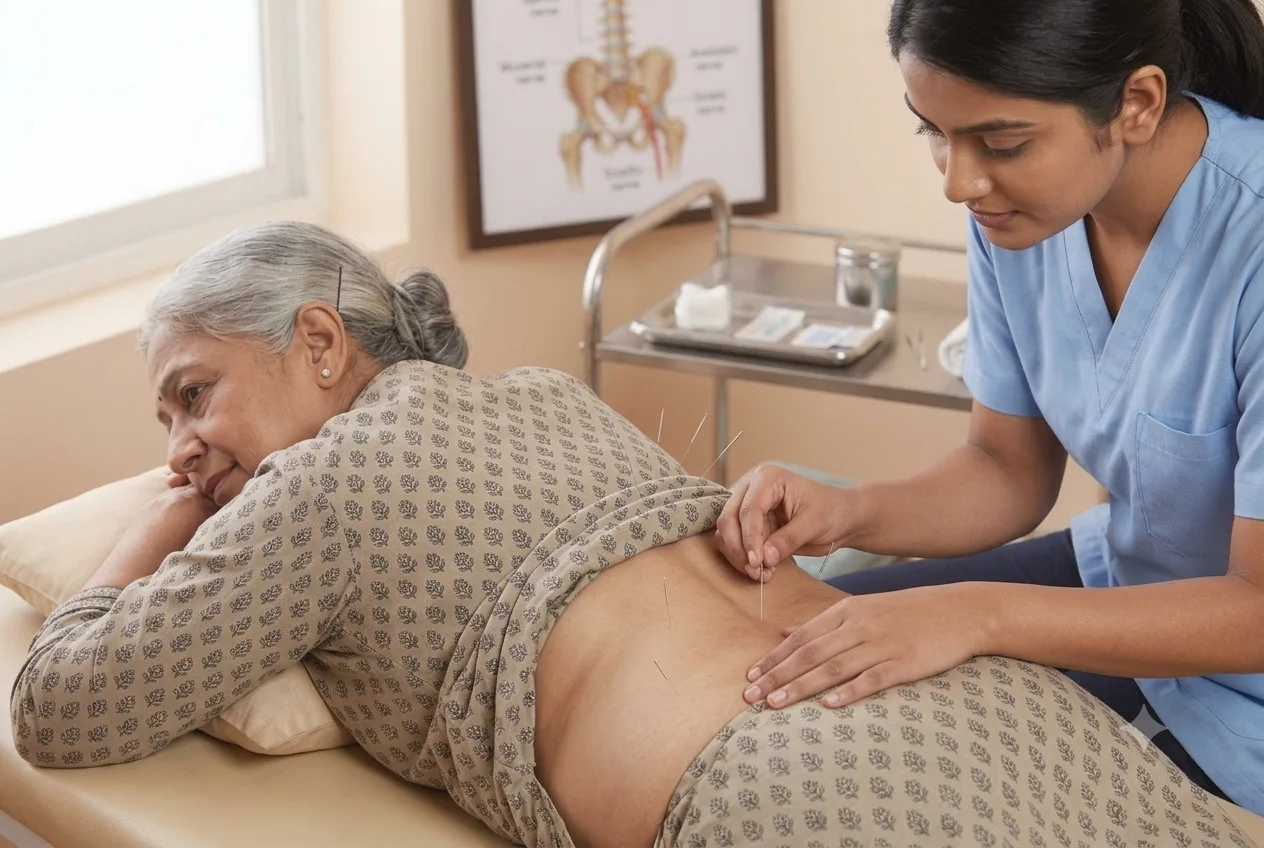
Dry needling is not suitable for everyone. A physiotherapist reviews your symptoms, medical history and preferences, and explains the benefits and risks before any needle is used.
Dry needling is a technique in which a physiotherapist inserts a thin, sterile, single-use needle into a tight or painful muscle or trigger point, without injecting any medication, to help reduce pain and improve movement.
It is called "dry" because nothing is injected. Dry needling is different from traditional acupuncture, which is based on traditional Chinese medicine principles, although the same type of needle is used.
Dry needling works best as part of a wider plan, so it is combined with manual therapy, therapeutic exercise, posture education and a home exercise programme.
Needles are placed in muscles identified as painful or tight during assessment.
Performed by a trained physiotherapist using sterile, single-use needles.
The aim is less muscle tension and more comfortable, freer movement.
Exercise builds on the relief to address why the muscle became painful.
Dry needling may be considered for selected muscle-related problems. An assessment should come before any decision to use it.
Tight upper back, neck and shoulder muscles from desk work or stress may be assessed for trigger point needling.
Muscle-related back and buttock pain may be considered for needling alongside exercise-based care.
Tender, tight bands in muscle that cause local or referred pain are a common reason for dry needling.
Headaches linked to neck and upper shoulder muscle tension may be reviewed, once serious causes are ruled out.
Tight or sore muscles in the thigh, calf and other areas after training may be assessed as part of rehabilitation.
Calf and foot muscle tightness linked to heel pain may be considered for needling alongside stretching and strengthening.
Sensations vary, but most people find it tolerable. You are in control throughout, and you can ask your physiotherapist to pause or stop at any time.
Tell your physiotherapist about any sharp, unusual or worsening sensations so they can adjust the technique straight away.
The fine needle often goes in with little or no feeling, or a brief pinch.
A muscle twitch or a cramp-like ache can occur briefly and is often expected.
Needles may be left in for a short time or moved gently, depending on the technique.
Soreness or mild bruising for a day or two is common, and gentle movement is usually advised.
Your first visit includes a discussion of your symptoms and medical history, followed by a physical examination to identify which muscles are involved.
Needling is only used if it suits you, and always after the risks and benefits have been explained and you have agreed.
Symptoms, posture, movement and muscle findings are reviewed.
Medical history and precautions are checked, and you give informed consent.
Sterile single-use needles are placed in selected muscles using a careful technique.
Stretching, strengthening and advice follow, and progress is reviewed.
Research suggests dry needling may give short-term pain relief for some muscle conditions, but responses vary and the evidence is stronger for some areas than others.
Relief from needling alone is often temporary. Lasting improvement usually depends on fixing the posture, strength and movement habits that overloaded the muscle in the first place.
That is why your plan combines dry needling with exercise and education, and relies less on needling as you recover.
Dry needling may be considered when pain is linked to tight, tender muscles and a physiotherapist finds no reason to avoid it.
Dry needling is generally avoided or used with great caution with needle phobia, bleeding disorders or blood-thinning medication, infection or skin problems at the site, pregnancy, lymphoedema in the limb, a weakened immune system or unstable medical conditions. Tell your physiotherapist about your full medical history.
Common effects are soreness, bruising and tiredness. Seek urgent care for chest pain or difficulty breathing after needling around the chest or upper back, and see a doctor for fever, spreading redness, swelling or pus, or new numbness or weakness.
A comprehensive plan combines different approaches according to your findings and goals.
Hands-on techniques to ease stiffness and tension alongside or instead of needling.
Stretching and strengthening to correct the overload behind the muscle pain.
Practical advice on sitting, working and lifting to reduce repeat strain.
A simple routine and self-care guidance to maintain progress between visits.
Calm n Cure Physiotherapy Center focuses on understanding your symptoms and movement limitations before using any technique, and explains each step so you stay in control of your care.
Book a physiotherapy assessment in Gurgaon. Our team can review your symptoms and explain whether dry needling is suitable and what a realistic plan could look like.
Book an AssessmentCommon questions about dry needling, safety, sessions and what to expect.
Share your basic details and concern. The Calm n Cure clinic team can discuss your symptoms, assessment requirements and the next appropriate step.
Medical note: Dry needling is an invasive technique with risks and is not suitable for every person or condition. It is one component of physiotherapy and does not replace medical diagnosis or treatment. It should be recommended and performed only by a suitably trained and qualified physiotherapist after assessment and with your informed consent. Individual treatment plans and outcomes vary.