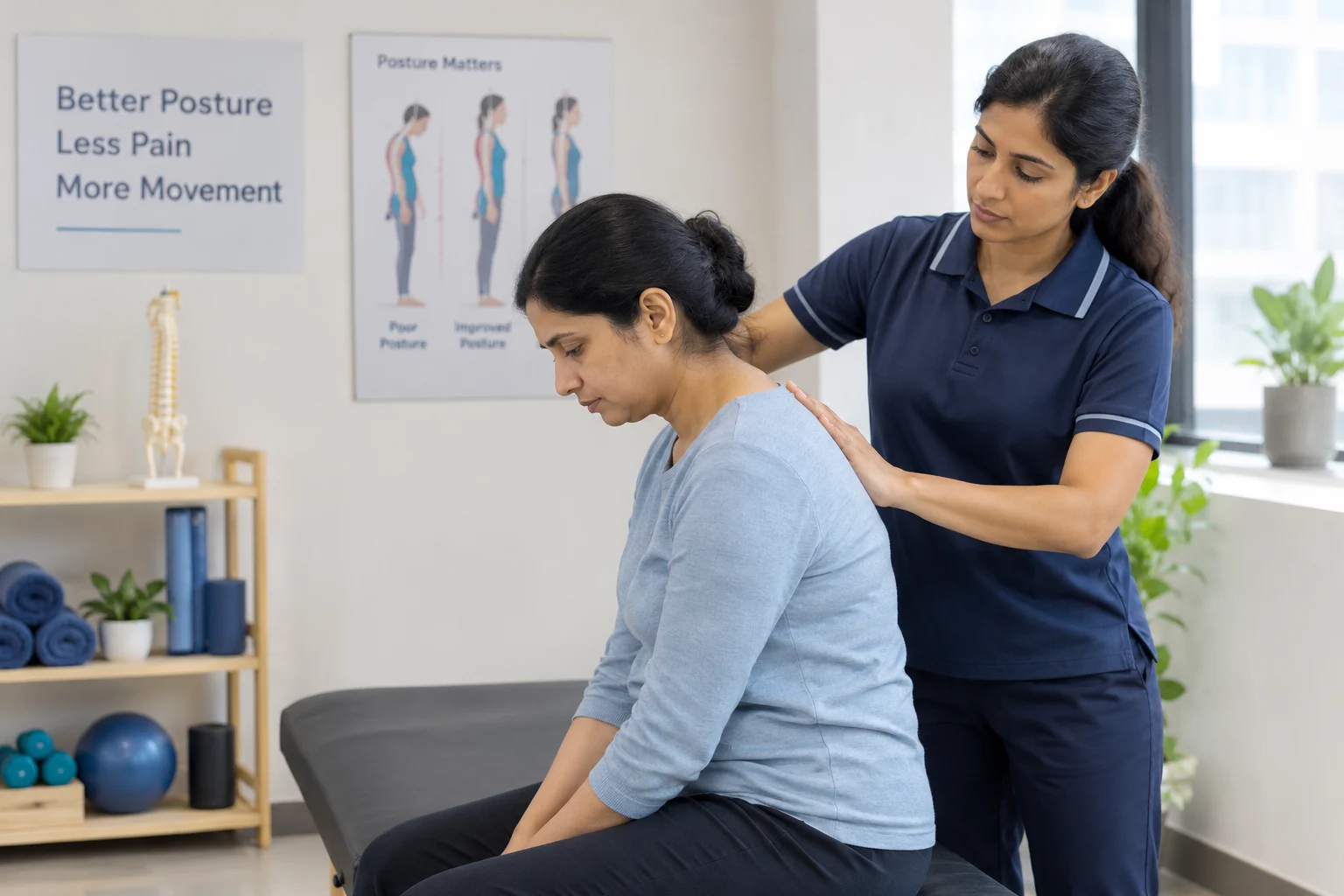
Posture-related pain has become increasingly common among people who spend long hours working at desks, using smartphones, driving, or performing repetitive activities. Poor posture and prolonged static positions can contribute to neck pain, shoulder stiffness, back pain, headaches, and muscle fatigue, affecting both daily comfort and productivity.
The good news is that physiotherapy helps with posture-related pain by identifying contributing factors, improving mobility, strengthening supporting muscles, and teaching healthier movement habits. Rather than focusing only on temporary pain relief, a physiotherapist develops a personalised treatment plan to address the factors that may be contributing to discomfort.
Whether you experience neck stiffness after working on a laptop, lower back pain after prolonged sitting, or shoulder tension from repetitive tasks, understanding the role of physiotherapy can help you take practical steps towards better posture and long-term musculoskeletal health.
In this guide, we explore the common causes of posture-related pain, how physiotherapy can help, the treatments a physiotherapist may recommend, and the daily habits that can support recovery.
What Is Posture-Related Pain?
Posture-related pain refers to discomfort in muscles, joints, or surrounding tissues that may be influenced by how a person sits, stands, sleeps, or moves throughout the day.
The body is designed to move through different positions. However, maintaining the same position for extended periods, particularly when combined with limited physical activity, inadequate muscular endurance, or an unsuitable workstation, can contribute to discomfort.
Common examples include:
- Forward head posture: The head moves forward relative to the shoulders, often while looking at a screen.
- Rounded shoulders: The shoulders rest forward, sometimes accompanied by upper-back stiffness.
- Prolonged slouching: Sitting in a position that feels uncomfortable or increases symptoms over time.
- Lower back discomfort: Pain that develops or increases during extended sitting, standing, or repetitive bending.
- Neck and shoulder tension: Muscle discomfort associated with prolonged computer use or repetitive activities.
It is important to understand that posture alone does not necessarily cause pain. Research and clinical guidance suggest that pain can have several contributing factors, including physical activity levels, stress, sleep, previous injuries, and individual health conditions. There is also no single perfect posture that suits everyone. The goal of physiotherapy is to improve comfort, strength, movement, and the ability to tolerate everyday activities.
Common Causes of Posture-Related Pain
Identifying potential contributing factors is an important first step in choosing the right physiotherapy treatment.
1. Prolonged Sitting and Desk Work
Office workers, students, and people working remotely often spend several hours sitting at a desk. When movement breaks are limited, the neck, shoulders, hips, and back may become stiff or uncomfortable.
An unsuitable chair, poorly positioned screen, or unsupported sitting position may also make certain tasks less comfortable. Regular movement and adjustments to the workstation can help reduce these problems.
2. Excessive Smartphone and Laptop Use
Looking down at a smartphone or working on a laptop positioned too low can encourage a forward head position. Maintaining this position for long periods may contribute to neck discomfort, shoulder tension, and headaches in some people.
The solution is not to avoid technology altogether. Instead, improving screen positioning, varying head and neck movements, and taking regular breaks can help.
3. Muscle Weakness and Reduced Endurance
Muscles around the neck, shoulder blades, trunk, and hips help control movement and support everyday activities. If these muscles have limited strength or endurance, prolonged work or repetitive tasks may become more uncomfortable.
Physiotherapy can help develop the strength and endurance needed for a person’s particular activities through an appropriately designed exercise programme.
4. Limited Mobility and Physical Inactivity
Spending much of the day sitting can reduce opportunities to move the spine, hips, and shoulders through their comfortable ranges. This may contribute to stiffness and reduced tolerance for physical tasks.
Gentle mobility exercises, walking, and regular changes of position can help maintain movement and reduce the effects of prolonged inactivity.
5. Repetitive Activities and Workplace Ergonomics
Jobs involving driving, lifting, computer work, assembly tasks, or repetitive arm movements may place repeated demands on particular body regions.
When work demands exceed a person’s current capacity, symptoms can develop. Physiotherapy can help identify practical changes to movement technique, workload, and exercise routines.
6. Stress, Fatigue, and Sleep Problems
Posture-related pain is not always a purely mechanical problem. Stress, poor sleep, fatigue, and worry about pain can influence muscle tension, sensitivity, recovery, and activity levels.
A comprehensive physiotherapy programme considers these factors alongside physical symptoms rather than treating posture as the only possible cause.
How Physiotherapy Helps With Posture-Related Pain
Physiotherapy combines assessment, education, exercise, and selected hands-on techniques to help people manage musculoskeletal pain and improve function. The treatment approach depends on the individual’s symptoms, physical examination, medical history, and daily activities.
Here are the main ways physiotherapy may help.
1. Identifies the Factors Contributing to Pain
One of the most important benefits of physiotherapy is a personalised assessment. A physiotherapist looks beyond the visible position of the spine or shoulders to understand what might be contributing to the patient’s symptoms.
The assessment may include:
- Reviewing the location, duration, and pattern of pain.
- Understanding work routines, exercise habits, and daily activities.
- Checking comfortable movement of the neck, back, shoulders, and hips.
- Assessing relevant muscle strength and endurance.
- Evaluating functional movements, such as reaching, bending, sitting, and standing.
- Identifying activities or positions that aggravate or ease symptoms.
This process helps the physiotherapist determine whether posture, movement habits, reduced strength, mobility limitations, or another condition may be contributing to the problem.
Why it matters: A person with neck pain may benefit from different exercises and advice than someone experiencing lower back discomfort. Treatment should address the individual’s needs rather than rely on a generic posture-correction routine.
2. Improves Muscle Strength and Endurance
Targeted strengthening exercises can help the body tolerate the physical demands of work, exercise, and daily life.
Depending on the assessment, a physiotherapist may recommend exercises for the deep neck muscles, shoulder-blade stabilisers, back muscles, abdominal muscles, or hip muscles.
Examples include:
- Chin tucks for selected cases of neck pain.
- Resistance-band rows for upper-back and shoulder strength.
- Trunk strengthening exercises for improved functional capacity.
- Gluteal strengthening to support hip and lower-limb function.
- Progressive endurance exercises to improve tolerance for sustained activities.
The objective is not simply to make a person sit upright all day. It is to build the capacity to move comfortably, maintain different positions when needed, and perform daily tasks with less discomfort.
A systematic review of seven randomised clinical trials involving 627 participants found that therapeutic exercise could improve forward head posture and may reduce neck pain. The precise relationship between postural changes and pain relief remains an area of research.
3. Reduces Muscle Stiffness and Improves Mobility
Limited mobility in the neck, upper back, shoulders, or hips may make some activities uncomfortable. Physiotherapists can use carefully selected mobility exercises and stretches to improve comfortable movement.
Depending on the problem, treatment may include:
- Gentle neck rotation and side-to-side movement.
- Thoracic spine mobility exercises.
- Shoulder mobility exercises.
- Chest stretches where appropriate.
- Hip mobility exercises for people with prolonged sitting-related stiffness.
Stretching is not necessary for every person, and it should not be prescribed solely because a particular muscle appears tight. The physiotherapist selects exercises according to the person’s symptoms, examination findings, and response to movement.
Improved mobility can make everyday tasks easier, particularly when combined with strengthening and regular physical activity.
4. Provides Manual Therapy When Appropriate
Manual therapy involves hands-on techniques used by trained physiotherapists to help manage pain and improve movement.
Depending on the patient’s condition, it may include soft-tissue techniques, massage, or joint mobilisation.
These techniques may provide short-term relief for some people experiencing neck or back discomfort. However, manual therapy is generally most useful as part of a broader treatment plan that also includes exercise, education, and self-management.
It should not be presented as a permanent solution on its own or as a method that guarantees structural correction of the spine.
5. Helps Correct Movement Habits and Improve Postural Awareness
Physiotherapy can help people understand how their everyday movement habits relate to their symptoms.
Rather than insisting that the patient maintain a rigid upright position, the physiotherapist can teach comfortable, adaptable movement strategies.
For example, a person who develops neck discomfort during computer work may benefit from bringing the screen closer to eye level, supporting the forearms, and changing position regularly.
Someone who experiences lower back pain after sitting for long periods may benefit from adjusting the chair, alternating between sitting and standing where practical, and taking short movement breaks.
The key principle is movement variation, not constant muscular tension. Changing positions throughout the day may be more useful than trying to hold one supposedly perfect posture for hours.
6. Offers Ergonomic Guidance for Work and Daily Life
An ergonomic assessment can help identify whether a workstation or daily routine is making activities unnecessarily uncomfortable.
A physiotherapist may recommend the following adjustments:
- Position the monitor so that you can view it without repeatedly bending your neck.
- Keep frequently used objects within comfortable reach.
- Adjust the chair to provide comfortable support.
- Use a footrest if your feet do not rest comfortably on the floor.
- Keep the keyboard and mouse positioned to avoid excessive reaching.
- Alternate tasks and take regular movement breaks.
- Hold your smartphone higher when practical instead of continuously looking down.
Ergonomic changes should suit your body, work requirements, and symptoms. They do not need to be expensive, and they cannot eliminate every cause of pain. Their purpose is to make daily activities more comfortable and manageable.
7. Supports Long-Term Pain Management
Recurring posture-related pain can affect concentration, work performance, exercise, and sleep. Physiotherapy helps people develop skills to manage symptoms and gradually return to meaningful activities.
A long-term management plan may include progressive exercise, pacing demanding activities, improving sleep routines, understanding symptom flare-ups, and maintaining regular physical activity.
The physiotherapist can also help patients recognise when symptoms are not following the expected pattern and when further medical assessment is needed.
This approach encourages active participation in recovery rather than dependence on passive treatments alone.
Physiotherapy Treatments for Posture-Related Pain
The best physiotherapy treatment for posture-related pain depends on the affected body region, the severity of symptoms, and the underlying contributing factors. A physiotherapist may combine several approaches rather than relying on a single treatment.
| Physiotherapy treatment | How it may help |
|---|---|
| Therapeutic exercises | Develops strength, endurance, and movement control. |
| Stretching and mobility exercises | Improves comfortable movement where mobility is limited. |
| Manual therapy | May provide short-term relief and improve movement in selected cases. |
| Postural and movement education | Helps patients identify and modify habits associated with their symptoms. |
| Ergonomic advice | Makes workstations and daily activities more comfortable. |
| Functional training | Builds tolerance for work, household tasks, and other everyday activities. |
| Home exercise programmes | Helps patients maintain progress between appointments. |
These treatments are not required for every patient. Your physiotherapist will recommend an appropriate combination after assessing your condition. Physiotherapy commonly uses exercise, movement training, and education, with other interventions selected when clinically appropriate.
Exercises That May Help With Posture-Related Pain
The following exercises are examples of movements that may be incorporated into a physiotherapy programme. They are not a substitute for an individual assessment, particularly if you have persistent pain, a recent injury, or a diagnosed spinal condition.
1. Chin Tucks
Chin tucks involve gently drawing the chin backwards without tilting the head up or down. They may be prescribed for selected cases of neck pain and forward head positioning.
Focus: neck control and muscle endurance.
2. Resistance-Band Rows
Pulling a resistance band towards the body while keeping the movement controlled can strengthen the muscles around the shoulder blades and upper back.
Focus: upper-back strength and pulling capacity.
3. Thoracic Mobility Exercises
Gentle upper-back extension and rotation movements may help improve comfortable movement when thoracic stiffness is contributing to symptoms.
Focus: upper-back mobility.
4. Glute Bridges
This exercise involves lifting the hips while lying on your back with your knees bent. It can strengthen the gluteal muscles and support general trunk and hip conditioning.
Focus: hip strength and functional capacity.
Start gently and progress according to your physiotherapist’s instructions. Stop an exercise if it significantly increases your pain, causes dizziness, or produces new tingling, numbness, or weakness. Exercises should be adapted to your specific condition.
How to Maintain Better Posture During Daily Activities
Physiotherapy works best when the skills learned during treatment are incorporated into everyday life. Small, consistent changes can help reduce the physical demands associated with prolonged static positions.
While Sitting at Work
- Choose a chair that allows you to sit comfortably with your back supported if needed.
- Keep your feet supported and avoid remaining in one position for unnecessarily long periods.
- Position your screen and keyboard to minimise awkward reaching or repeated neck bending.
- Change your sitting position whenever you feel uncomfortable.
- Take short movement breaks throughout your workday.
While Using a Smartphone
- Bring the device closer to eye level when practical.
- Avoid holding your neck in one position for extended periods.
- Alternate between hands or use a stand when appropriate.
- Take breaks from scrolling and move your neck and shoulders comfortably.
While Standing
- Distribute your weight comfortably between your feet.
- Avoid forcing your shoulders backwards or excessively tightening your abdominal muscles.
- Shift your weight and change positions regularly.
- Use supportive, comfortable footwear suited to your activities.
While Sleeping
Choose a sleeping position and pillow that allow your neck and body to rest comfortably. There is no single sleeping position that is ideal for everyone.
If you regularly wake up with neck or back pain, a physiotherapist can help assess possible contributing factors and suggest suitable adjustments.
The most important principle is to avoid treating posture as a rigid rule. A comfortable position that changes throughout the day is often more practical than attempting to maintain one fixed alignment continuously.
Who Can Benefit From Physiotherapy for Posture-Related Pain?
Physiotherapy may benefit people whose neck, back, shoulder, or other musculoskeletal symptoms are influenced by prolonged positions, movement habits, reduced physical capacity, or workplace demands.
It may be particularly useful for:
- Office professionals: People experiencing neck, shoulder, or back discomfort during computer work.
- Students: Individuals who spend long hours studying or using digital devices.
- Remote workers: People whose home workstations may not provide comfortable support.
- Drivers: Individuals who experience stiffness or discomfort after extended periods behind the wheel.
- Older adults: People who need help maintaining mobility, strength, balance, and functional independence.
- Physically active individuals: People who experience discomfort during training, repetitive movements, or recovery from injury.
Physiotherapy is not limited to people who visibly slouch. Someone with apparently upright posture may still experience pain, while another person with a visibly rounded upper back may have no symptoms.
The decision to seek treatment should therefore be based on pain, functional limitations, individual needs, and clinical assessment rather than appearance alone.
What to Expect During a Physiotherapy Session
If you visit a physiotherapy clinic for posture-related pain, your treatment will generally begin with an assessment.
Step 1: Initial consultation
The physiotherapist asks about your symptoms, medical history, work routine, physical activity, and the tasks that make your pain better or worse.
Step 2: Physical assessment
Depending on your symptoms, the therapist may assess joint movement, muscle strength, endurance, balance, and functional activities.
Step 3: Personalised treatment plan
Your physiotherapist develops a programme based on the assessment findings. This may include exercises, movement education, ergonomic advice, and selected hands-on techniques.
Step 4: Guided exercise and education
You learn how to perform appropriate exercises safely and how to modify everyday activities that aggravate your symptoms.
Step 5: Progress monitoring
Your therapist reviews changes in pain, mobility, strength, and daily function, adjusting the programme as necessary.
The duration of treatment varies. Some people improve within a few weeks, while persistent or complex conditions may require a longer programme. Progress depends on the underlying problem, individual health, activity demands, and consistency with the recommended plan.
When Should You See a Physiotherapist?
Consider consulting a qualified physiotherapist if you experience recurring neck pain, upper-back stiffness, lower back discomfort, shoulder tension, or difficulty maintaining comfortable positions during daily activities.
An assessment is particularly useful if your symptoms interfere with work, sleep, exercise, or household tasks, or if they do not improve with reasonable self-care.
However, not all posture-related pain is caused by posture. Persistent or worsening symptoms may require medical evaluation to identify another underlying condition.
Seek urgent medical assessment for severe pain following a significant injury, new or progressive limb weakness, or back pain accompanied by new bladder or bowel dysfunction or numbness around the groin or saddle region. Neck pain accompanied by new neurological symptoms, fever, or a severe unusual headache also warrants prompt medical attention.
Do not delay appropriate medical care by assuming that a problem is simply due to poor posture. Contact us for details
Conclusion: Can Physiotherapy Help With Posture-Related Pain?
Yes, physiotherapy can help manage posture-related pain by improving strength, mobility, movement control, and tolerance for everyday activities. It can also help identify contributing factors and provide practical guidance for workstations, exercise routines, and daily movement habits.
The most effective approach is not necessarily to sit or stand perfectly straight all day. Instead, it is to develop the strength and confidence to move comfortably, vary positions, and perform daily activities without unnecessary discomfort.
If posture-related pain is affecting your quality of life, consider consulting a qualified physiotherapist for an individual assessment and treatment plan. Addressing symptoms early and following an appropriate exercise programme may help you return to daily activities with greater comfort and confidence.
Frequently Asked Questions (FAQs)
1. How does physiotherapy help with posture-related pain?
Physiotherapy helps with posture-related pain through personalised exercises, mobility training, ergonomic advice, movement education, and selected manual therapy techniques. These approaches may reduce discomfort, improve physical function, and help patients manage activities that aggravate their symptoms.
2. How long does physiotherapy take to improve posture-related pain?
The timeline varies depending on the cause and duration of the pain, the individual’s physical condition, and the treatment plan. Some people notice improvement within a few weeks, while persistent symptoms may require longer-term management. Your physiotherapist can review your progress and adjust your programme.
3. Can physiotherapy correct forward head posture and rounded shoulders?
Physiotherapy may help improve forward head positioning and shoulder movement through targeted strengthening, mobility exercises, and movement training. The degree of change varies between individuals, and the goal should be improved comfort and function rather than achieving one rigidly defined posture.
4. What are the best exercises for posture-related neck and back pain?
Suitable exercises depend on the person’s symptoms and assessment findings. Common options include chin tucks, resistance-band rows, thoracic mobility exercises, and selected trunk-strengthening exercises. Not every exercise suits every condition, so a physiotherapist can recommend appropriate movements and progression.
5. Can posture-related pain be prevented with physiotherapy?
Physiotherapy can help reduce the risk of recurring discomfort by improving strength, mobility, and exercise habits while teaching practical strategies for workstation setup and movement breaks. However, it cannot guarantee that pain will never return, because musculoskeletal symptoms can have multiple contributing factors.