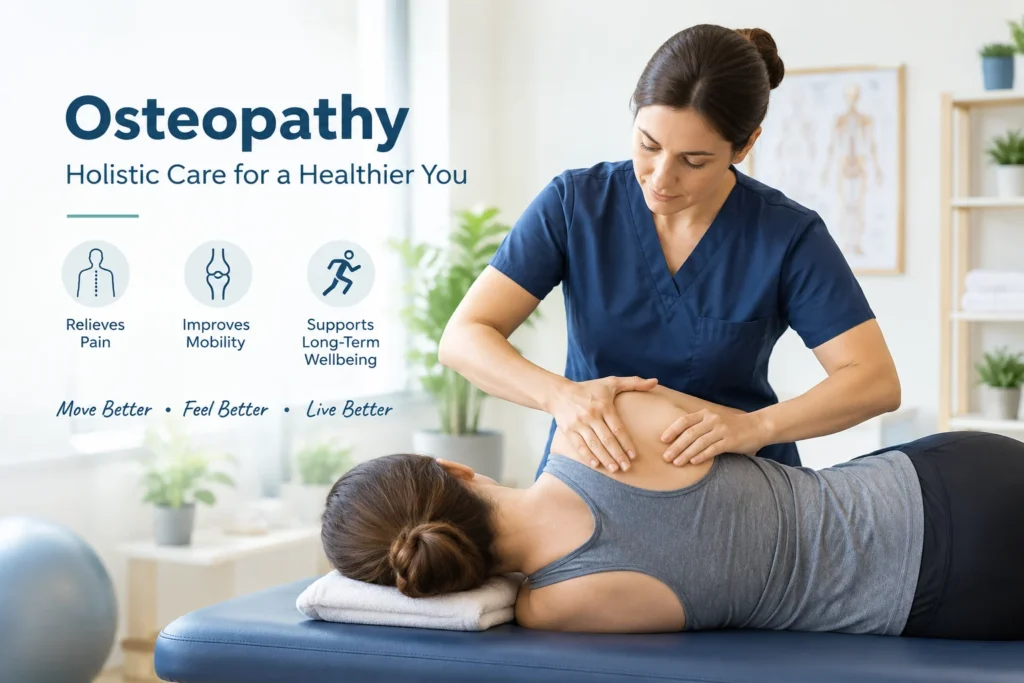
Osteopathy is a hands-on approach to healthcare that focuses on the relationship between the body’s structure and its function. It looks at the body as an interconnected system rather than treating a painful area in isolation. This means that an osteopath may consider the muscles, joints, connective tissues, posture, movement patterns, and other physical factors that could be contributing to a person’s symptoms.
Many people consider osteopathy when they experience back pain, neck pain, joint stiffness, muscle discomfort, sports-related problems, or recurring musculoskeletal pain. Others want to understand how osteopathy compares with physiotherapy and whether one approach is more appropriate for their particular condition.
While osteopathy and physiotherapy have some similarities, they are not the same. Both can involve hands-on treatment and are commonly used in musculoskeletal care, but their treatment approaches and emphasis can differ.
In this comprehensive guide, we will explain what osteopathy is, how osteopathy works, the techniques used during treatment, conditions that may benefit from osteopathic care, the potential benefits of osteopathy, and the difference between osteopathy and physiotherapy.
What Is Osteopathy?
Osteopathy is a form of hands-on healthcare that places emphasis on the relationship between the body’s structure and how it functions.
An osteopathic approach considers the body as a connected system. For example, discomfort in one area may be influenced by movement or mechanical factors elsewhere in the body. Therefore, an osteopathic assessment may look beyond the location where a person feels pain.
Rather than focusing exclusively on symptoms, an osteopath may assess factors such as:
- Joint movement
- Muscle tension
- Posture
- Spinal mobility
- Movement patterns
- Soft-tissue function
- Physical activity
- Previous injuries
- Overall musculoskeletal function
The treatment approach is individualised according to the person’s symptoms, physical findings, medical history, and functional requirements.
It is important to note that osteopathy varies internationally in terms of professional training, regulation, and scope of practice. In some countries, osteopathic physicians are fully licensed medical doctors, while in other countries osteopaths are trained primarily as manual healthcare practitioners. Patients should therefore check the qualifications and regulatory status of the practitioner in their region.
How Does Osteopathy Work?
Osteopathy is based on the concept that different parts of the musculoskeletal system work together and that restrictions in movement or changes in tissue function may influence how the body moves.
An osteopathic session typically begins with a detailed assessment.
The practitioner may ask about:
- Your current symptoms
- When the pain started
- Previous injuries
- Medical history
- Lifestyle and physical activity
- Work-related activities
- Exercise habits
- Factors that make your symptoms better or worse
A physical examination may then assess movement, joint mobility, muscle tension, posture, and other relevant factors.
Based on the assessment, the osteopath may use hands-on techniques intended to improve mobility, reduce muscle tension, and support normal movement.
The treatment plan may also include advice about movement, activity, exercise, and lifestyle.
What Happens During an Osteopathy Session?
An osteopathy appointment usually begins with a consultation and physical assessment.
The practitioner may observe how you stand, walk, bend, rotate, or perform particular movements.
Depending on the findings, treatment may involve several hands-on techniques.
Soft-Tissue Techniques
These techniques involve working on muscles and other soft tissues.
The aim may be to reduce excessive muscle tension, improve tissue mobility, and make movement more comfortable.
Joint Mobilisation
Joint mobilisation involves controlled movements applied to a joint.
The technique and intensity depend on the individual and the joint being treated.
Manipulation
Some osteopathic practitioners may use specific manual techniques involving controlled joint movements.
These techniques should only be performed following an appropriate assessment and when clinically suitable.
Muscle and Fascial Techniques
Treatment may also focus on muscles and connective tissues surrounding a painful or restricted area.
Movement and Lifestyle Advice
Osteopathy may also include guidance about physical activity, posture, work habits, exercise, and other factors that could influence symptoms.
A modern musculoskeletal approach generally works best when hands-on treatment is combined with appropriate active movement and rehabilitation rather than relying exclusively on passive treatment.
What Conditions Can Osteopathy Help With?
Osteopathic treatment is primarily associated with musculoskeletal problems. The reference article discusses osteopathy in relation to conditions such as back pain, neck pain, headaches, spinal and joint problems, and certain other complaints.
Some people seek osteopathic care for:
Lower Back Pain
Lower back pain is one of the most common reasons people seek hands-on musculoskeletal treatment.
An osteopathic assessment may examine spinal mobility, hip movement, muscle tension, posture, and movement patterns that could be contributing to symptoms.
Neck Pain and Stiffness
Neck pain can develop due to prolonged desk work, repetitive activities, muscle tension, injury, or other factors.
Osteopathic treatment may focus on the neck, upper back, shoulders, and surrounding soft tissues.
Shoulder Problems
Shoulder discomfort can be associated with the muscles, tendons, joints, posture, or movement patterns.
An assessment may examine the shoulder as well as the upper back and neck.
Joint Pain and Stiffness
Osteopathic care may be considered for certain musculoskeletal complaints involving joints and surrounding tissues.
Sports-Related Problems
Athletes and physically active individuals may develop pain or movement restrictions due to repetitive loading, changes in training volume, or previous injuries.
A comprehensive assessment can help identify factors that may be contributing to the problem.
Headaches
Some headaches may have a musculoskeletal component, particularly when symptoms are associated with neck pain or stiffness. However, headaches can have many causes, and persistent, severe, unusual, or changing headaches require appropriate medical assessment.
Potential Benefits of Osteopathy
The potential benefits of osteopathic treatment depend on the person’s condition, the underlying cause of symptoms, and the treatment approach used.
Possible benefits may include:
Improved Joint Mobility
Manual techniques may help improve movement in restricted joints.
Reduced Muscle Tension
Soft-tissue techniques may help reduce muscular tightness and improve comfort.
Improved Movement
By addressing restrictions and movement patterns, treatment may help some people move more comfortably.
Pain Management
Osteopathy may be incorporated into the management of certain musculoskeletal pain conditions.
The reference article cites research suggesting benefits for some forms of acute neck pain, chronic low back pain, and pregnancy-related back pain, while also noting that evidence varies by condition and outcome.
Better Understanding of Your Body
An assessment can help patients understand how their movement, activity, posture, and physical habits may be contributing to their symptoms.
However, osteopathy should not be viewed as a universal treatment for every health condition. The suitability of treatment depends on the individual diagnosis and clinical assessment.
Osteopathy vs Physiotherapy: What Is the Difference?
One of the most common questions patients ask is:
“Should I see an osteopath or a physiotherapist?”
There is no universal answer because the appropriate treatment depends on the person’s condition, goals, clinical findings, and practitioner qualifications.
Broadly speaking, osteopathy often places greater emphasis on hands-on assessment and treatment of the body’s musculoskeletal relationships, whereas physiotherapy commonly places significant emphasis on active rehabilitation, therapeutic exercise, movement retraining, strength, mobility, and functional recovery. There can be considerable overlap between the two approaches.
Osteopathy
An osteopathic treatment programme may include:
- Hands-on assessment
- Soft-tissue techniques
- Joint mobilisation
- Manual techniques
- Movement advice
- Lifestyle guidance
Physiotherapy
A physiotherapy programme may include:
- Therapeutic exercises
- Strength training
- Mobility exercises
- Manual therapy
- Balance and coordination training
- Functional rehabilitation
- Posture and movement education
- Sports rehabilitation
Physiotherapy is particularly commonly used following injuries, surgery, neurological conditions, sports injuries, and problems where restoring strength and physical function is a major rehabilitation goal.
Osteopathy and physiotherapy can also sometimes be used as complementary approaches when clinically appropriate.
The important point is not simply choosing a treatment based on its name. A proper assessment should determine what is causing the symptoms and what type of care is appropriate.
Is Osteopathy a Hands-On Treatment?
Yes, hands-on treatment is a significant part of many osteopathic approaches.
Depending on the practitioner and the patient’s condition, treatment may include soft-tissue work, joint mobilisation, manipulation, stretching, and other manual techniques.
However, osteopathy does not necessarily have to be limited to passive treatment.
Education, movement, exercise, activity modification, and lifestyle advice can also form part of a broader management plan.
A patient may therefore receive hands-on treatment during a session while also being encouraged to remain appropriately active between appointments.
Is Osteopathy Suitable for Everyone?
Osteopathy is not automatically appropriate for every person or every condition.
A qualified practitioner should assess your medical history and symptoms before treatment.
Certain symptoms may require medical evaluation rather than routine manual therapy.
You should seek appropriate medical attention if you experience symptoms such as:
- Sudden or severe unexplained pain
- Significant weakness
- Progressive numbness
- Loss of bladder or bowel control
- Severe pain following major trauma
- Unexplained weight loss
- Fever associated with severe pain
- Chest pain or difficulty breathing
- Other new or concerning symptoms
A healthcare professional can determine whether osteopathic treatment is appropriate or whether further investigation is required.
What Should You Expect After Osteopathic Treatment?
People respond differently to manual treatment.
Some individuals may experience temporary soreness or mild discomfort after a session, particularly following certain manual techniques. This usually settles, but persistent or severe symptoms should be discussed with the practitioner or another healthcare professional.
The goal of treatment should be meaningful improvement in symptoms, movement, and function rather than simply having repeated passive treatment indefinitely.
For long-term musculoskeletal health, an active rehabilitation programme may be valuable alongside hands-on care.
Osteopathy and Physiotherapy Can Work Together
Osteopathy and physiotherapy do not necessarily have to be viewed as competing treatments.
For some patients, manual therapy can help improve comfort or movement, while physiotherapy exercises can help build strength, endurance, mobility, balance, and confidence.
For example, someone with recurring back pain might receive hands-on treatment to address movement restrictions and then follow a progressive exercise programme to improve trunk and hip strength.
Similarly, someone recovering from an injury may benefit from manual techniques during certain stages of rehabilitation while gradually progressing towards strengthening, functional exercises, and a return to normal activity.
The exact combination should be based on individual assessment rather than a fixed treatment formula.
How to Choose the Right Practitioner
When looking for osteopathic treatment, consider the practitioner’s:
- Professional qualifications
- Registration or licensing where applicable
- Experience with your particular condition
- Treatment approach
- Willingness to explain the diagnosis and treatment plan
- Approach to exercise and rehabilitation
- Communication style
A good practitioner should explain what they believe is contributing to your symptoms, discuss reasonable treatment options, and help you understand what you can do outside the clinic to support recovery.
Be cautious of anyone promising a guaranteed cure or claiming that one technique can treat every health problem.
Frequently Asked Questions About Osteopathy
1. What is osteopathy used for?
Osteopathy is primarily used as a hands-on approach for musculoskeletal problems such as certain types of back pain, neck pain, joint stiffness, and movement-related complaints. Treatment is individualised following an assessment. It is not a replacement for medical care when symptoms require diagnosis or urgent investigation.
2. Is osteopathy the same as physiotherapy?
No. Osteopathy and physiotherapy are different healthcare approaches, although they share some techniques. Osteopathy commonly places considerable emphasis on hands-on assessment and treatment, while physiotherapy often places greater emphasis on active rehabilitation, therapeutic exercise, strength, mobility, and functional recovery. There is considerable overlap between the two.
3. Is osteopathy painful?
Osteopathic treatment should be appropriately tailored to the individual. Some manual techniques may cause temporary discomfort or soreness, but treatment should be discussed with the practitioner if it becomes painful or causes concerning symptoms. The practitioner should explain the technique and obtain appropriate consent before treatment.
4. How many osteopathy sessions will I need?
There is no fixed number of sessions that is suitable for everyone. The number depends on the nature and duration of your symptoms, your response to treatment, your goals, and whether you are following an active rehabilitation programme. Your progress should be reassessed regularly rather than continuing treatment without a clear purpose.
5. Can osteopathy and physiotherapy be taken together?
In some situations, yes. Osteopathy and physiotherapy can complement each other when the treatment plan is coordinated and appropriate for the individual’s condition. Hands-on treatment may be combined with physiotherapy-based exercises, strengthening, mobility work, and functional rehabilitation.
Conclusion: Understanding Osteopathy and Your Treatment Options
Osteopathy takes a whole-body approach to musculoskeletal care, considering how different parts of the body interact and how changes in movement, joint mobility, muscle function, and physical habits may contribute to symptoms.
It commonly involves hands-on techniques such as soft-tissue treatment, joint mobilisation, and other manual approaches, combined where appropriate with movement and lifestyle advice.
For people experiencing certain types of back pain, neck pain, joint stiffness, muscle discomfort, or movement-related problems, osteopathic treatment may be one option to consider following an appropriate assessment.
At the same time, physiotherapy offers a strong focus on active rehabilitation, therapeutic exercise, strengthening, mobility, functional recovery, and injury rehabilitation. The two approaches can overlap and may sometimes be incorporated into a broader musculoskeletal care plan.
Ultimately, the most appropriate treatment depends on the cause of your symptoms, your physical condition, your goals, and a qualified professional’s assessment.
If you are experiencing persistent pain, stiffness, restricted movement, or recurring musculoskeletal problems, consult a qualified healthcare professional to determine the most appropriate treatment approach for you.